
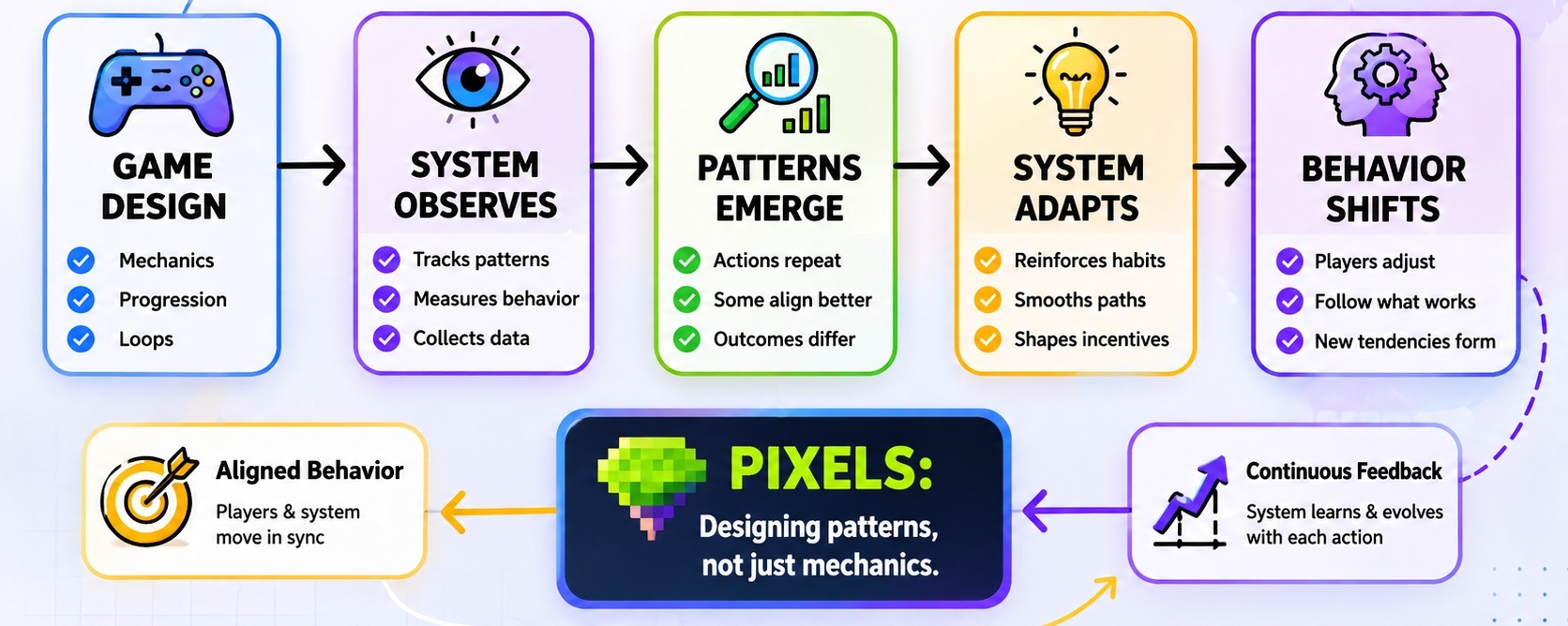


I’ve been thinking about how we usually separate game design from everything around it. Mechanics, progression, loops that’s the game. Incentives, rewards, tokens that’s the layer on top.
With @Pixels that line doesn’t feel as clear anymore.
That’s the part I keep coming back to.
Because it doesn’t seem like the system is only designing what you do. It’s starting to shape how you behave while doing it.
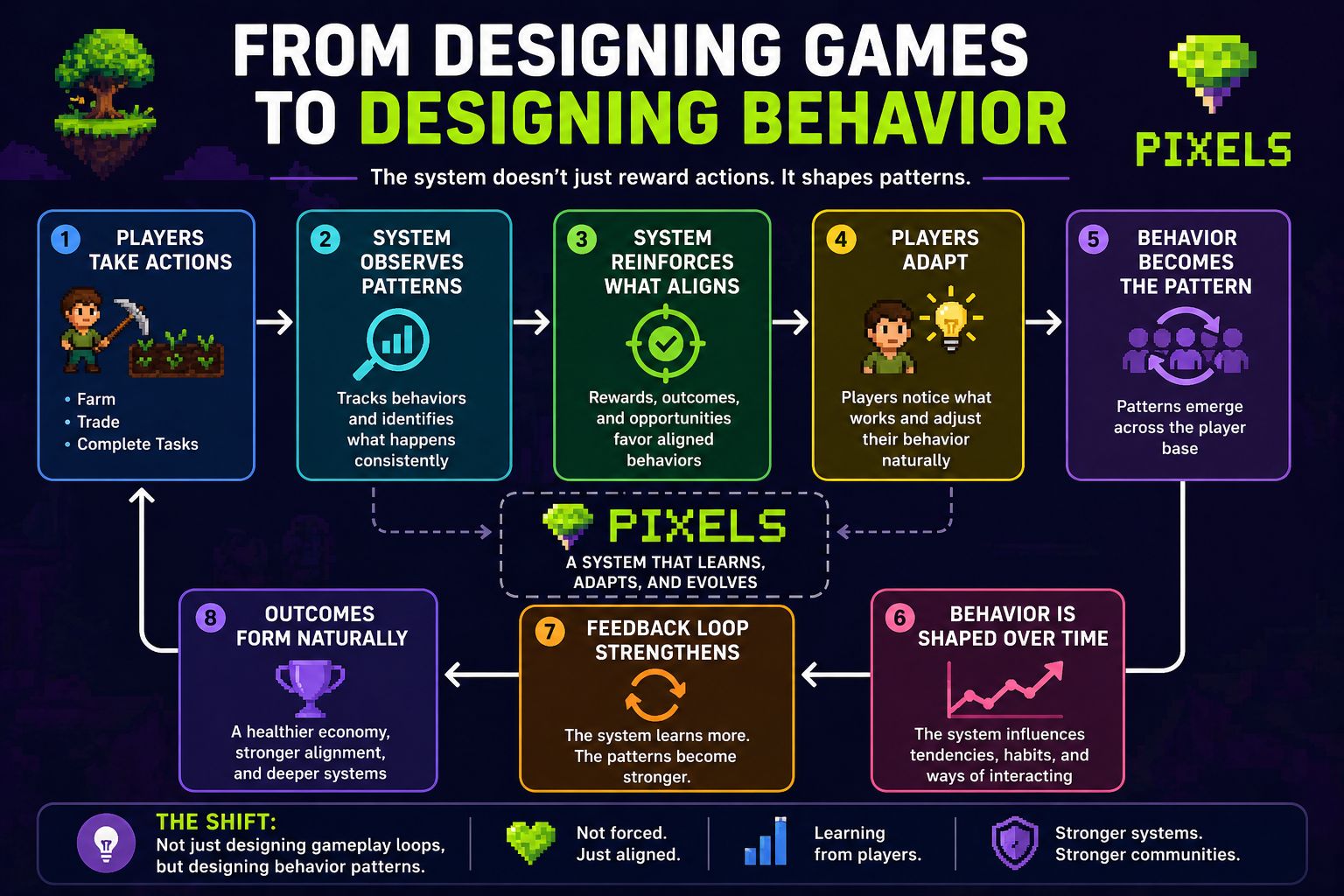
At first, it still looks familiar. You farm, you trade, you complete tasks. The surface-level experience hasn’t changed much. But underneath, there’s this growing sense that the system is paying attention to patterns, not just actions.
And over time, those patterns start to matter.
Not in a direct way you can map out, but in how outcomes form. Some behaviors align more naturally with the system. Others don’t carry the same weight, even if they look similar on the surface.
And once that difference shows up, players adjust.
Not because they’re told to, but because the environment subtly pushes them in that direction. Certain paths feel smoother, more consistent. Others feel like they stall out over time.
That’s where the shift happens.
Because when a system starts reinforcing behavior patterns instead of just rewarding isolated actions, it’s no longer just designing gameplay loops. It’s designing tendencies. Habits. Ways of interacting with the system that extend beyond any single mechanic.
And that’s a different layer entirely.
I’m not sure most players would describe it like that. They’d just say they found what works and stuck with it. But what “works” isn’t neutral. It’s shaped by what the system recognizes, measures, and reinforces.
Which means behavior itself becomes part of the design.
Not explicitly, but through feedback.
Pixels seems to be moving in that direction. Not fully there, but showing signs of a system that’s less focused on fixed rules and more on guiding patterns over time.
And that changes how you engage with it.
You’re not just learning mechanics $PIXEL
You’re aligning with something that’s quietly learning from you at the same time.
I’m not sure if that makes the experience deeper or just more structured.
On one hand, it could lead to stronger systems. More stability, better alignment between players and the economy. On the other hand, it introduces a layer where behavior isn’t entirely your own anymore. It’s shaped by something that’s continuously adapting around you.
And that balance is hard to see clearly from the inside.
Because it doesn’t feel forced.
It just feels like things start making more sense… in a very specific direction.
Pixels might not be fully there yet.
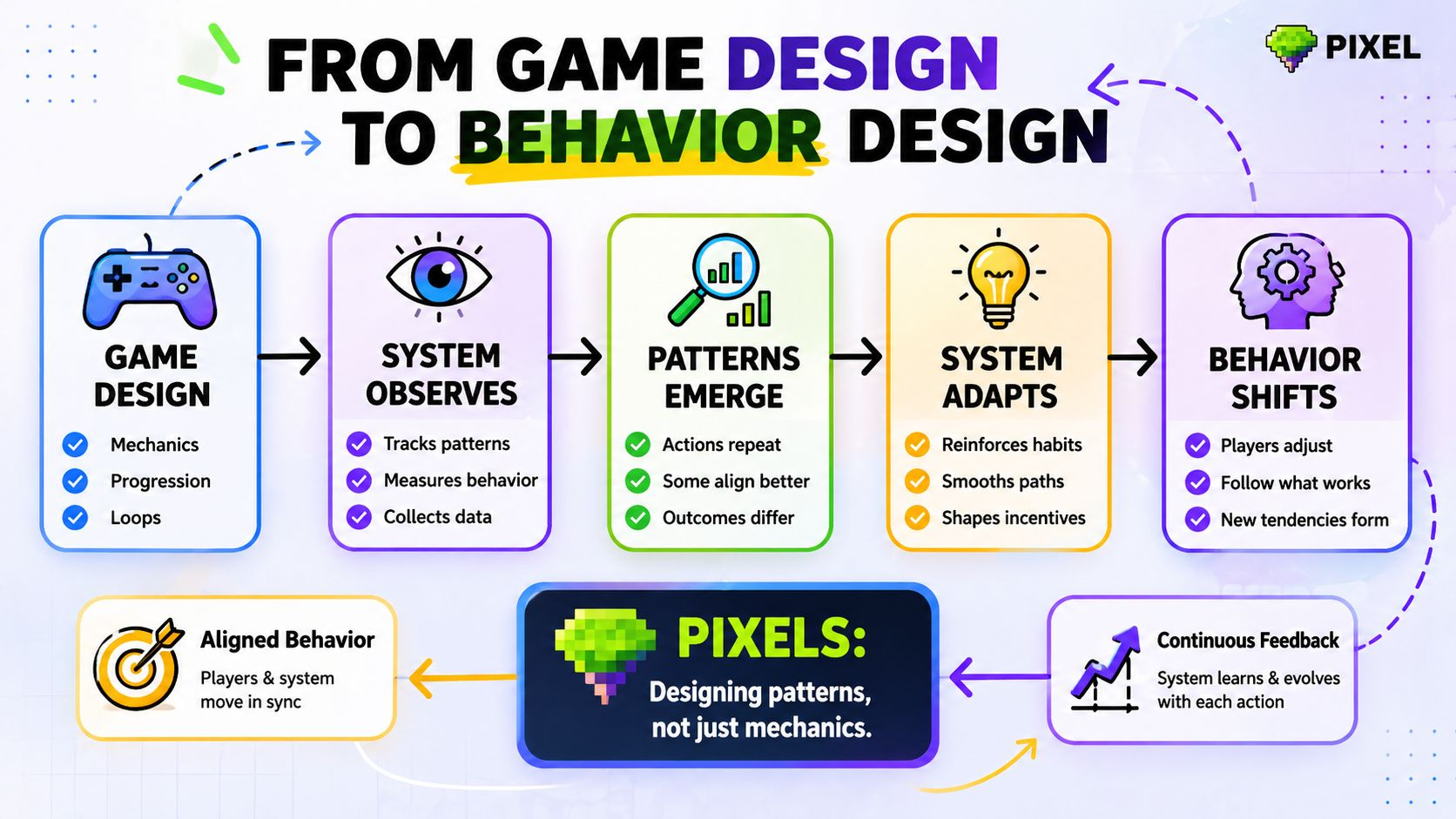
But it does feel like it’s moving from designing games To designing behavior & that’s a shift that’s easy to miss at first.
But hard to ignore once you start noticing it.
