
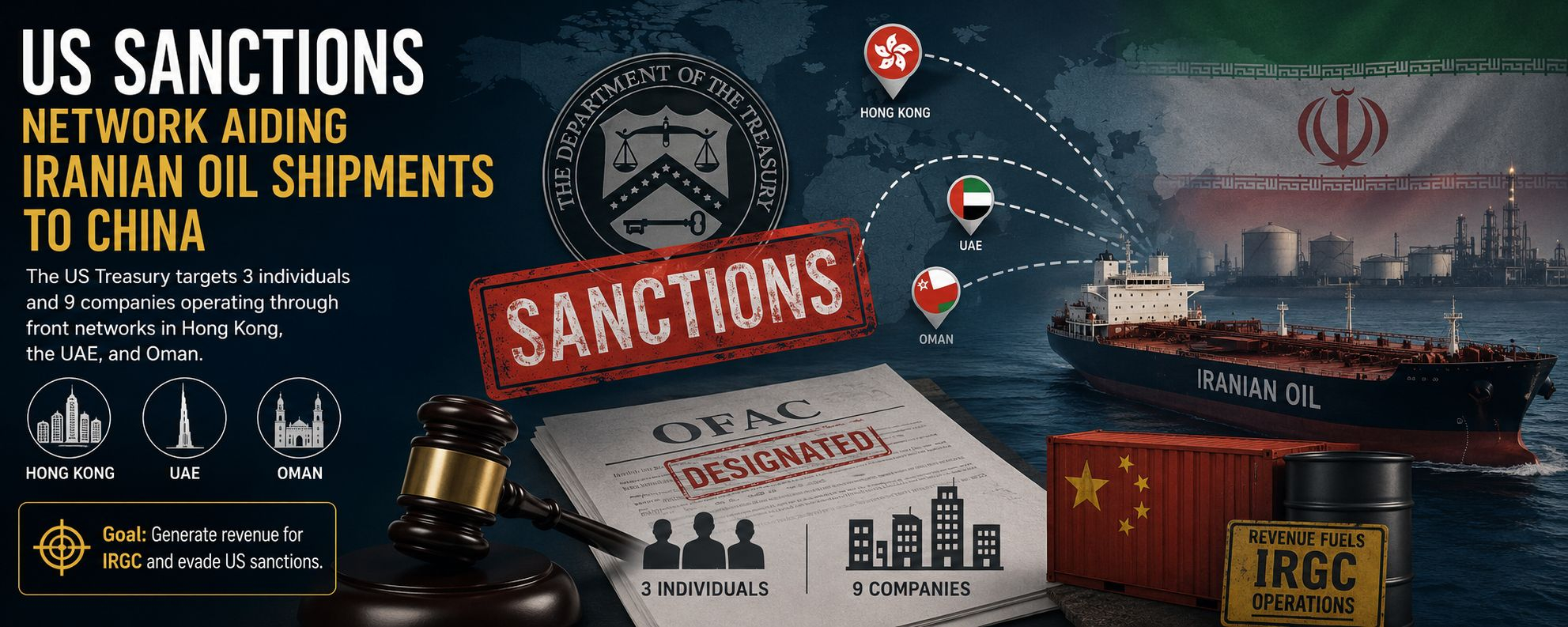

I started to know about this new US action after the Treasury Department announced fresh sanctions against people and companies connected to Iranian oil shipments. In my search, I found that the US government is trying to stop Iran from earning money through hidden oil trading networks. They believe this money is helping the Islamic Revolutionary Guard Corps, also known as the IRGC. The US has already called the IRGC a terrorist organization, so any company helping them can face serious punishment.
This time, the US sanctioned three individuals and nine companies. These companies were not openly working under Iran’s name. They were operating through front businesses in places like Hong Kong, the UAE, and Oman. I researched on it and found that these countries become important centers for international trade and shipping, which makes it easier for hidden networks to move oil without attracting attention.
The US Treasury Department said these companies were helping Iran send crude oil to China while hiding where the oil was really coming from. They used different methods to avoid detection. Sometimes oil shipments are transferred from one ship to another in the middle of the sea. Sometimes shipping documents are changed or cargo information is hidden. In many cases, shell companies become part of the process because they help move money quietly between countries.
China remains the biggest buyer of Iranian oil even though many sanctions already exist. In my search, I found that China buys most of Iran’s sanctioned crude oil because it is often sold at lower prices. This trade has continued for years through complicated networks that involve shipping companies, brokers, and financial middlemen spread across different countries.
The US government believes these hidden oil sales help Iran earn billions of dollars. According to Treasury officials, some of that money is later used to support military operations, weapons programs, and regional groups connected to the IRGC. That is why the US keeps increasing pressure with new sanctions every few weeks or months.
What I also noticed is that this action is not only about oil anymore. The US is now watching entire financial networks. Earlier sanctions targeted companies linked to drones, weapons, and equipment supplies connected to Iran. Some businesses in China, Dubai, and Belarus were already accused of moving millions of dollars through secret payment channels.
I start to know about another important angle while reading this news. Even though no crypto companies or wallets were directly sanctioned this time, the crypto market is still paying attention. The reason is simple. The US government has already shown in past cases that it will take action against crypto platforms or services if they help sanctioned groups move money.
Many people remember the Tornado Cash case in 2022. That case showed the world that even decentralized crypto services can face sanctions if authorities believe they are being used for illegal financial activity. Since then, crypto businesses have become much more careful about compliance and monitoring transactions.
For crypto investors and builders, this situation becomes a warning sign. Any exchange, wallet provider, or crypto protocol that accidentally processes transactions linked to sanctioned entities could face investigations or restrictions later. This is why compliance teams now spend huge amounts of time checking wallets, addresses, and financial activity connected to countries under sanctions.
I researched on it and found that places like the UAE and Hong Kong are becoming major focus areas for regulators because many international financial operations pass through these regions. Authorities believe some over the counter crypto brokers and trading firms in these locations may also be used to move funds quietly across borders.
The bigger picture here is about global financial control. The US is trying to close every possible path that sanctioned countries use to move money. Oil shipments, shipping companies, shell firms, and even digital assets are now all connected in one larger enforcement strategy. They want to make it harder for Iran to sell oil secretly and harder for networks to hide profits.
For normal people watching the news, this story may look like another political fight between countries. But in reality, it also affects global markets, oil prices, shipping industries, and even cryptocurrency businesses. Every new sanction creates pressure on international trade networks and increases fear among companies that operate in high risk regions.
In my search, I realized that these sanctions are not ending anytime soon. The US government keeps expanding its investigations, and they are tracking not only physical oil shipments but also the money flows behind them. They want to know who is buying, who is transporting, who is financing, and who is helping hide the transactions.
That is why this latest move is important. It shows that the US is becoming more aggressive in tracking global networks connected to Iranian oil exports, and it also sends a message to companies around the world that helping sanctioned operations can bring serious consequences later.