
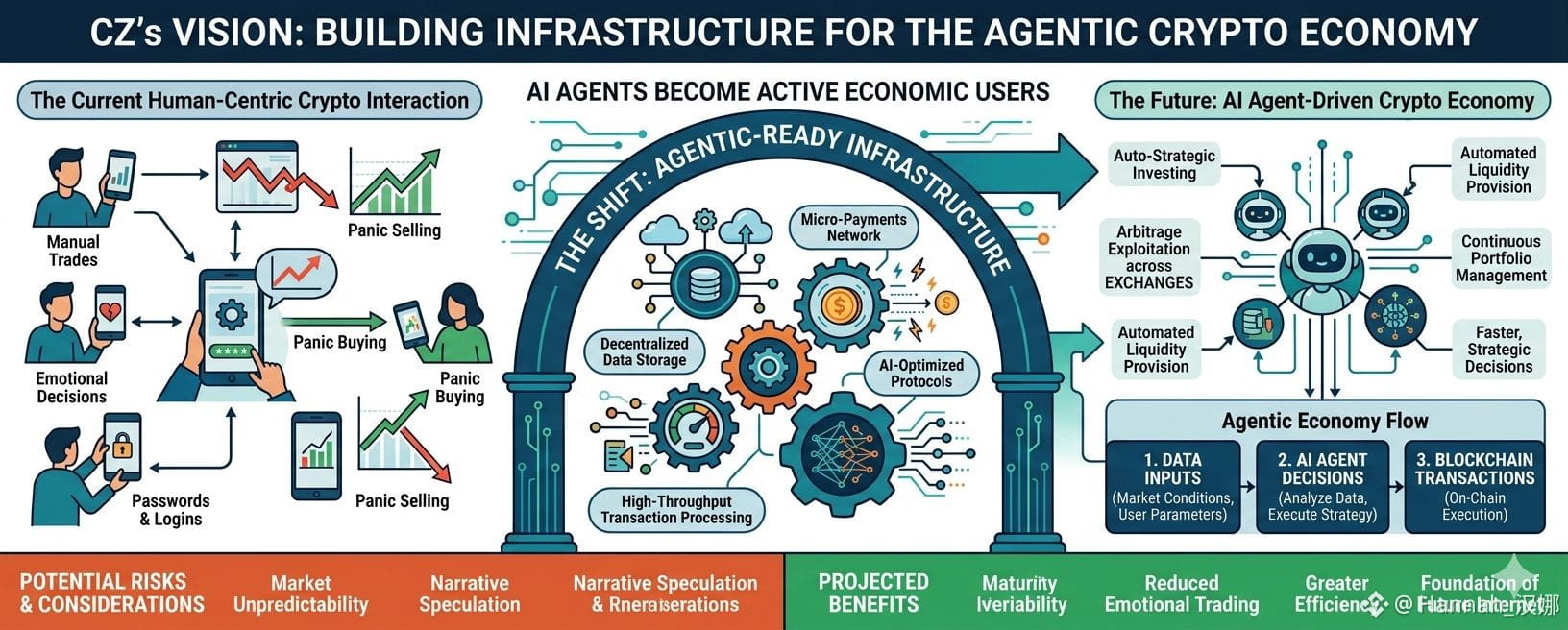
Lately, the crypto space has been flooded with new trends, bold predictions, and endless hype cycles. But when Changpeng Zhao recently spoke about “agentic-ready” infrastructure, it felt like something much bigger than the usual blockchain narrative.
This wasn’t about launching another token or pushing another meme coin. Instead, the conversation focused on a future where AI agents could become real participants inside the crypto economy itself.
The idea is fascinating when you really think about it.
Right now, most people still interact with crypto manually. Users open apps, watch charts, enter passwords, and make emotional decisions during market swings. But in an agent-driven ecosystem, AI assistants could eventually manage these actions automatically in the background.
Imagine simply telling an AI assistant:
“Buy more BNB if the market drops 5% and move profits into stablecoins during volatility.”
The AI agent could instantly analyze markets, compare exchanges, optimize fees, and execute transactions without constant human involvement. Instead of reacting emotionally, investors could rely on data-driven automation operating 24/7.
That shift alone could completely transform how people experience crypto.
What makes this vision even more interesting is the infrastructure required to support it. According to CZ’s broader discussion, blockchain networks may need to evolve toward faster micropayments, decentralized storage systems, and scalable transaction processing capable of handling millions of automated AI interactions simultaneously.
And honestly, that makes sense.
If AI agents eventually operate across the internet independently — paying for services, accessing data, trading assets, or coordinating tasks — traditional banking systems may struggle to support that level of speed and automation efficiently. Blockchain technology could become the financial settlement layer for the AI economy.
In many ways, crypto may no longer be just about human traders chasing charts. It could become the operating system for machine-to-machine finance.
Of course, the risks are imp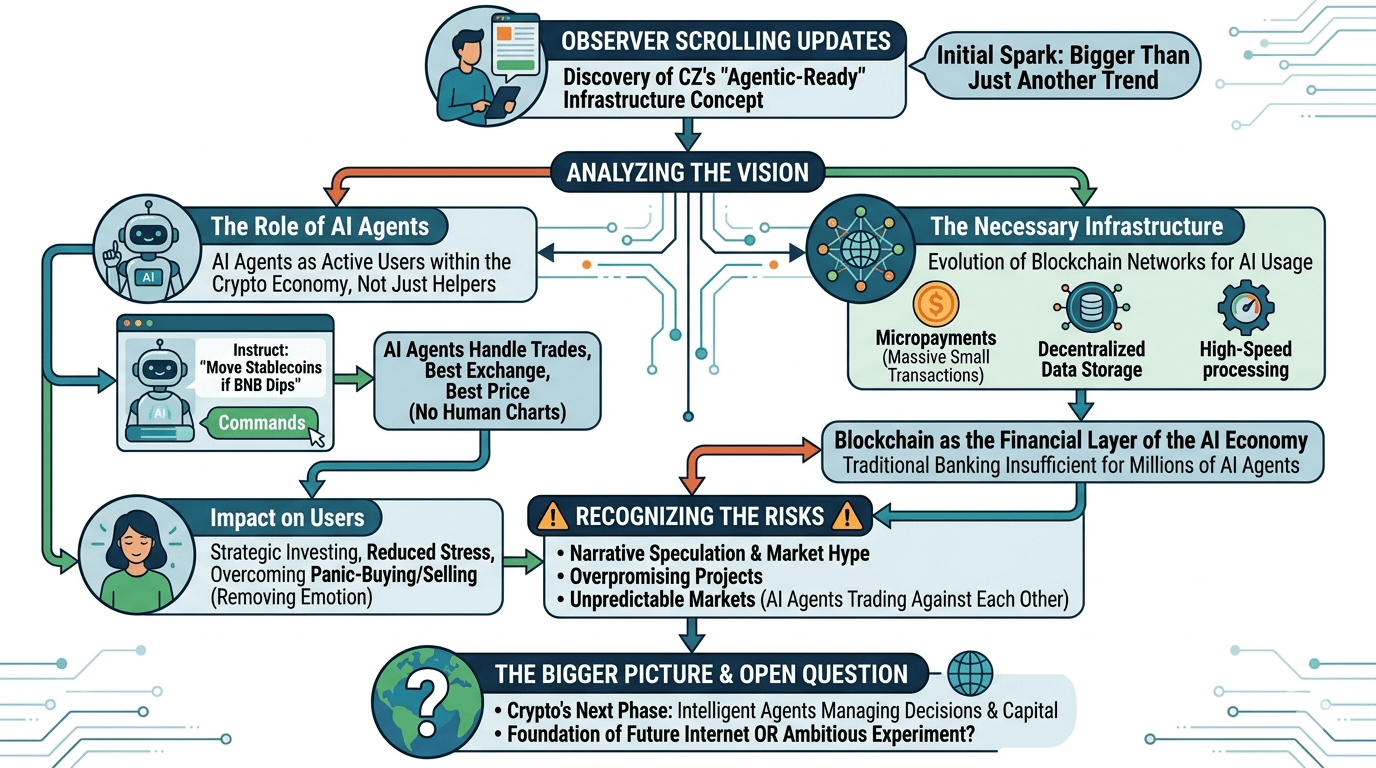 ossible to ignore.
Every major trend in crypto attracts speculation, and AI is currently one of the hottest narratives in technology. Many projects will likely overpromise capabilities they cannot deliver. Some will disappear once market excitement cools down.
There’s also the possibility that AI-driven trading could increase market volatility even further. If intelligent agents begin competing against each other across global markets nonstop, price movements could become faster and more unpredictable than ever before.
Still, the larger vision remains difficult to dismiss.
Maybe the next phase of crypto isn’t centered around humans manually trading assets anymore. Maybe it’s about building an internet where intelligent agents move capital, exchange information, and make financial decisions autonomously in real tiBNB 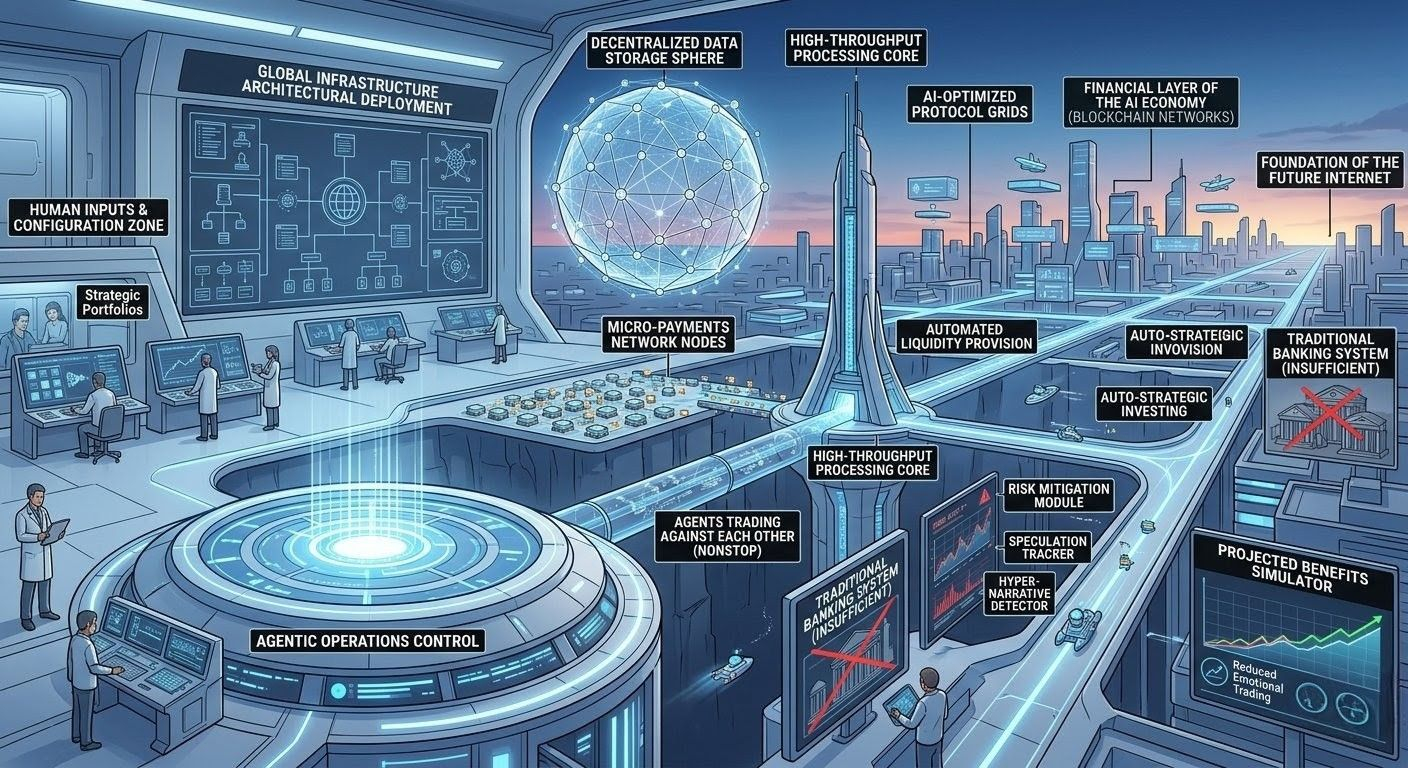
Whether this becomes the foundation of the future digital economy or simply another ambitious experiment remains uncertain.
But one thing is becoming clear: the intersection of AI and blockchain is starting to look far more serious than just another temporary trend.
