
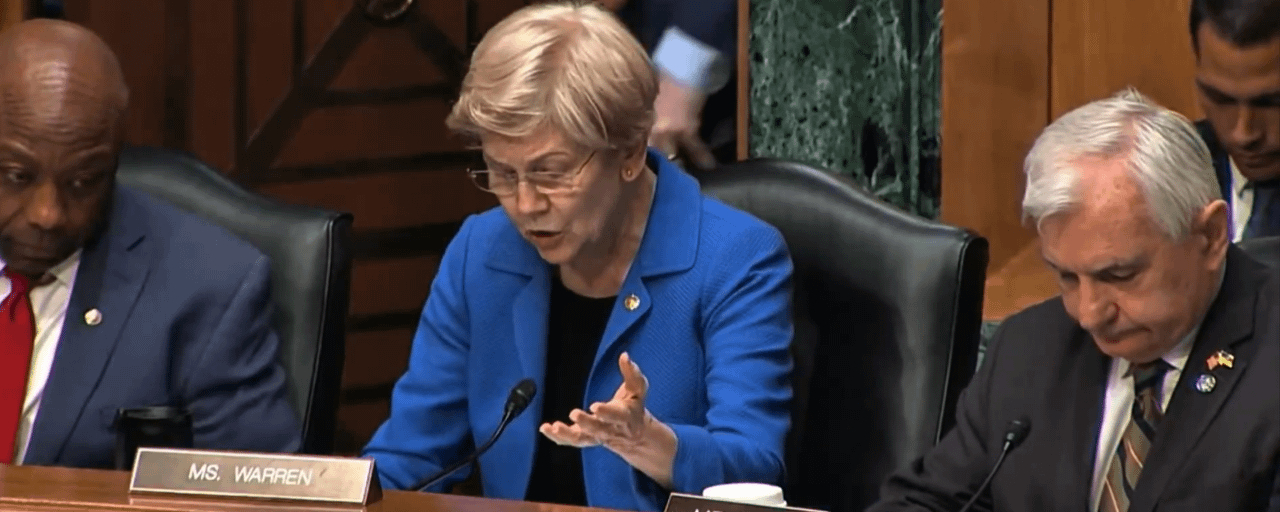
A major political clash over cryptocurrency regulation is unfolding in Washington as Senator Elizabeth Warren launches a strong attack against the proposed CLARITY Act. The senator warned that the bill could “blow up the economy” by accelerating the integration of crypto into the broader financial system.
Her comments have immediately reignited the debate between supporters of digital asset innovation and critics who believe the industry still poses serious financial risks.
The CLARITY Act was introduced to establish a clearer legal framework for cryptocurrencies in the United States. The legislation aims to define which digital assets should be treated as commodities and which should be regulated as securities. It also seeks to provide clearer oversight for stablecoins and crypto-related businesses operating within the country.
Supporters of the bill argue that regulatory clarity is exactly what the crypto industry needs. According to many investors and blockchain companies, uncertainty from regulators has slowed innovation, discouraged institutional participation, and pushed crypto businesses outside the United States. They believe the CLARITY Act could create the legal certainty required for long-term growth and broader adoption.
Senator Warren, however, sees the issue very differently.
For years, Warren has been one of the most outspoken critics of the cryptocurrency industry. She has repeatedly warned about fraud, consumer risks, money laundering concerns, and the possibility that crypto could destabilize traditional financial markets. Her latest statement suggests she believes the CLARITY Act would legitimize and accelerate an industry she considers inherently dangerous.
At the center of the debate is a larger philosophical conflict about the future of finance.
Crypto supporters believe blockchain technology represents the next evolution of the global financial system — one that is more decentralized, transparent, and efficient. They argue that increased adoption is not a threat, but rather a necessary technological shift similar to the rise of the internet or digital banking.
Critics, on the other hand, fear that rapid expansion of crypto markets could expose the economy to new forms of instability. They argue that speculative assets, insufficient oversight, and interconnected financial risks could create major problems if the industry grows too quickly without stronger protections.
Despite the criticism, momentum for crypto legislation in Washington appears stronger than it has been in previous years. Lawmakers from both political parties have increasingly acknowledged the need for updated digital asset regulations as cryptocurrencies continue gaining global attention.
The market reaction to Warren’s comments has been mixed. Some traders expect short-term volatility as political uncertainty creates fear across the market. Others believe the criticism actually highlights how influential crypto has become within mainstream financial and political discussions.
For many investors, the real signal is not the rhetoric itself, but whether lawmakers ultimately move forward with the legislation.
The battle surrounding the CLARITY Act is becoming more than just a policy disagreement. It now represents a broader struggle between financial innovation and government control — a debate that could shape the future of digital assets in the United States for years to come.
Whether Warren’s warnings prove accurate or not, one thing is becoming increasingly clear: crypto regulation is no longer a niche discussion. It has become a central economic and political issue with potentially global consequences.is she just trying to stop the inevitable? What’s your take? Drop a comment below! 👇