
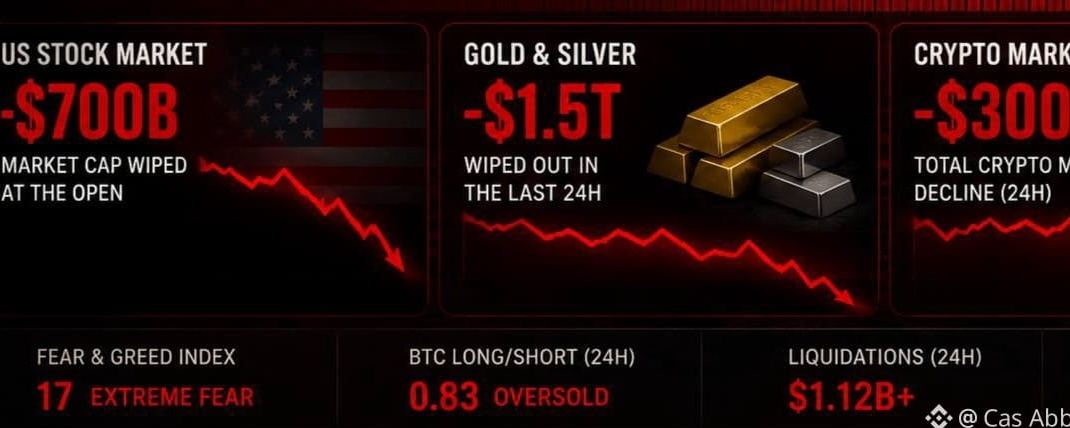
When Bitcoin dropped below $80,000, most people immediately blamed crypto weakness.
But the bigger signal wasn’t Bitcoin.
It was the fact that gold and silver collapsed alongside it.
That changes the entire story.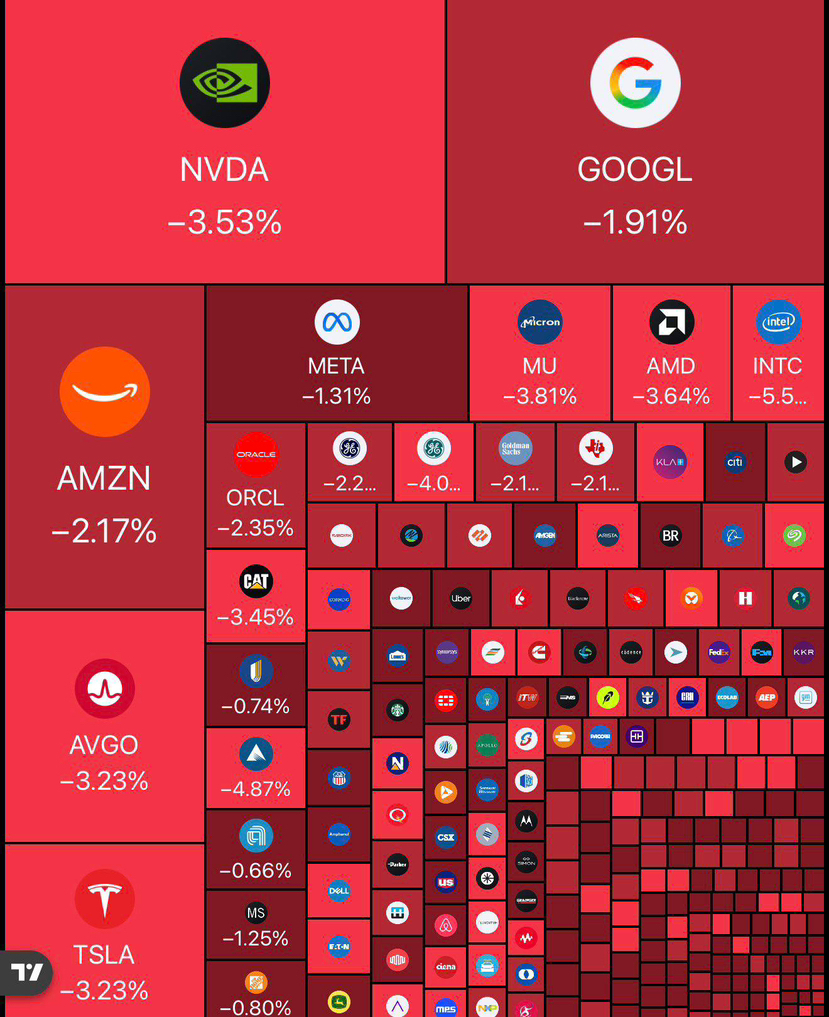
Within hours, global markets were hit by a wave of aggressive selling. U.S. equities erased hundreds of billions in market value, crypto markets saw cascading liquidations, and even traditional safe-haven assets like gold and silver were suddenly dumping hard.
And when gold falls together with Bitcoin, this stops looking like a “crypto problem.”
It starts looking like a full-scale liquidity event.
Correlations Change During Panic
A lot of retail traders still believe Bitcoin trades independently from traditional markets.
In reality, during periods of fear, correlations across markets often move toward one.
Funds don’t sell what they want to sell — they sell what they can sell.
Bitcoin trades 24/7 and has deep liquidity, which makes it one of the fastest assets institutions can use to raise cash during risk-off conditions. That’s why major crypto drawdowns during macro stress often happen faster and more violently than people expect.
The break below $80K matters less from a technical perspective and more from a psychological one.
It became a fear trigger.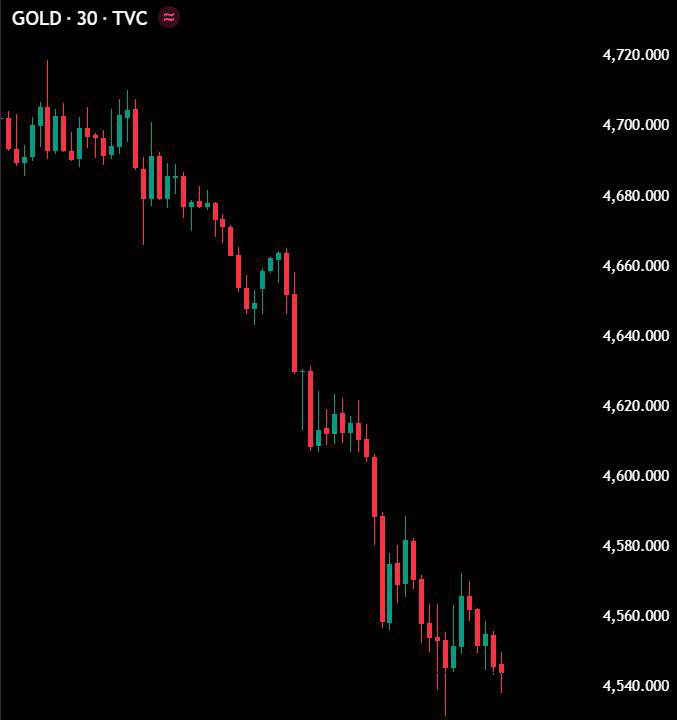
The Market Was Already Showing Cracks
Signs of weakness had been building for days:
Overcrowded derivatives positioning
Rising liquidations across leveraged trades
Weakening market sentiment
Sticky inflation concerns
Higher bond yields increasing pressure on risk assets
The environment was already fragile before the latest selloff accelerated.
Then came the surprise: precious metals also rolled over.
Gold Was Supposed to Be the Safe Trade
For months, gold had been one of the strongest macro narratives in the market.
Investors were hedging against:
Currency debasement
Sovereign debt concerns
Central bank credibility issues
Geopolitical instability
Gold bulls believed uncertainty would continue driving prices higher.
But markets become dangerous when everyone crowds into the same trade.
That’s the part many newer investors miss.
Assets don’t always crash because they’re fundamentally weak. Sometimes they crash because positioning becomes too one-sided. Once large players begin unwinding exposure, the move can become violent very quickly.
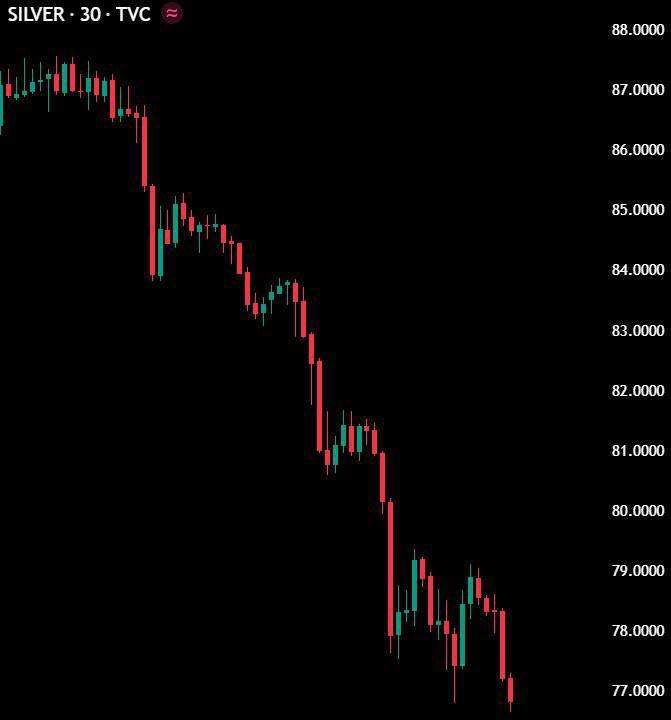
Silver was hit even harder, with some sessions seeing dramatic percentage declines in an extremely short timeframe.
This Looks Institutional
The behavior across markets points toward broad deleveraging rather than isolated retail panic.
You can see the signs everywhere:
Hedge funds reducing leverage
Institutions cutting exposure
Margin calls triggering forced liquidations
Cross-asset selling spreading simultaneously
Markets don’t usually behave like this unless liquidity itself becomes the priority.
And that’s why this environment feels different.
Major Narratives Are Breaking Down
Over the past year, several dominant market narratives looked untouchable:
“Bitcoin is digital gold”
“Gold only rises during uncertainty”
“AI stocks can’t go down”
Now all of them are being challenged at the same time.
That’s typically when markets become the most irrational — both to the downside and eventually to the upside.
The first phase is panic.
Then forced liquidation.
Then exhaustion.
The difficult part is recognizing the difference between a structural collapse and a temporary liquidity reset while it’s happening in real time.
Liquidity Matters More Than Price Right Now
At this stage, liquidity conditions may matter more than individual price charts.
Key things traders are watching now:
ETF inflows and outflows
Treasury yield movements
Equity market stress
Credit conditions
Overall risk appetite
If macro pressure continues building, volatility across crypto and traditional markets could remain elevated. Some analysts are already discussing deeper downside scenarios if risk sentiment deteriorates further.
But historically, violent flushes are also where long-term accumulation quietly begins.
That’s the irony of market panic: Retail investors often see disaster. Experienced capital often sees forced discounts.
This Is Bigger Than Crypto
Nobody knows where the exact bottom is.
But this no longer feels like a normal crypto correction.
When stocks, gold, silver, and Bitcoin all bleed simultaneously, markets are signaling something deeper happening beneath the surface.
This is becoming a macro liquidity story now.
And those are the environments that test everyone.#BTC走势分析 #BTC