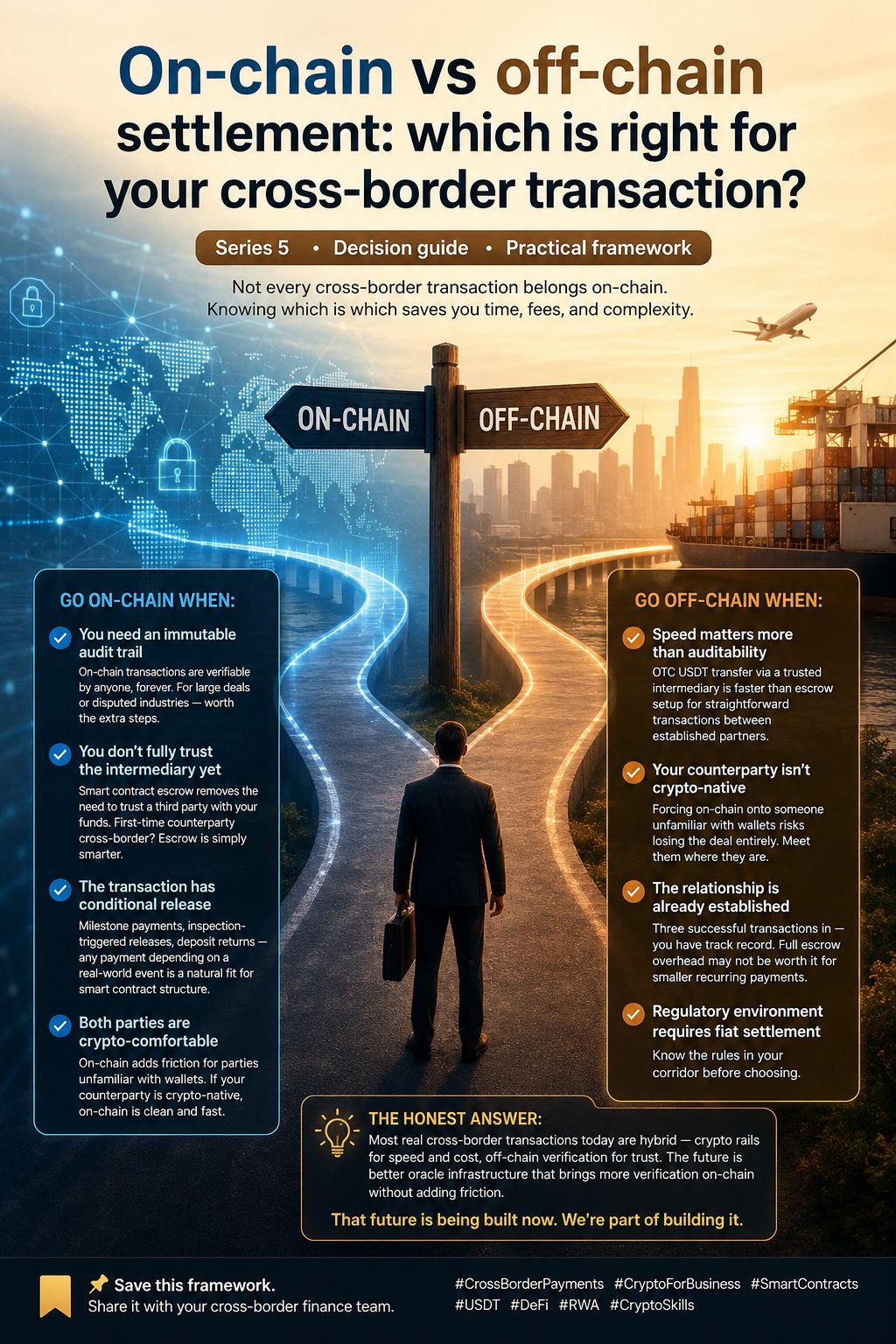
Not every cross-border transaction belongs on-chain.
Knowing which is which saves you time, fees, and complexity.
Go ON-CHAIN when:
✓ You need an immutable audit trail
On-chain transactions are verifiable by anyone, forever. For large deals or disputed industries — worth the extra steps.
✓ You don't fully trust the intermediary yet
Smart contract escrow removes the need to trust a third party with your funds. First-time counterparty cross-border? Escrow is simply smarter.
✓ The transaction has conditional release
Milestone payments, inspection-triggered releases, deposit returns — any payment depending on a real-world event is a natural fit for smart contract structure.
✓ Both parties are crypto-comfortable
On-chain adds friction for parties unfamiliar with wallets. If your counterparty is crypto-native, on-chain is clean and fast.
Go OFF-CHAIN when:
✓ Speed matters more than auditability
OTC USDT transfer via a trusted intermediary is faster than escrow setup for straightforward transactions between established partners.
✓ Your counterparty isn't crypto-native
Forcing on-chain onto someone unfamiliar with wallets risks losing the deal entirely. Meet them where they are.
✓ The relationship is already established
Three successful transactions in — you have track record. Full escrow overhead may not be worth it for smaller recurring payments.
✓ Regulatory environment requires fiat settlement
Know the rules in your corridor before choosing.
The honest answer:
Most real cross-border transactions today are hybrid — crypto rails for speed and cost, off-chain verification for trust. The future is better oracle infrastructure that brings more verification on-chain without adding friction.
That future is being built now. We're part of building it.
📌 Save this framework. Share it with your cross-border finance team.
#CrossBorderPayments #CryptoForBusiness #SmartContracts #DeFi #RWA