
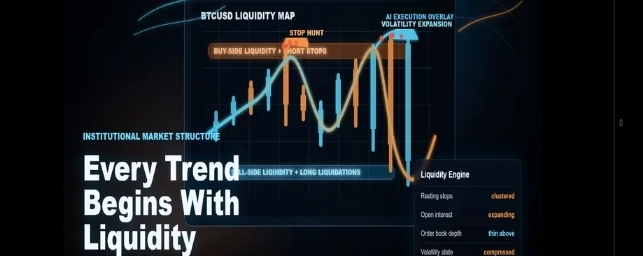
$BTC A simple educational explanation of how Bitcoin moves between liquidity zones, why stop hunts happen, and how traders can understand modern BTC market structure around the $76k-$77k area in 2026.
Bitcoin is currently trading around the $76k-$77k area. Most traders think price moves because of indicators, patterns, or news. But in reality, Bitcoin usually moves toward liquidity. Liquidity means areas where many orders are waiting in the market. These orders include stop-losses, breakout entries, liquidations, and panic exits. Large players and algorithms need liquidity because they cannot enter or exit huge positions without enough orders on the opposite side.
This is why price often moves toward obvious highs and lows. Above recent highs, there are usually short stop-losses and breakout buyers waiting to enter. Below recent lows, there are long stop-losses and traders ready to panic sell. The market naturally moves toward these areas because that is where liquidity exists.
Right now, the nearby upside zone for BTC is around $78k-$78.5k. That area may contain short liquidations and breakout traders. On the downside, the $76k-$76.3k area may contain long stops and weak buyers who could get forced out if price drops lower.
Many beginner traders think a breakout above a high automatically means the market is bullish. Sometimes that is true, but many times the breakout is only a liquidity sweep. A liquidity sweep happens when price moves into an area full of stops and forced orders, triggers them, and then quickly reverses. The market is not always trying to start a new trend immediately. Sometimes it is simply collecting liquidity first.
The same thing can happen below lows. When BTC suddenly drops under support, many traders panic and sell. Long positions get liquidated and sentiment turns bearish. But if price quickly reclaims the level and moves back higher, the downside move may only have been a stop hunt designed to trap traders.
This is one of the biggest differences between retail traders and professional traders. Retail traders usually focus only on direction and ask, Is BTC bullish or bearish? Professional traders ask a different question:
•Where are traders trapped?
•Where are stop-losses sitting?
•Where is the next liquidity pool?
Modern crypto markets are heavily influenced by algorithms, ETFs, perpetual futures, and liquidation data. Algorithms can easily detect where traders are likely placing stops. Because of this, many obvious breakouts fail quickly. The first move often creates emotion, while the second move usually reveals the real intention of the market.
Most BTC trends follow a simple liquidity cycle. First comes compression, where price moves sideways and liquidity builds above and below the range. Next comes the sweep, where price moves above a high or below a low to trigger stops. After that comes displacement, where price strongly moves away from the swept level and shows which side has taken control.
For example, imagine BTC pushes above $78.5k. Retail traders may buy the breakout while shorts get liquidated. But if price quickly falls back below the breakout zone, the move may only have been a liquidity grab. On the other hand, if BTC drops below $76k, triggers panic selling, and then quickly reclaims the level, the downside move may only have been a sell-side liquidity sweep.
Experienced traders do not blindly buy support or sell resistance. They focus on how price reacts around liquidity zones and whether the market accepts or rejects important levels. Once traders understand liquidity, charts become much easier to understand
"Disclaimer: This article is for educational purposes only and should not be considered financial advice. Always do your own analysis and use proper risk management.
Thank you for reading. I hope this article helped you better understand market behavior, trading psychology, and risk management during volatile conditions.
#CryptocurrencyPotential #CryptoPatience
#CryptoDawar [Followers...?]