


@OpenLedger | $OPEN | #OpenLedger
Most AI crypto projects sound exciting for one week and then disappear into the same old noise.
Big promises. Fancy words. “AI-powered” branding. A few screenshots. Then nothing real behind the story.
That is why I usually stay careful when a new AI token starts getting attention.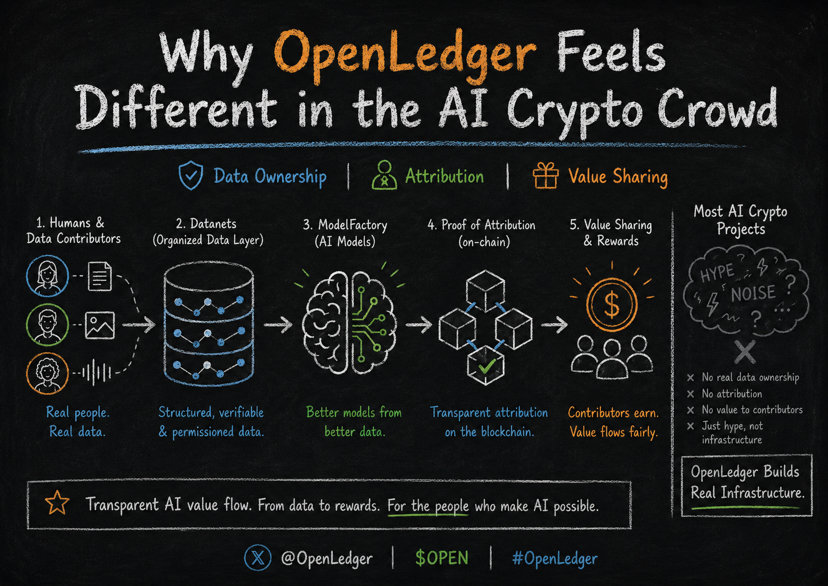
But OpenLedger feels a little different to me.
Not because it is just another project mixing AI and blockchain. The interesting part is that OpenLedger is focusing on a problem that actually exists: data ownership, attribution, and value sharing.
AI models do not grow from nothing.
They are trained on human knowledge, expert input, community data, public content, labeled information, and many other forms of contribution. But in most AI systems, the people who provide that value slowly disappear from the final economy.
The model becomes valuable.
The platform becomes valuable.
The companies become valuable.
But the original contributors often receive nothing.
That is the gap OpenLedger is trying to address.
Its idea is simple but powerful: if data helps create AI value, then that contribution should be traceable and rewarded. Instead of treating data like free fuel, OpenLedger treats it more like an economic asset.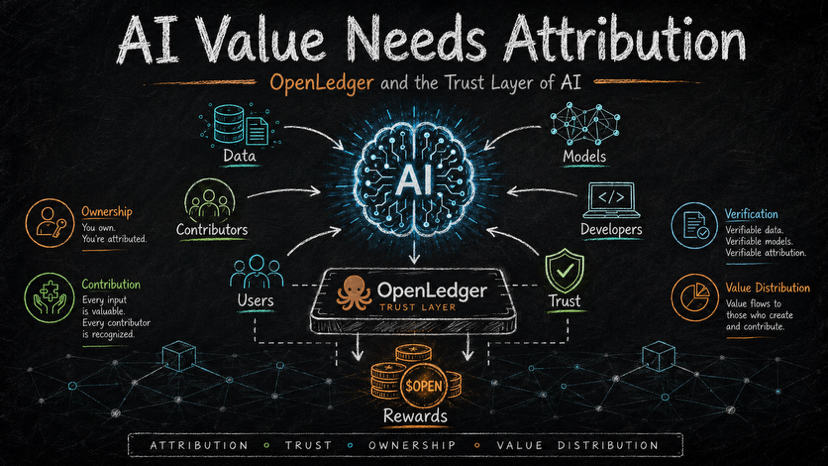
This is where concepts like Datanets, ModelFactory, and Proof of Attribution become important.
Datanets can organize specific types of data around certain use cases. ModelFactory can help builders create more focused AI models from those data layers. Proof of Attribution is the part that connects contribution with usage, so the value does not only move upward to the final product.
That is the real difference.
OpenLedger is not trying to win by saying “we have AI.” It is trying to build a system where data, models, contributors, and users can all be connected through a more transparent economy.
For crypto, that matters.
Blockchain is not useful for every AI problem. But for provenance, attribution, payments, and coordination, it actually makes sense. These are areas where transparency and programmable incentives can solve real issues.
Of course, this does not mean $OPEN is risk-free.
AI crypto is still a crowded sector. Real adoption takes time. Testnet activity does not always guarantee long-term demand. Enterprise users will not join just because a token exists. The project still has to prove that builders, data contributors, and paying users can all stay active in the same ecosystem.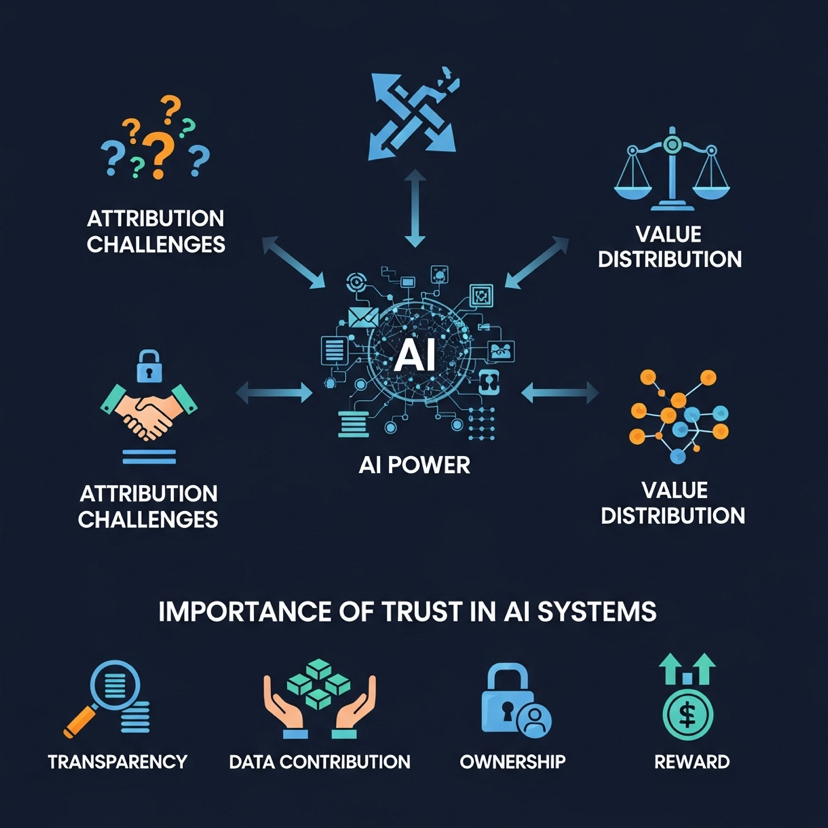
But the thesis is strong enough to watch.
Because the future of AI may not only be about bigger models or cheaper compute. It may also be about who owns the data, who gets credit, and who gets paid when AI creates value.
That is why OpenLedger stands out to me.
In a market full of AI hype, $OPEN is not only selling a narrative. It is pointing toward a real question the AI industry will eventually have to answer:
If data creates value, why should the people behind that data be invisible?