
Most people use AI every day now without even thinking about it. We ask chatbots questions, generate images, automate small tasks, and search for information faster than before. It all feels smooth on the surface. But behind every AI system, there is something many people forget about — data.
AI does not magically become smart on its own. It learns from huge amounts of information created by real people. Articles, conversations, images, research, public datasets, online activity, and user interactions all play a role in training models. The strange part is that the people contributing value to this system are usually invisible once the final AI product is released.
That is one reason OpenLedger caught my attention.
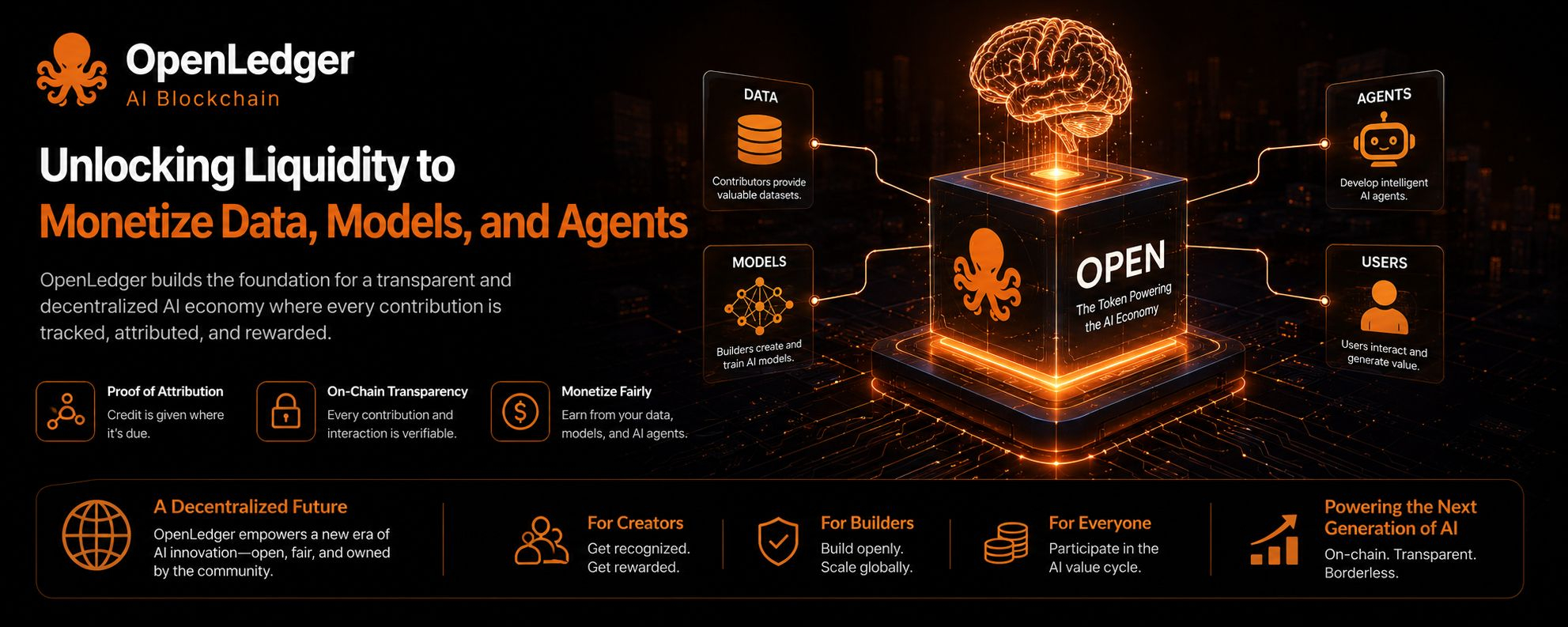
OpenLedger is building what it calls an AI blockchain, but the interesting part is not simply the combination of AI and blockchain. Many projects say those words together now. What makes OpenLedger stand out is its focus on attribution and ownership inside the AI economy.
The project is trying to create a system where contributors are not ignored after helping train or improve AI models. Instead of data disappearing into closed systems controlled by large platforms, OpenLedger wants contributions to be traceable and connected to rewards.
When I first looked into the idea, it honestly felt like a practical direction for AI rather than just another crypto narrative.
Right now, the AI industry mostly works in a one-way structure. People contribute value without realizing it, companies build powerful systems from that value, and the rewards stay concentrated at the top. Smaller developers, independent researchers, and normal users rarely benefit from the long-term success of the systems they indirectly helped create.
OpenLedger seems to be questioning that structure.
The blockchain side of the project matters because it creates transparency. Contributions can be recorded on-chain, making it easier to verify where certain datasets, models, or AI outputs came from. That may sound technical at first, but the real-world idea is actually simple. If someone creates useful data or helps improve an AI model, there should be a visible connection between their contribution and the value generated later.
In traditional AI platforms, most of this process is hidden. Users upload information, interact with systems, and move on without knowing how their activity is being used behind the scenes. OpenLedger is trying to make that relationship more open and trackable.
I think this becomes even more important as AI agents continue growing.
In the future, AI may not only answer questions. It could handle tasks, manage workflows, automate business operations, and interact with other AI systems. If that future happens, then data and models become even more valuable than they are today. The question is who controls that value.
That is where OpenLedger’s direction becomes interesting.
Instead of building another closed AI ecosystem, the project appears focused on creating infrastructure where developers, data contributors, and model creators can all participate in a shared economy. A smaller builder with a useful AI model may finally have a way to monetize their work without needing massive corporate backing.
That could change opportunities for independent developers in a very real way.
One thing I noticed while reading about OpenLedger is that the project does not seem obsessed with hype language. The idea feels connected to an actual problem inside AI rather than forcing blockchain into the conversation just because it is trending. The core issue is easy to understand: AI systems depend heavily on contributions from many different sources, but the economic structure around AI rarely reflects that reality.
OpenLedger is trying to build a more balanced system around those contributions.
Of course, none of this is easy.
Both AI and blockchain are still evolving quickly. Many projects in both industries promise big changes but struggle to achieve real adoption. Building technology is one challenge. Creating systems that people genuinely want to use every day is much harder.
Still, I think the conversation OpenLedger is pushing matters.
As AI becomes more powerful, questions about ownership, contribution tracking, transparency, and monetization will become impossible to ignore. People are starting to realize that data itself has value. The next step is figuring out how contributors can participate fairly in the systems they help create.
That is probably the bigger idea behind OpenLedger.
It is not only about AI becoming smarter. It is about building an AI economy where contributors are visible instead of forgotten.