
The Decentralized Leviathan
In the fast-paced world of Web3, branding is often an afterthought. Projects rush to market with generic logos, hoping their whitepapers will do the heavy lifting. But every once in a while, a project chooses an aesthetic identity that perfectly mirrors its underlying architecture. There must be a reason why @OpenLedger chose an octopus, which is widely recognized as the most intelligent invertebrate on the planet, as their icon. When you dig into the mechanics of what OpenLedger is actually building, the brilliance of this choice becomes impossible to ignore.
The Anatomy of Decentralized Intelligence
To understand OpenLedger, you first have to understand the octopus. Unlike humans, whose intelligence is strictly centralized in a single brain, an octopus features a distributed nervous system. While it possesses a central brain, two-thirds of its neurons are located in its eight arms. This means each arm can independently touch, taste, react, and make decisions without needing to constantly communicate with the central brain. It is the biological embodiment of decentralized processing.
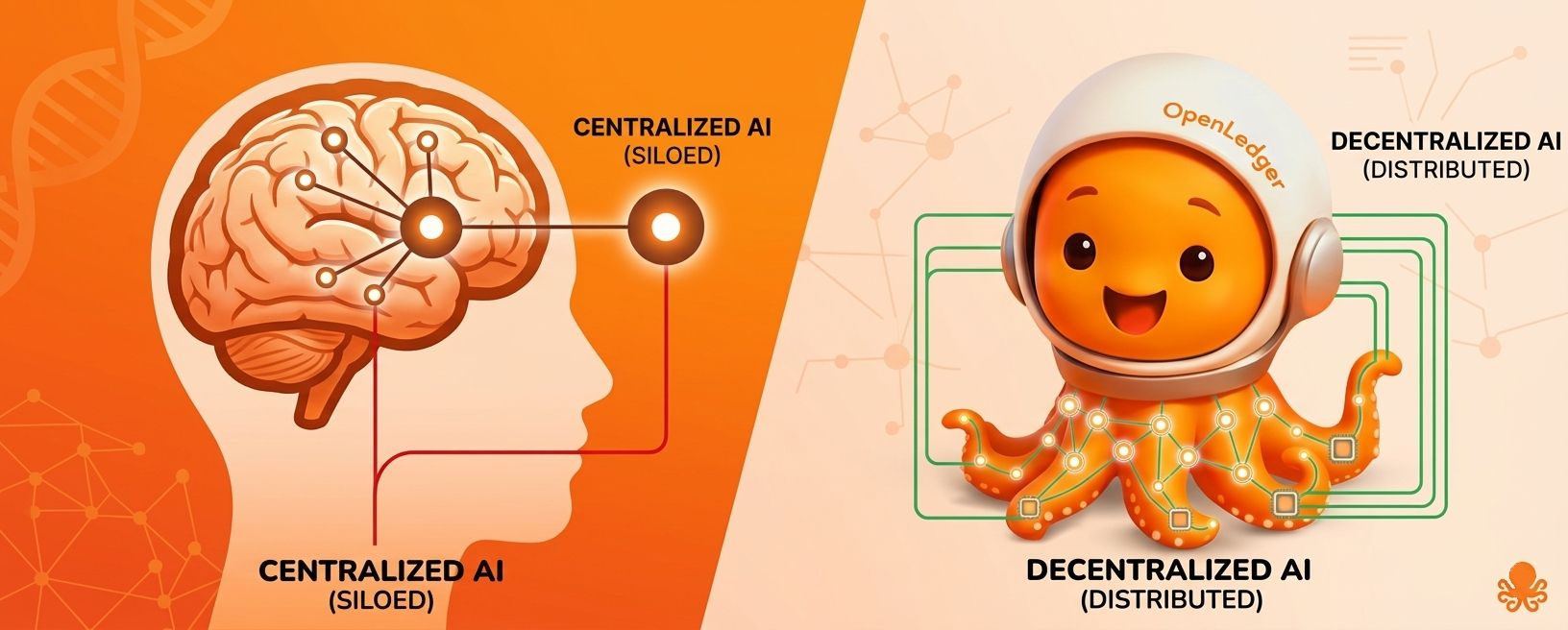
Traditional Artificial Intelligence today is built like a human brain: highly centralized, siloed in massive corporate data centers, and controlled by a single entity. If that central hub goes down or becomes corrupted, the whole system fails. OpenLedger is pioneering an AI Blockchain that functions like the octopus. It provides a secure, decentralized base layer, but the real magic happens at the edges of the network. Independent data providers, machine learning models, and autonomous AI agents act as the "tentacles" of this ecosystem. They operate independently, gathering information and executing tasks, while feeding back into a collective, decentralized intelligence.
Unlocking AI Liquidity
Beyond intelligence, the octopus is a master of fluidity. Because it lacks a skeletal structure, it can squeeze through incredibly tight spaces, adapting its shape to fit whatever environment it finds itself in. In the financial and technological sectors, we call this concept "liquidity" as the ability for value to flow without friction.
Currently, the AI industry is incredibly illiquid. If a brilliant data scientist creates a highly effective predictive model, monetizing that model is remarkably difficult. They have to navigate corporate platforms, deal with fiat payment gateways, and surrender a massive percentage of their earnings to middlemen. The asset (the model) is locked up.
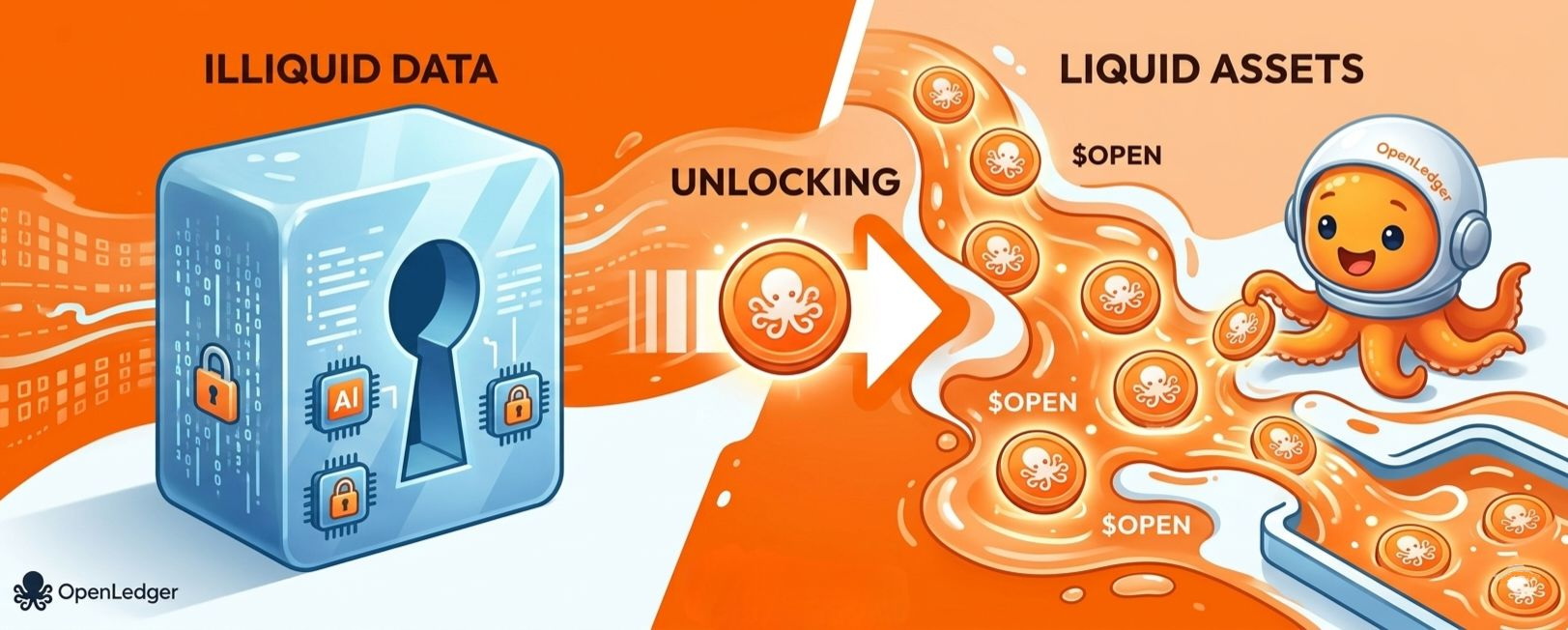
OpenLedger solves this by unlocking liquidity to monetize data, models, and agents. By tokenizing these AI assets on the blockchain, OpenLedger turns them into liquid commodities. An AI agent looking for a specific dataset can instantly purchase it from a creator using the $OPEN token. There are no middlemen, no bottlenecks, and no friction. Value flows seamlessly through the network, much like an octopus gliding effortlessly through a coral reef.
The Role of Autonomous Agents
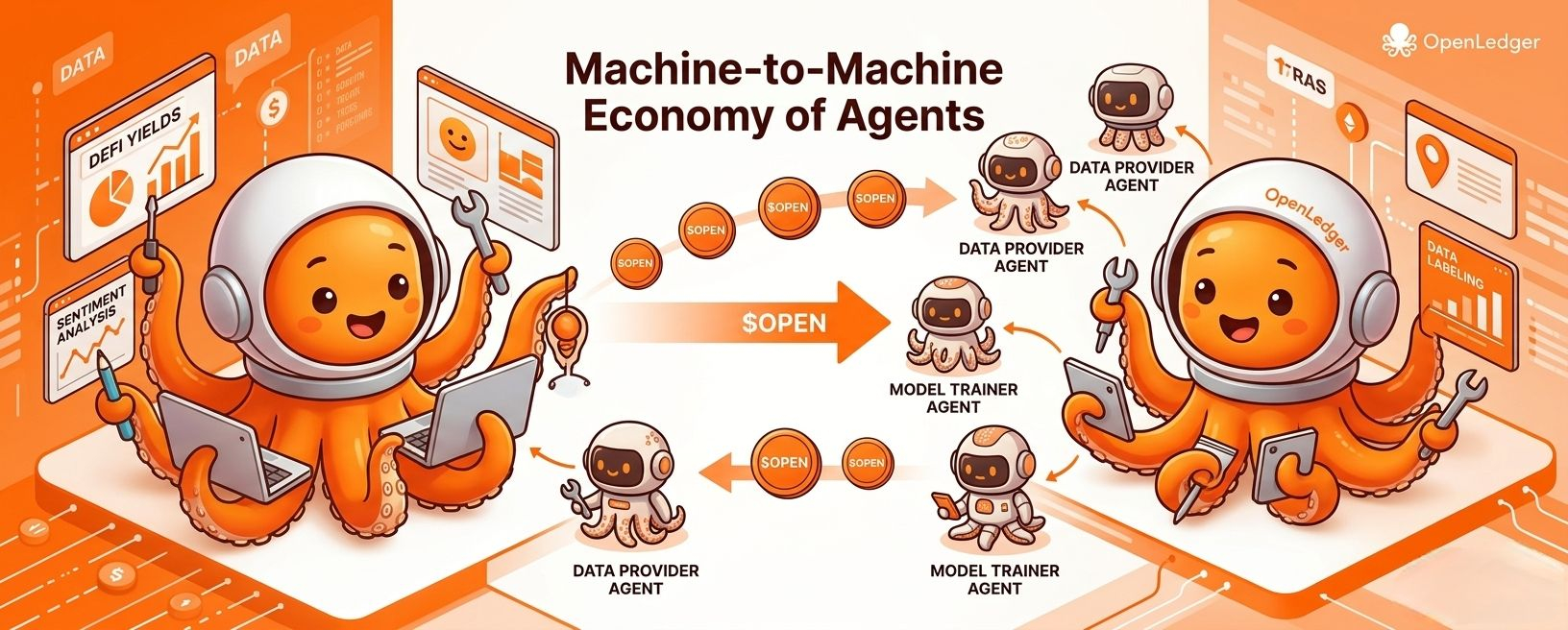
The future of Web3 isn't just human-to-human transactions; it is machine-to-machine economies. OpenLedger is heavily focused on monetizing "agents" as an autonomous bits of code powered by AI that can execute tasks on behalf of users.
Imagine an ecosystem where thousands of these agents are operating simultaneously. One agent might specialize in analyzing decentralized finance (DeFi) yields, while another specializes in aggregating social sentiment. On OpenLedger, these agents can collaborate. The DeFi agent can pay the sentiment agent in $OPEN tokens to access its data, combining forces to create a better investment strategy. This interconnected, multi-tasking environment is perfectly represented by the eight arms of the octopus, all working independently yet cooperatively toward a singular goal.
Participating in the Revolution
As participants in the Binance Square Global Leaderboard Campaign, we have a front-row seat to this technological shift. The 50,000 USDC reward pool dedicated to OpenLedger is fantastic, but the real reward is recognizing the fundamental infrastructure being laid down for the AI economy of the 2030s.
OpenLedger isn’t just a cryptocurrency; it is an foundational layer designed to democratize artificial intelligence. It takes the power out of the hands of the centralized tech giants and distributes it to the creators, the data providers, and the community.
So the next time you see that orange octopus on your feed, recognize it for what it truly is: a symbol of distributed intelligence, ultimate adaptability, and the frictionless future of AI liquidity.