If you’ve scrolled through Crypto Twitter or watched any major blockchain conference this month, you’ve seen the acronym everywhere: RWA.
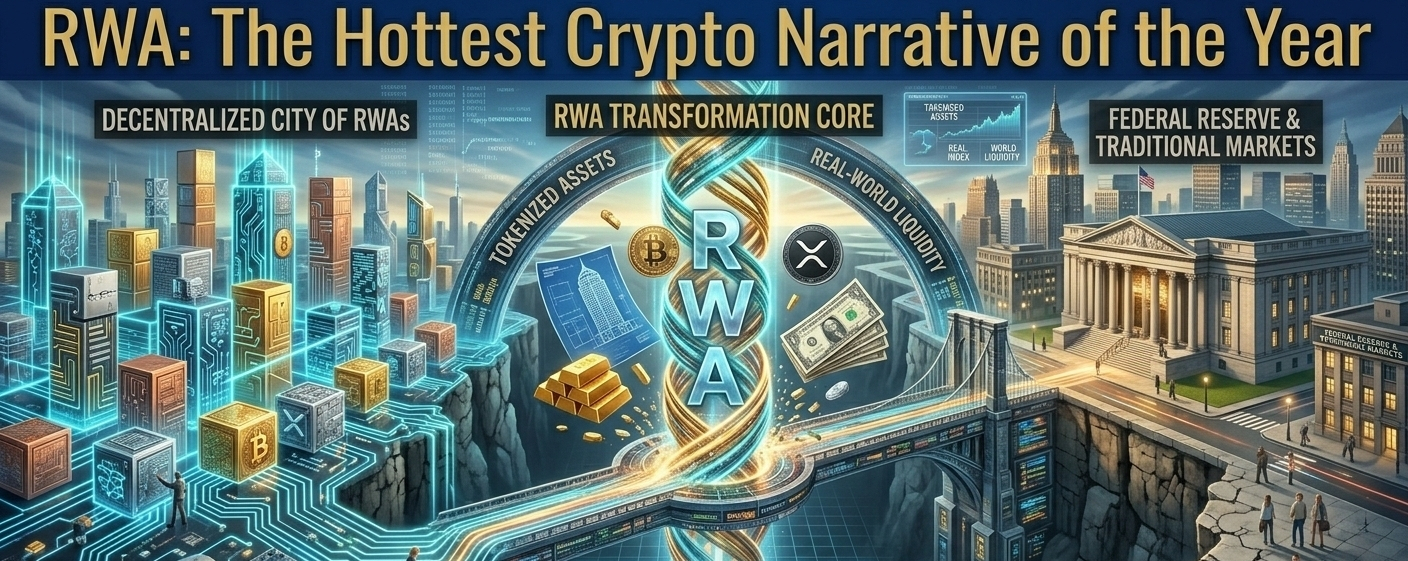
Real-World Assets—tangible or traditional financial instruments tokenized on-chain—have officially overtaken memecoins and infrastructure plays as the narrative of 2026. And unlike past hype cycles driven purely by speculation, this one comes with a multi-trillion-dollar addressable market and growing institutional validation.
The Numbers Don’t Lie
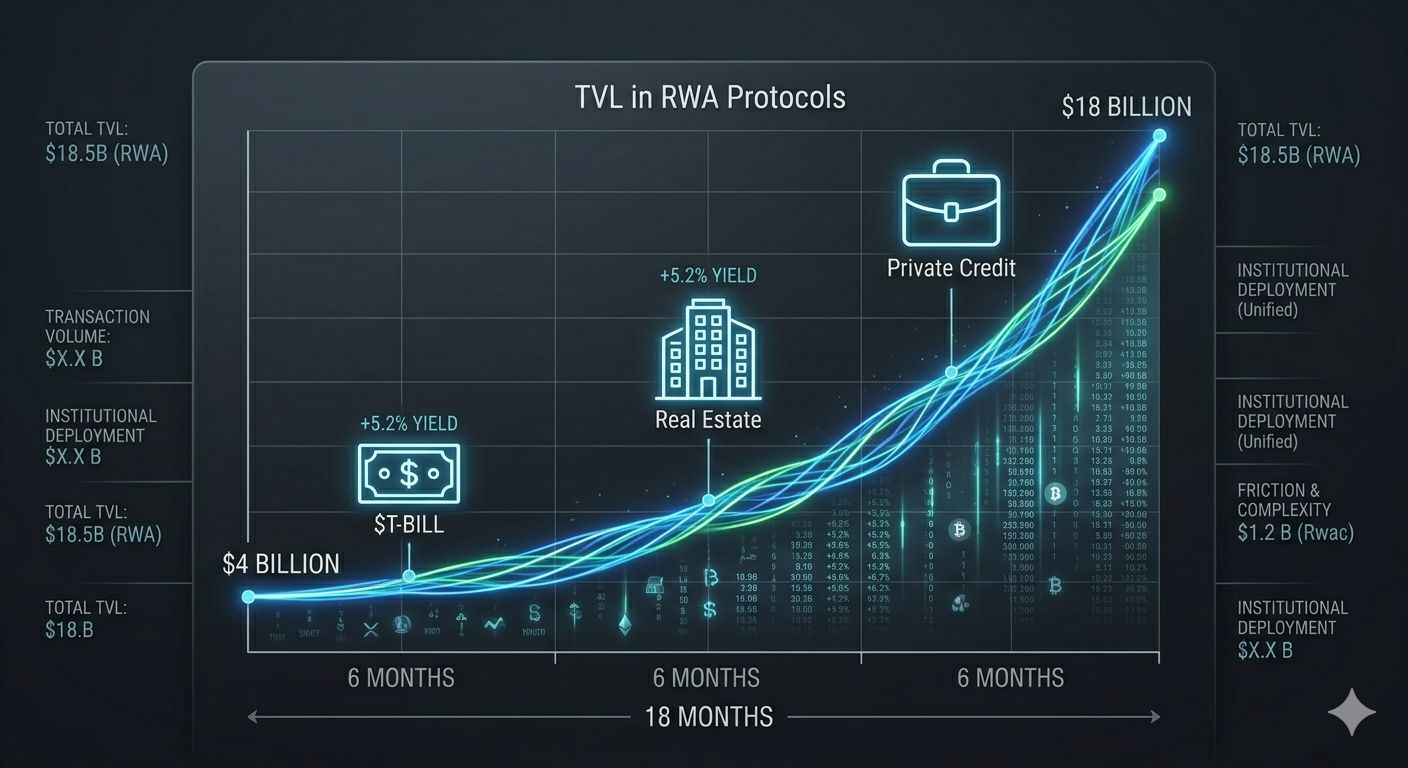
As of Q2 2026, the total value locked in RWA protocols exceeds **$18 billion**, up from less than $4 billion just 18 months ago. That doesn’t even count private tokenization pilots from BlackRock, Franklin Templeton, and a half-dozen major banks.
U.S. Treasury debt tokenized on Ethereum, Polygon, and Solana alone now represents over $3.5 billion in outstanding value, offering non-US investors access to risk-free rates without traditional banking hurdles.
Why Now? Three Converging Trends
1. Yield-starved capital: With DeFi lending yields sitting at 2-4% on blue-chip collateral, tokenized private credit (offering 8-12%) and T-bills (5%) are suddenly irresistible.
2. Regulatory clarity: The EU’s DLT Pilot Regime and MiCA 2.0 updates explicitly carved out tokenized securities. The US, while slower, has seen the SEC greenlight multiple RWA platforms under existing exemptions.
3. Infrastructure maturity: Protocols like Centrifuge, Ondo Finance, and Maple Direct have built borrower-tested legal wrappers, KYC modules, and bankruptcy protections that didn’t exist two years ago.
The Asset Classes Leading the Charge
· Private credit ($9B+ tokenized): Small-to-mid business loans, trade finance, and invoice factoring.
· Real estate (~$2.5B): Fractional ownership of income-generating property, mainly in Europe and Southeast Asia.
· Commodities (~$1.8B): Tokenized gold, silver, and even carbon credits.
· Collectibles & IP (~$800M): Music royalties, art shares, and litigation finance.
The Silent Revolution: DeFi as RWA’s Liquidity Layer
Perhaps the most overlooked shift is how RWAs are transforming DeFi itself. Protocols like Aave and MakerDAO now hold hundreds of millions in tokenized T-bills as yield-bearing collateral. For the first time, decentralized lending can offer stable, real-world yields without reliance on volatile crypto assets.
One RWA credit pool recently survived a market crash that liquidated 90% of overcollateralized DeFi positions—because its loans were backed by physical inventory audits and legal claims, not volatile tokens.
Risks That Aren't Going Away
Of course, RWAs inherit traditional finance’s problems: legal enforcement across borders, counterparty risk (the borrower or custodian can still fail), and slower settlement than native crypto assets.
Critics also note that “decentralized” RWA pools still rely on licensed entities to verify off-chain assets—making them closer to regulated tokenized funds than to Bitcoin’s permissionless ideal.
The Bottom Line
RWAs won’t replace memecoins or experimental DeFi overnight. But for the first time, crypto has a narrative that speaks directly to pension funds, family offices, and conservative yield-seekers. It’s no longer “when will institutions come?”—they’re already here, buying tokenized T-bills on public blockchains.
If 2024–2025 was about infrastructure and speculation, 2026 is the year crypto grew up and touched the real world.
#OpenAIToConfidentiallyFileForIPO