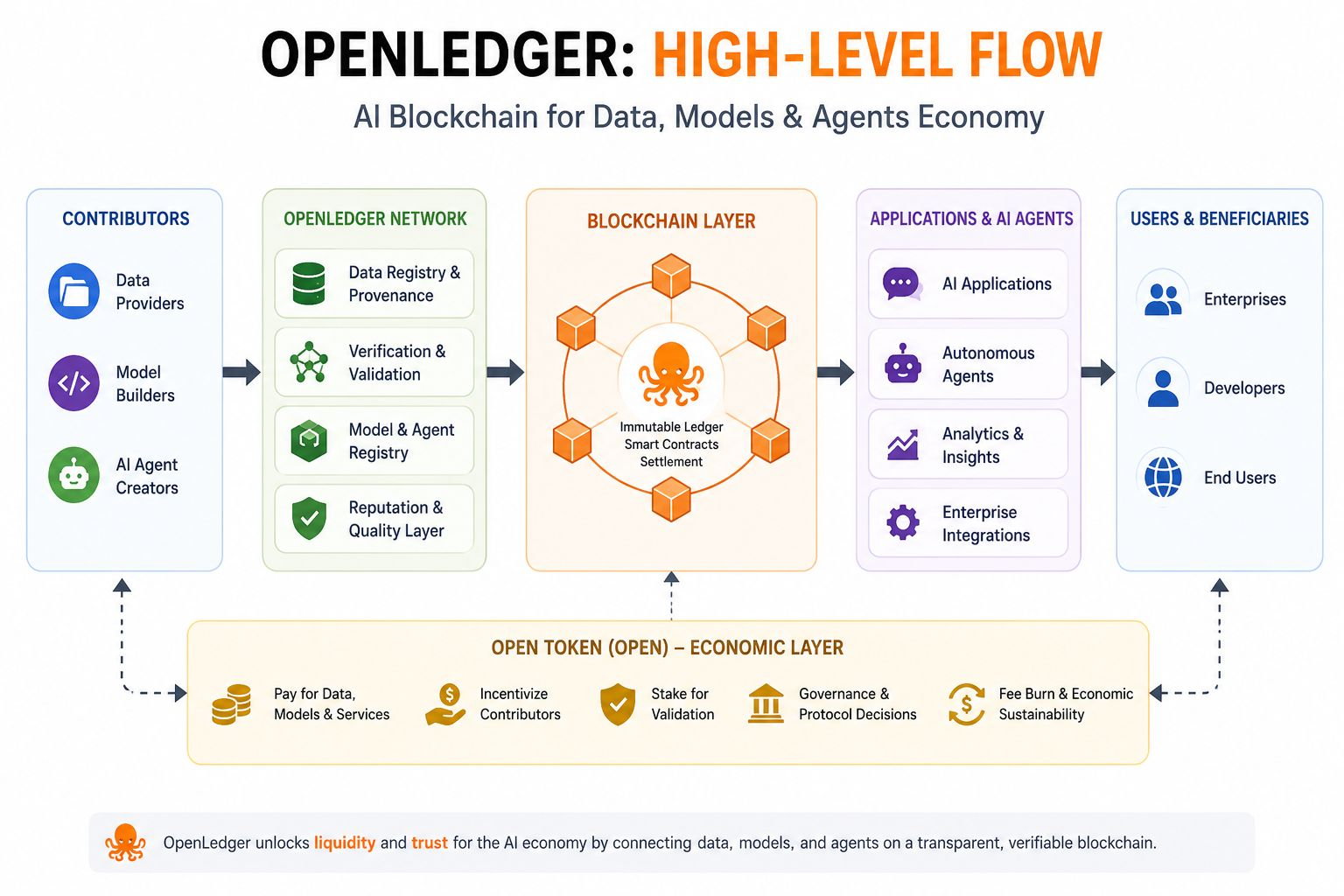
Look, I understand why projects like OpenLedger (OPEN) are getting attention right now. Artificial intelligence is the hottest story in technology, crypto is desperately searching for another narrative after memecoins exhausted themselves, and investors are once again convincing themselves that adding a blockchain to something automatically makes it more important.
I’ve seen this movie before.
First it was cloud computing. Then the metaverse. Then NFTs. Then “Web3 infrastructure.” Every cycle comes with the same promise: this time the technology changes everything. This time the middlemen disappear. This time ordinary users participate in the upside instead of giant corporations.
And every cycle eventually runs into the same wall. Human behavior. Economics. Regulation. Gravity.
OpenLedger’s core pitch sounds elegant when you hear it the first time. AI systems need data, coordination, identity, and economic incentives. Contributors should get paid for the value they create. AI agents should transact automatically across decentralized infrastructure. Blockchain technology becomes the accounting layer underneath machine intelligence.
It sounds tidy. On paper, at least.
But when you peel back the marketing, the glue starts to melt.
The project claims it is solving a real problem. And to be fair, the problem does exist. Right now, the AI economy is heavily centralized. A few giant companies own the compute. A few giant companies control the distribution. Data gets vacuumed into training systems while the people creating that data rarely see financial upside. Developers depend on centralized APIs. Smaller players get squeezed out.
That part is true.
The issue is that OpenLedger’s answer to this problem may create even more friction than the system it wants to replace.
Because here’s the thing nobody likes admitting in crypto circles: centralized systems often dominate for a reason. They are faster. Cleaner. Easier to govern. Easier to secure. Easier to troubleshoot when something breaks at three in the morning.
Decentralization sounds noble until you actually have to operate infrastructure at scale.
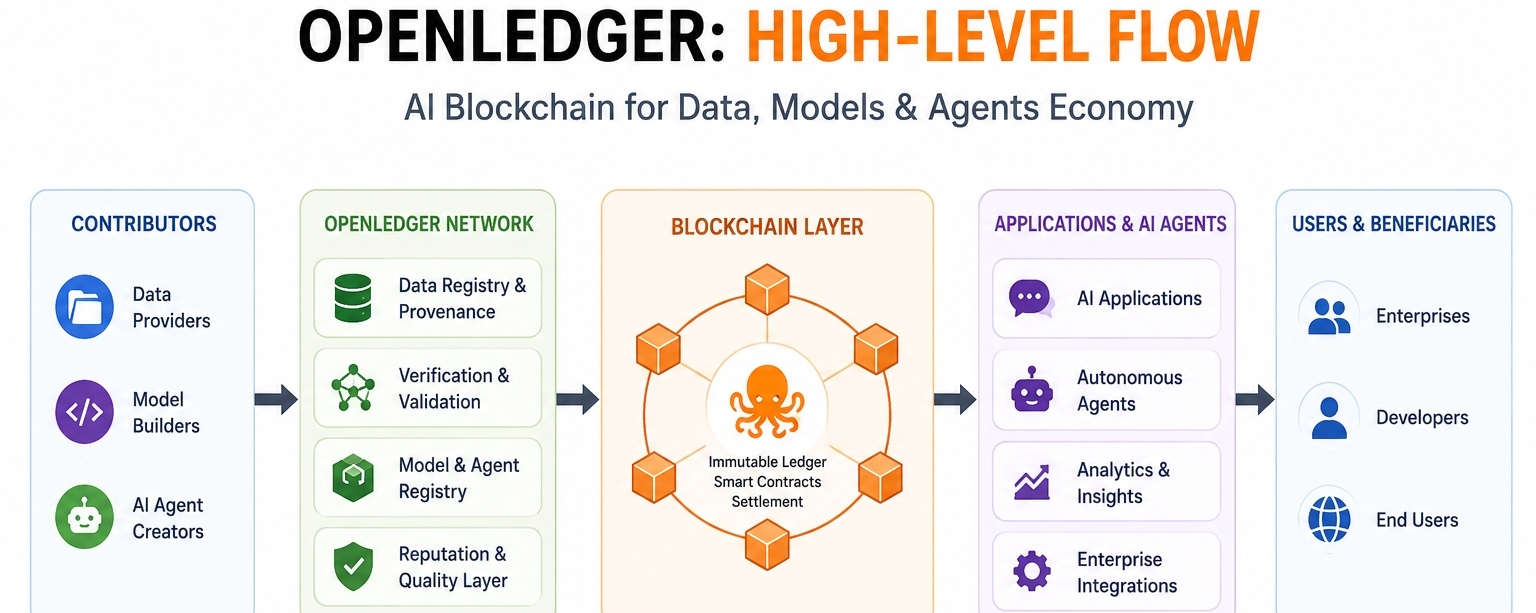
OpenLedger wants to create a network where datasets, AI models, validators, developers, and autonomous agents all coordinate through blockchain rails. The chain records interactions. Smart contracts distribute rewards. Contributors supposedly receive compensation automatically.
Fine. But now ask the obvious question.
Who decides what data is valuable?
Seriously. Who?
Because the internet is already drowning in garbage data. Low-quality text. Duplicated content. Scraped nonsense. Manipulated information. Spam. Synthetic media. AI-generated sludge feeding other AI systems in a giant recursive loop.
Now imagine adding token incentives on top of that environment.
People will upload anything if there’s money attached.
This is where the marketing starts avoiding specifics. Open systems sound democratic until the network becomes flooded with low-value contributions and somebody has to act like a gatekeeper. Then suddenly decentralization starts looking suspiciously centralized again.
I’ve watched this happen repeatedly.
Crypto projects talk endlessly about removing middlemen right up until the moment they need moderators, validators, governance councils, reputation systems, compliance teams, and emergency intervention mechanisms. At that point the “decentralized ecosystem” quietly becomes a corporation wearing a blockchain costume.
And then there’s the token itself. Of course there’s a token.
There is always a token.
The OPEN token is supposed to coordinate incentives across the ecosystem. Payments, staking, governance, validation, rewards. The usual architecture. But let’s be honest here. Most retail buyers are not studying protocol mechanics before buying these assets. They are speculating on future price appreciation. That is the engine underneath much of this market whether people admit it or not.
The uncomfortable reality is that many blockchain ecosystems depend less on utility and more on maintaining investor belief long enough for adoption to maybe arrive later.
Maybe.
Meanwhile insiders, early investors, and foundations often hold enormous portions of supply before ordinary participants even arrive. This is another detail the glossy ecosystem diagrams rarely emphasize. Decentralization in governance does not necessarily mean decentralization in wealth or influence.
Follow the cap table long enough and the romance fades.
The other problem is operational complexity. OpenLedger is trying to combine two industries already drowning in unresolved issues: AI and blockchain.
AI has copyright lawsuits piling up globally. Regulators are still trying to define accountability for model outputs. Data ownership laws are tightening. Governments increasingly care where information comes from and where it moves.
Now insert blockchain into that situation.
Immutable ledgers sound clever until someone demands deletion rights under privacy law. Transparent transaction records sound useful until enterprises realize competitors can analyze behavioral flows. Autonomous AI agents sound futuristic until one makes a costly mistake and nobody can determine legal responsibility.
Who gets blamed when an autonomous system fails inside a decentralized environment?
The validator?
The protocol?
The developer?
The token holders?
Good luck getting a clear answer.
And this is the part where crypto projects usually retreat into philosophical language about “community governance” and “distributed accountability,” which often translates into nobody being responsible until regulators show up.
Let’s talk about the AI agent narrative for a moment because this is where things become especially speculative. OpenLedger and similar projects increasingly describe futures where autonomous software agents negotiate, transact, hire services, exchange resources, and operate independently across networks.
Maybe that future arrives eventually.
But I’ve spent twenty years watching technology demos get mistaken for functioning economies.
There’s a massive gap between proving something can work technically and proving people actually want to use it at scale. Most businesses do not wake up in the morning thinking, “You know what we need? More decentralized complexity attached to our infrastructure stack.”
They want reliability. Predictable costs. Legal accountability. Customer support numbers that somebody answers.
Traditional enterprises are boring for a reason. Boring systems tend to survive.
That creates another uncomfortable question. If OpenLedger succeeds, does it actually stay decentralized? Because infrastructure networks naturally concentrate over time. The largest validators gain influence. The richest participants accumulate more control. Governance participation drops. Smaller operators disappear because margins collapse.
Again. I’ve seen this movie before.
And beneath all of it sits the core contradiction the AI-crypto sector keeps trying to ignore. Artificial intelligence is becoming more centralized, not less. Training frontier models requires absurd amounts of compute power, energy infrastructure, networking optimization, and capital expenditure. That naturally favors giant corporations with massive balance sheets.
Blockchain projects keep pitching decentralization into an industry whose economics reward concentration.
That tension does not disappear because a whitepaper says otherwise.
Maybe OpenLedger finds a niche. Maybe it becomes useful infrastructure for specific coordination tasks around AI attribution or data settlement. That is possible. But the broader vision being sold — a decentralized economy of machine intelligence coordinated through token systems — still feels like an idea searching for a stable economic foundation.
And when markets get euphoric, people stop asking the most important question of all.
Not whether something sounds revolutionary.
Whether anybody truly needs it once the speculation cools down.