
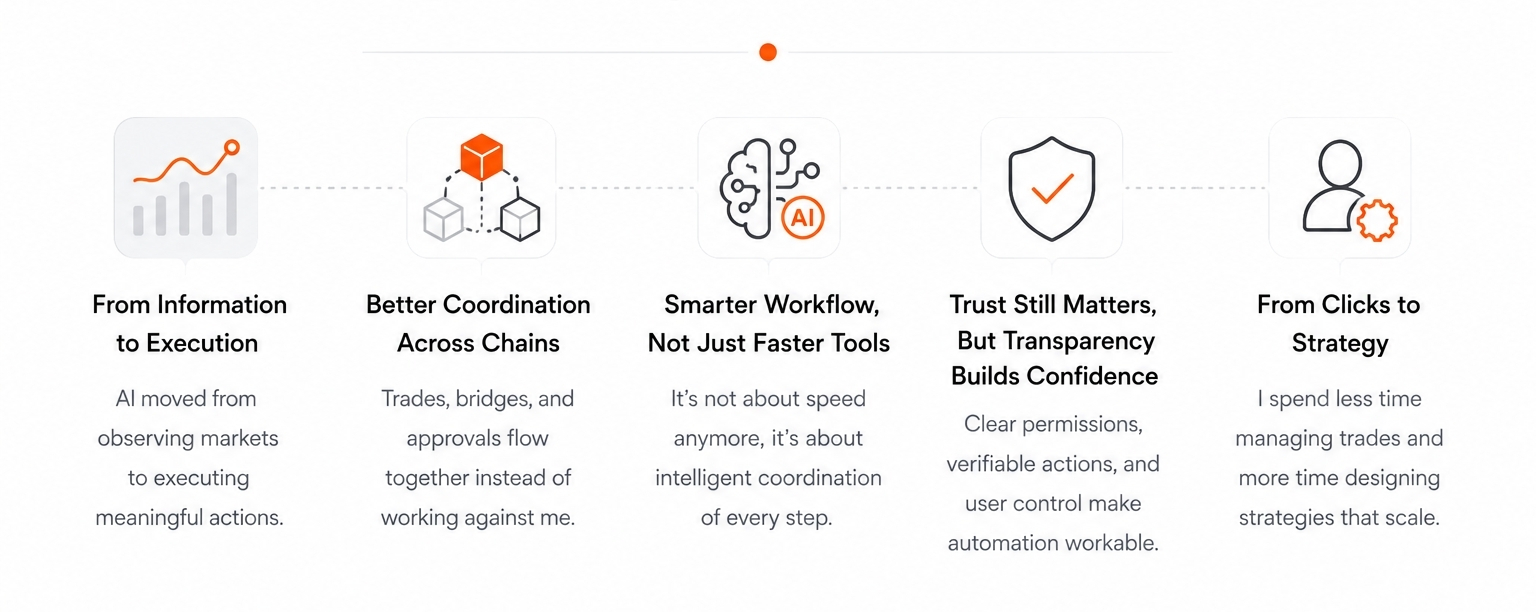
I used to think most AI tools in crypto were just another layer of noise added on top of already noisy markets. A cleaner dashboard, a faster alert system, a chatbot repeating information everyone already saw five minutes earlier. But the more I thought about the Octoclaw launch from @OpenLedger , the more it felt like something slightly different was happening beneath the surface.
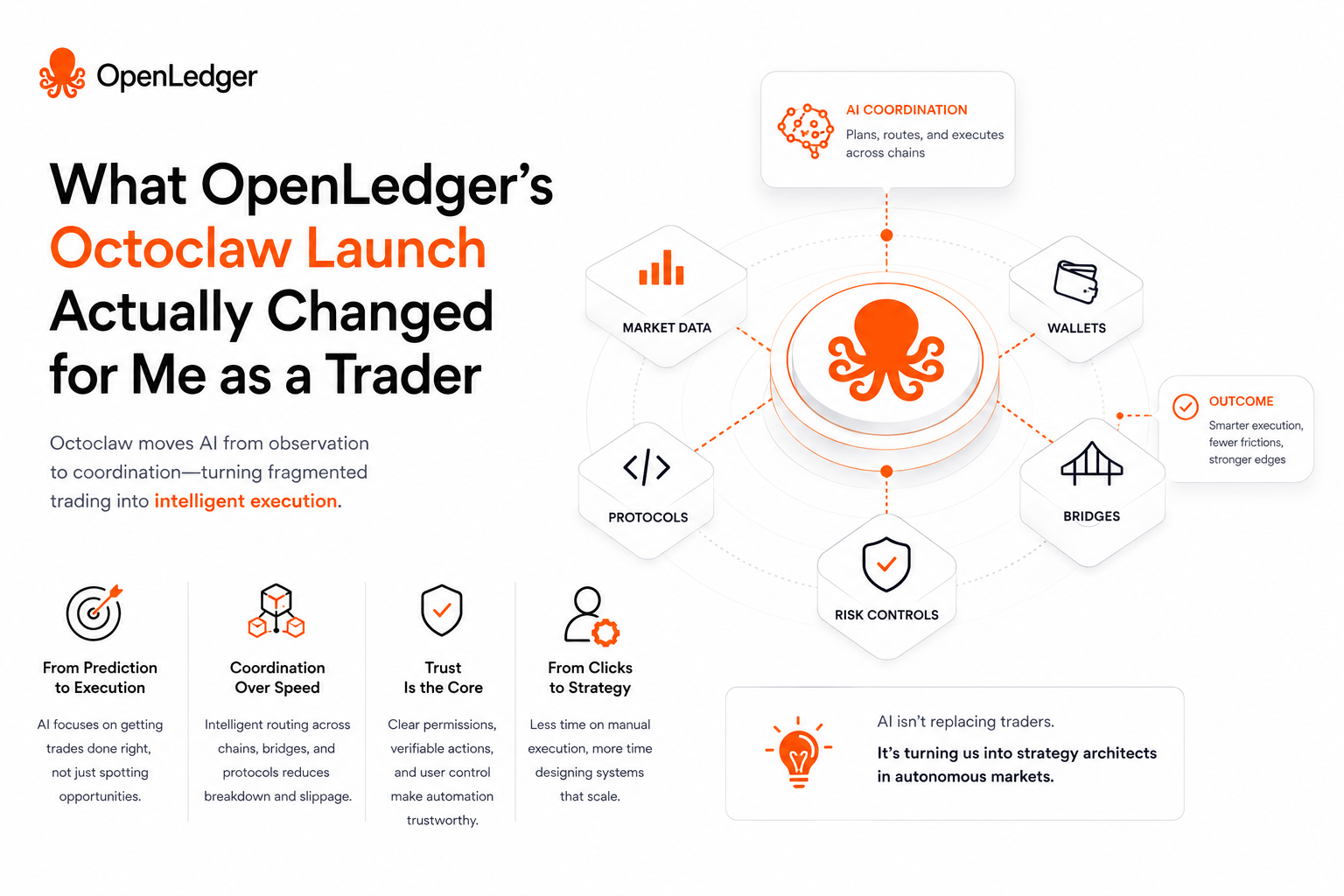
Most traders don’t actually lose because they lack information. They lose because execution breaks down in real time. A trade looks profitable until bridge delays, gas spikes, approvals, and timing slowly erase the edge. What’s interesting here is that Octoclaw shifts AI away from observation and closer to coordination.
That small shift in design can have bigger effects than people realize.
The idea behind $OPEN started making more sense to me once I looked at trading less as prediction and more as workflow management. In a multi-chain economy, speed alone eventually stops being an advantage. Everyone gets faster tools. Everyone gets better data. What remains valuable is how intelligently actions are coordinated across fragmented systems.
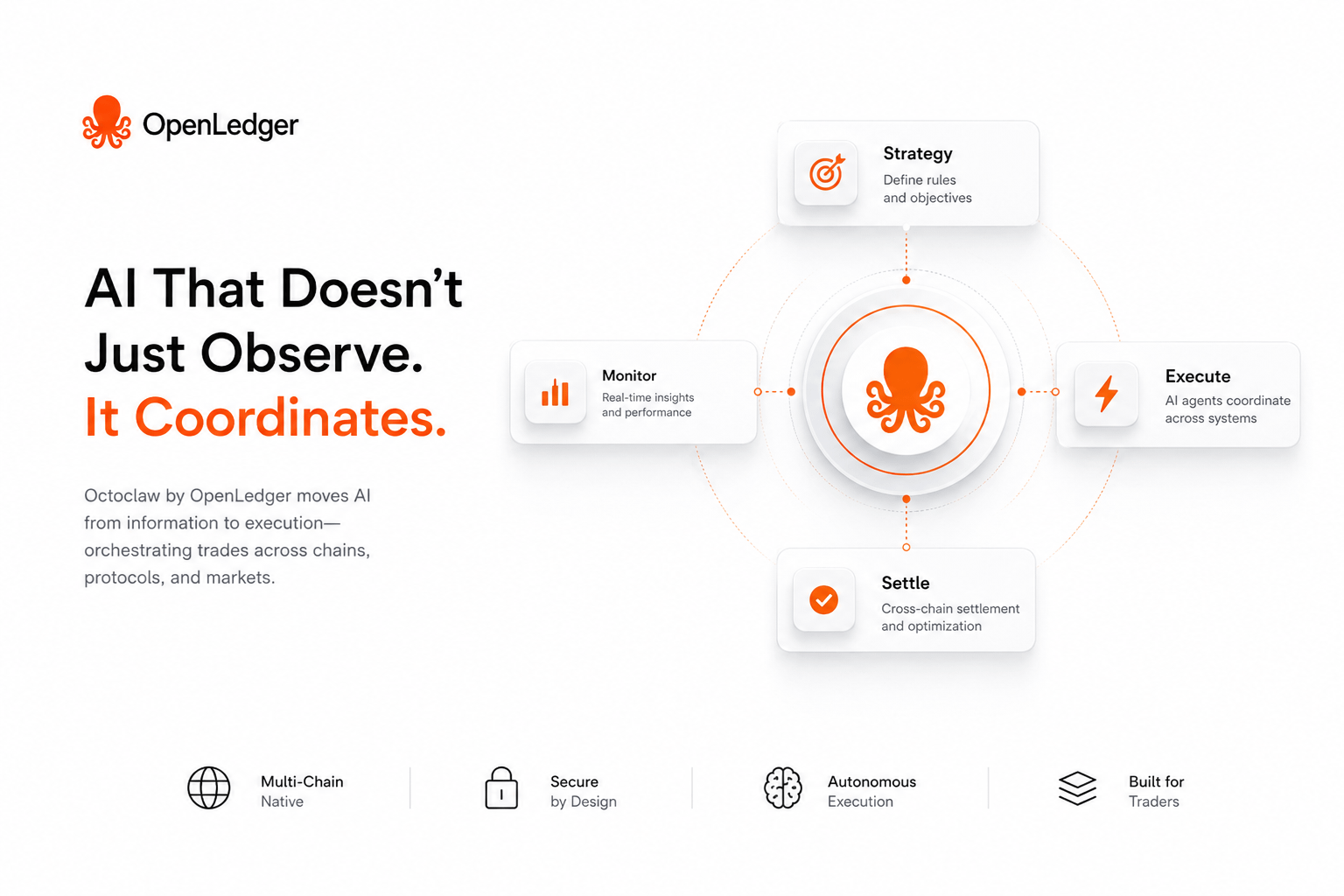
#OpenLedger feels early in that transition.
I still think trust becomes the hardest layer. Letting agents operate across wallets, bridges, and protocols changes the relationship between users and execution itself. But it also changes participation. Traders may spend less time clicking buttons and more time designing systems that act on their behalf.
The more I think about it, the more this feels less like AI replacing traders and more like traders slowly becoming strategy architects inside autonomous markets.