
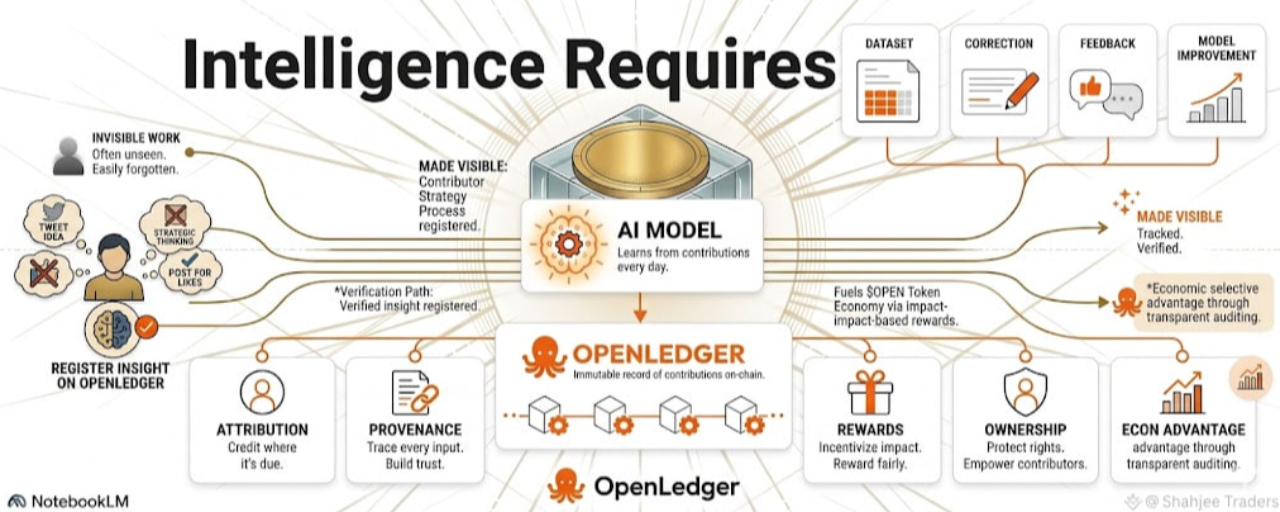
I used to think the AI economy was just a food chain. Big labs at the top. Everyone else as prey.
Then I looked closer at OpenLedger. And now I see something else. Not a network. Not a marketplace. An evolution engine. It doesn't just connect contributors and models. It forces you to adapt—or get eaten.
Here's what happened.
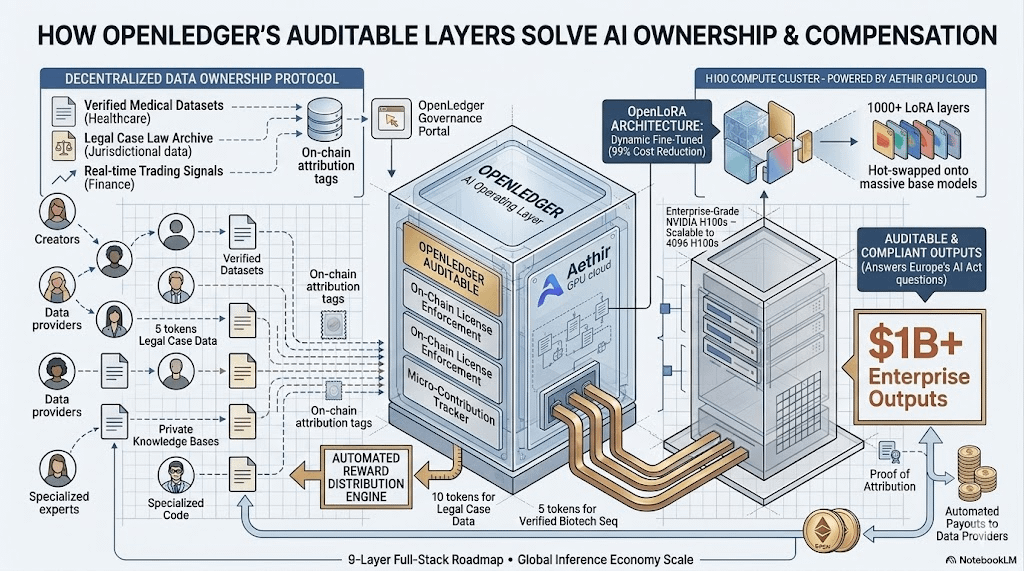
I started watching how early users behaved. Not the ones posting generic datasets. The ones who understood attribution before it was trendy. They weren't just sharing. They were positioning. Registering niche knowledge—obscure legal precedents, esoteric trading patterns, proprietary medical notes. Things that couldn't be scraped from Wikipedia. They built little moats around their insights. And when models needed that specific signal, the attribution layer pointed straight back to them.
That's when it clicked. OpenLedger doesn't reward generosity. It rewards strategic scarcity. The same way a predator evolves sharper teeth, a contributor evolves better judgment about what to share and what to license. The network is just the arena. The evolution happens inside you.
I've seen hype coins come and go.
PROVE had its moment loud,community‑driven,ambitious. But hype without evolution is just a flash in the pan. PHB tried to gamify speculation. Fun, but static. OpenLedger isn't static. It's surgical. It's pricing your strategic thinking down to the byte. The ones who treat their data as a renewable asset—not a one‑time giveaway—become the predators. The ones who keep posting everything for free? They become the prey.
Here's what most people miss. They look at attribution and think "fairness." A way for little guys to get paid. That's not wrong, but it's shallow. The real effect is selection pressure. The system doesn't just distribute value. It reshapes behavior. It rewards those who learn to allocate their contributions like capital. It punishes those who treat the internet like a public diary. Over time, the only voices that matter are the ones that evolved a strategy.
I caught myself doing something strange last week. I had an insight about a market inefficiency. Old me would have tweeted it immediately for likes. New me? I stopped. I thought—where does this insight fit? Which model would pay for it? Should I register it on OpenLedger first, then let the attribution layer do its job? That pause. That calculation. That's the evolution. The engine already changed me.
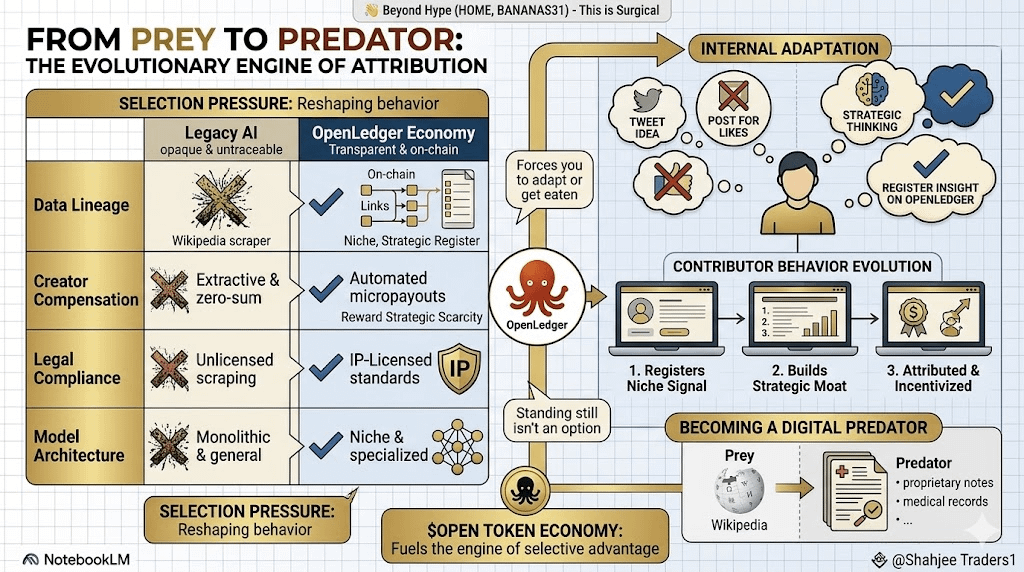
And that's what scares me. Not the technology. The mirror. Once you start seeing your every post, every dataset, every fine‑tune as a move in an evolutionary game, you can't go back to being a passive content generator. You either learn to hunt. Or you learn to hide. Standing still isn't an option.
OpenLedger didn't build a network. It built a pressure cooker for digital survival. The predators are already evolving. The rest? They're just waiting to be scraped.