
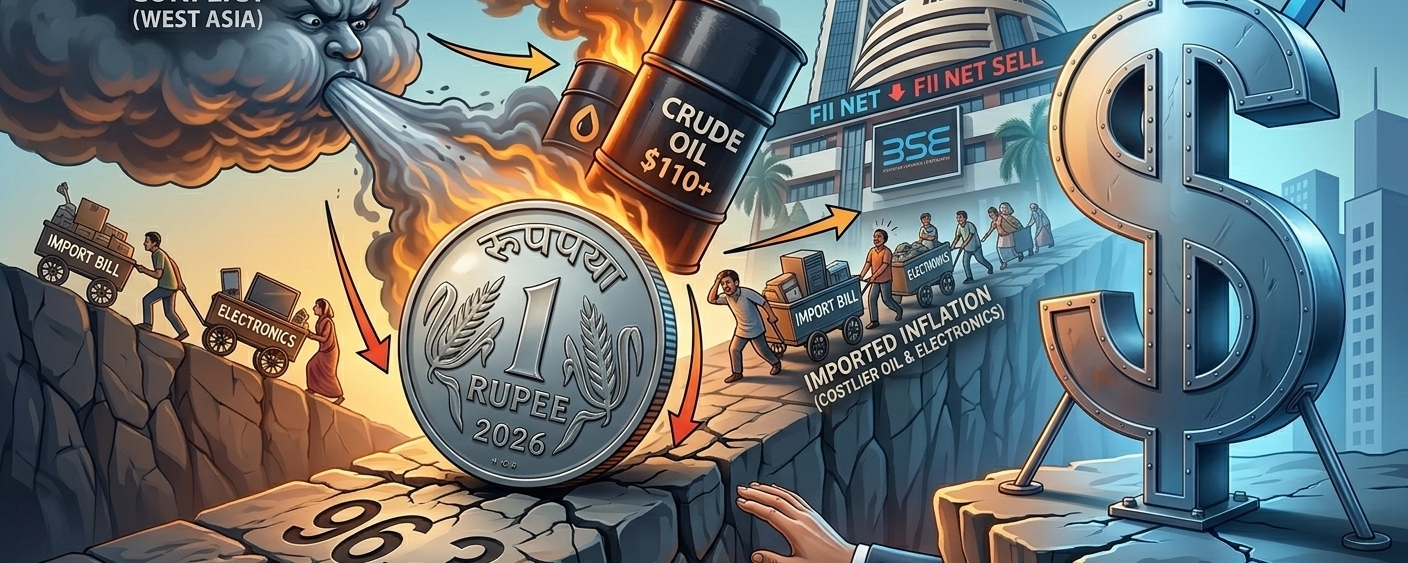
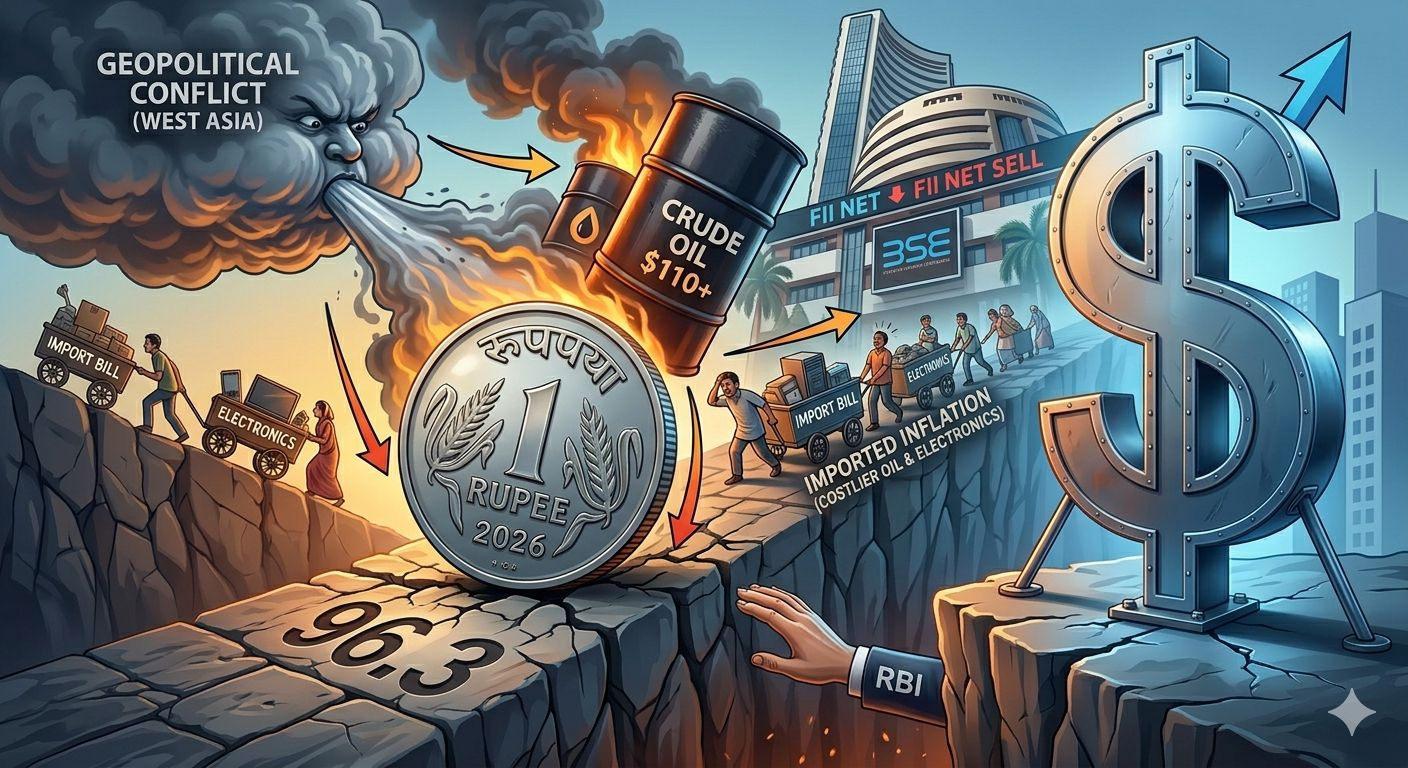
The Indian Rupee (INR) has officially become one of Asia's worst-performing currencies this year, tumbling over 7% in 2026 to trade at an all-time low near ₹96.70-₹97 against the US Dollar. This marks its sharpest four-year decline, catching the eye of global investors and domestic policymakers alike.
What is triggering this sudden freefall? Here is a breakdown of the three massive macroeconomic forces colliding at once:
🔹 1. The Geopolitical Energy Shock:
With stalled US-Iran peace talks and intense disruptions around the Strait of Hormuz, Brent crude oil prices have rocketed toward $110-$126 per barrel. Because India imports nearly 85-90% of its crude oil needs, our importing companies are forced to aggressively buy dollars to pay for energy, draining our forex balances and drastically widening the trade deficit.
🔹 2. Historic Capital Flight (FIIs Turning Away):
In times of global uncertainty, international investors flock to safe-haven assets like the US Dollar. Foreign Institutional Investors (FIIs) have aggressively dumped Indian equities and bonds—pulling out over $23 billion in 2026 alone—creating an oversupply of rupees and a severe crunch for dollars in the local market.
🔹 3. The Luxury Trap (Gold Imports Surge):
Adding fuel to the fire, India's gold imports jumped over 81% year-on-year. To curb this massive cash drain, the government has stepped in to hike import duties on precious metals to preserve vital foreign reserves for essential commodities like oil.
The Bottom Line:
A weaker rupee translates directly to "Imported Inflation," raising the cost of everything from fuel and electronics to overseas education and foreign travel. While the RBI continues its balancing act to defend the currency, the rupee remains heavily bound to how global geopolitical tensions evolve in the
What are your thoughts on how this currency depreciation will impact Indian stock markets over the next quarter? Let’s discuss below! 👇
 #macroeconomic s #IndianEconomy #Forex #Rupee #CrudeOil #FinanceNews #Investing