
For a long time, I thought the future of AI would simply be about better models.
Smarter responses. Faster reasoning. More realistic outputs.
Like most people, I was focused on what AI could do.
But recently, while exploring OpenLedger, I started thinking less about the outputs and more about the invisible system underneath them. And honestly, that changed the way I look at AI completely.
Because behind every intelligent model is something much bigger happening quietly in the background.
Data is being generated constantly. Human feedback keeps refining systems. Models learn from interactions. Developers improve architectures. Communities contribute knowledge without even realizing how much value they’re creating.
Yet somehow, most of that value still flows back into closed ecosystems.
That realization stayed in my mind longer than I expected.
The more I thought about it, the more it felt like AI today resembles the early internet years massive participation, massive innovation, but still unclear ownership structures around the value being created.
And that’s exactly why OpenLedger started feeling different to me.
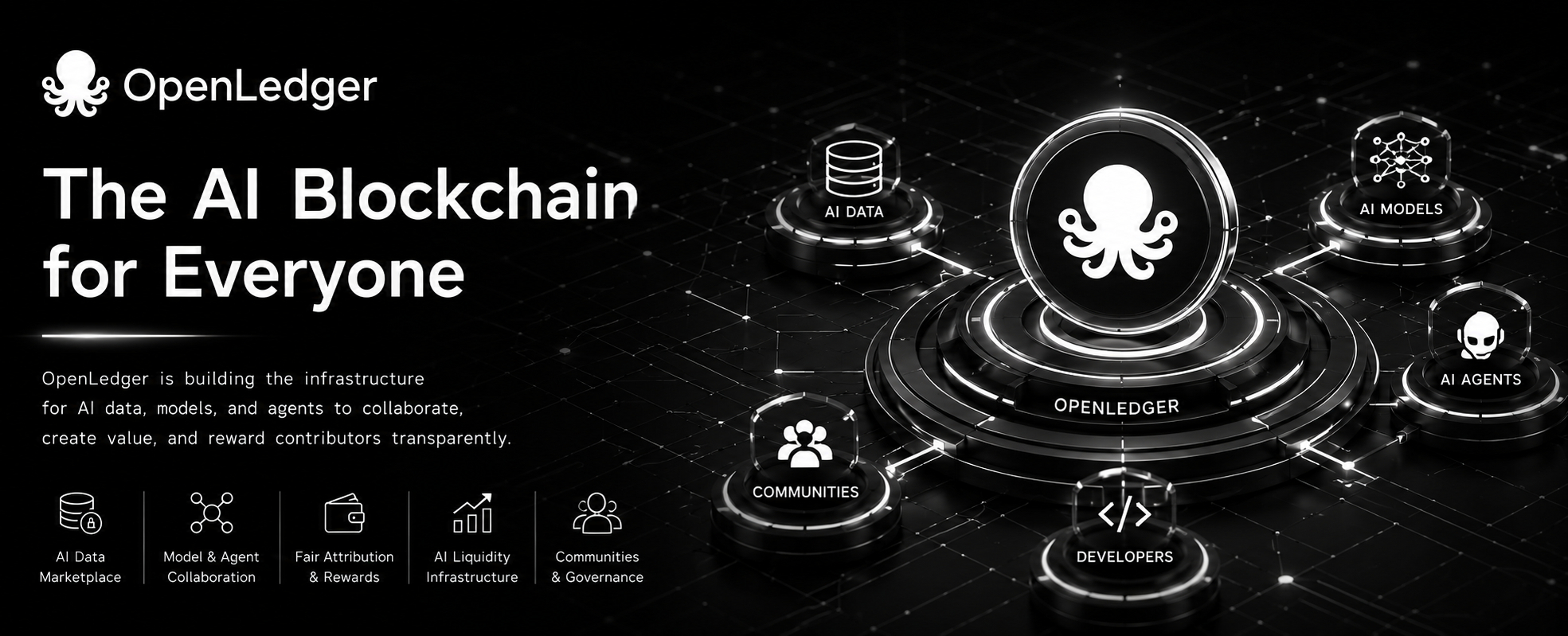
Instead of only building another AI product, the project appears to be exploring something deeper: how intelligence itself can become part of an open economic system.
Not just AI as software.
AI as infrastructure.
AI as liquidity.
AI as a network where contributors, datasets, models, and autonomous agents can all exist inside the same value layer instead of being trapped inside isolated platforms.
The interesting part is that this idea doesn’t feel futuristic anymore.
It actually feels necessary.
Because AI is already moving beyond simple chatbot interactions. We’re slowly entering a phase where autonomous systems may begin interacting with each other continuously — agents making decisions, models improving themselves, machine-generated outputs carrying real economic value.
But if that future arrives, one question becomes impossible to ignore:
Who benefits from all that intelligence?
Right now, the answer is still heavily centralized.
That’s why OpenLedger caught my attention.
The project seems less focused on temporary hype and more focused on solving the economic coordination layer around AI itself. And honestly, that may end up becoming one of the most important layers in the entire industry.
Because technology alone rarely changes the world.
Incentive systems do.
The internet scaled because participation became valuable. Social platforms exploded because attention became monetized.
Now AI is entering its own economic phase.
And if intelligence becomes an asset class in the future, then networks capable of handling attribution, ownership, and liquidity around AI may become incredibly important.
That’s the shift I started noticing while researching OpenLedger.
Not just another AI narrative.
A possible foundation for how value moves inside future machine economies.
And the more I think about it, the more it feels like we’re still extremely early in understanding how big that transition could actually become.
@OpenLedger #OpenLedger #OpenLedgar $OPEN
