
Sometimes I sit and think about AI, and I feel
like most people are still only looking at the
surface of something that is already becoming much bigger than we realize.
We talk about AI like it’s just apps tools for writing, coding, making images, or helping with trading ideas.
It feels normal now, almost casual.
But underneath all of that, there is a much deeper system forming.
One that is slowly reshaping how information is created, shared, and valued.
And the question that keeps coming back to me is simple, but uncomfortable:
Who is actually getting rewarded for all this intelligence being produced?
Because if we really break it down, AI doesn’t just appear out of nowhere. It is trained on
human activity billions of interactions, texts, corrections, behaviors, and patterns.
Every search, every prompt, every piece of content people create online becomes part of the invisible fuel that makes these systems smarter.
In a way, it feels like a collective effort.
Almost like millions of people are contributing without directly signing up for it.
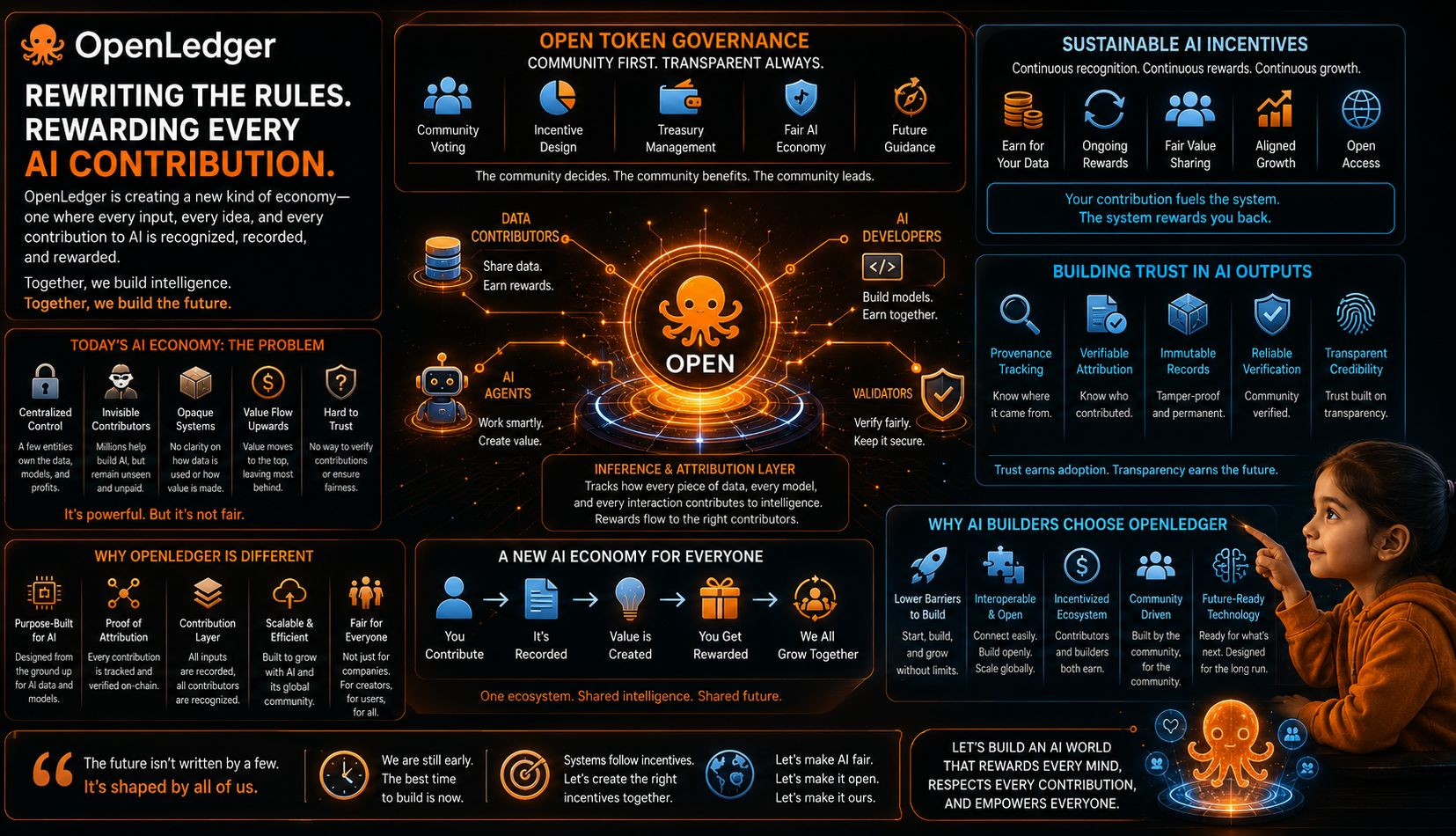
But the value created from that intelligence doesn’t really flow back to those people.
Instead, it mostly concentrates in a few large companies that own the infrastructure
the models, the data pipelines, the platforms. And slowly, that imbalance has become normal.
Most people don’t even question it anymore because it’s just how the system works right now.
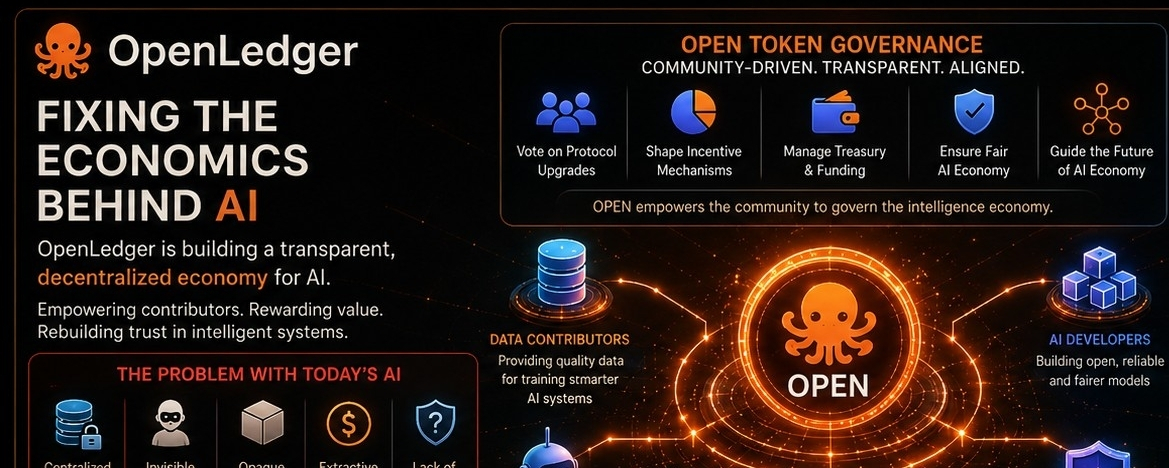
That’s why ideas like OpenLedger feel
interesting to me.
Not because they are perfect or fully proven, but because they try to ask a question that matters:
What if contributions to AI could actually be tracked and rewarded more fairly?
On paper, that sounds simple and even fair. If someone helps improve a system, they should
get credit for it. If data or feedback contributes to better outcomes, there should be some form of recognition or reward.
But the moment you start thinking deeply about how that would work, everything becomes complicated.
AI is not built in clean, separable pieces. It doesn’t work like a simple equation where you can say, “this input caused that output.”
Instead, it is shaped by layers of influence millions of small signals blending together over time.
One dataset influences another. One user interaction changes future behavior in ways that cannot always be traced directly.
So the idea of perfectly tracking contribution starts to feel almost impossible.
Not because the idea is wrong, but because the system itself is too interconnected.
And then there is another concern: if we try too hard to measure everything, do we end up creating a system that only experts can
understand? Something so technical and
complex that the average person is once again excluded from it? That would defeat the purpose of fairness in a different way.
Still, even with all these challenges, I can’t ignore the direction things are moving in.
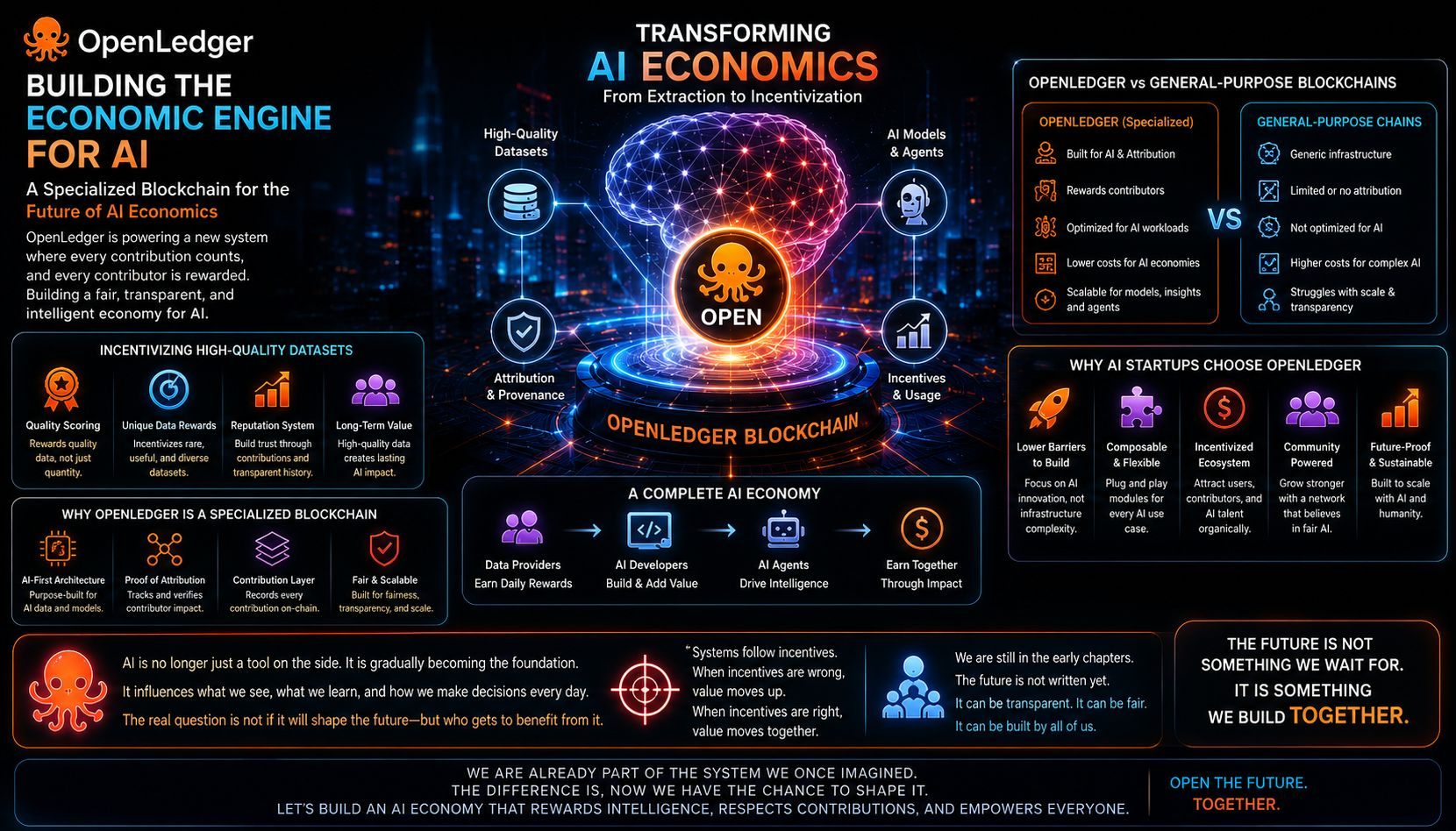
AI is no longer just a tool sitting on the side. It is slowly becoming infrastructure.
It shapes what we see online, what information reaches us, what content gets amplified, and even how we think about certain topics.
Quietly, it is becoming part of the background layer of modern life.
And when something becomes that deeply embedded, the question of control, ownership, and incentives becomes very real.
Because systems are shaped by incentives.
If incentives are wrong, the system becomes extractive value moves upward, control becomes centralized, and most contributors stay invisible.
But if incentives are aligned properly, then it becomes something more collaborative. Something where participation actually matters.
Right now, we are still mostly in the extraction phase.
That is just the reality of where the technology is. Fast growth, centralized control, and massive value concentration.
But the interesting part is that this doesn’t feel like the final stage.
It feels like an early version of something that is still being figured out.
Maybe future systems will look more transparent. Maybe contribution will become more visible.
Or maybe new models will emerge that we haven’t even thought of yet.
I don’t think the answer is clear yet. But I do think the question itself is important.
Because we are already inside the system we used to imagine in theory.
It is just unfolding slowly enough that most people haven’t fully realized it yet.
And sometimes that’s the part that feels the most strange not that the future is coming,
but that it is already here, just distributed in pieces we are still trying to understand.
