A lot of people talk about AI attribution as if it is mainly a transparency problem, or maybe a fairness problem if you want to sound a little more serious. That framing makes sense at first because it feels orderly. Someone contributes data, a model uses it, the system records what happened, and then the world moves on with clearer credit and better incentives. It sounds elegant, almost obviously good. But the more I think about it, the more I feel that this is only the easy version of the story, the version you tell before money, rights, and recurring value are attached to the output. The moment attribution stops being symbolic and starts becoming financially meaningful, the whole thing changes shape. It is no longer just about who helped. It becomes about who can claim, who can challenge, and who gets recognized when the same outcome can be interpreted through more than one lens.
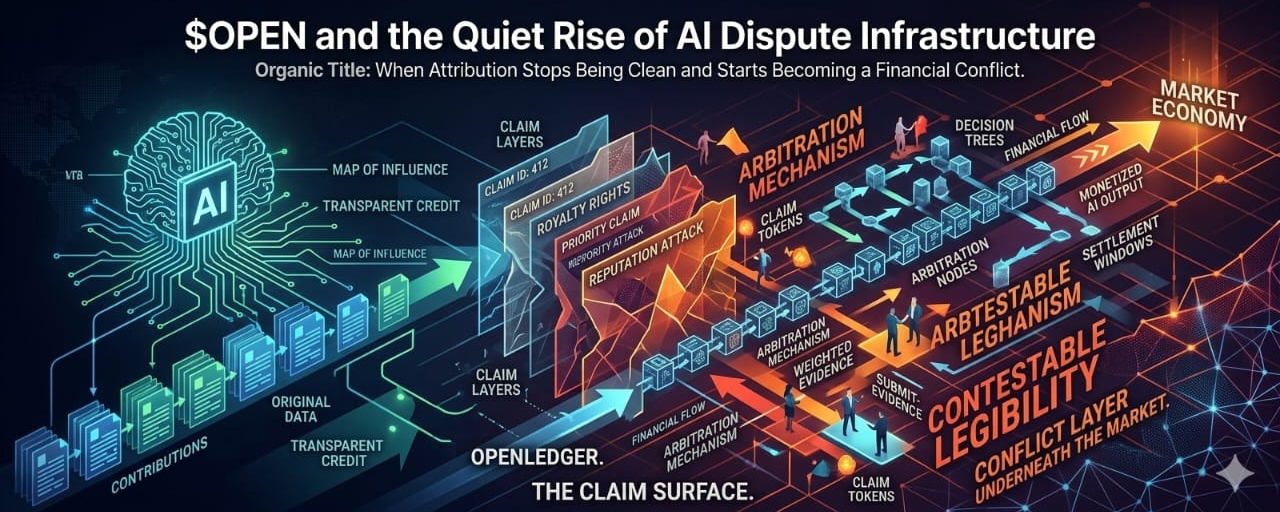
That is where the idea of AI attribution infrastructure becomes more interesting, and a little more uncomfortable. A system like OpenLedger may not simply be making contributions visible. It may be turning influence into something legible enough for markets to use. And once that happens, visibility is no longer neutral. It creates claim surfaces. It gives people something to point to, dispute, price, or defend. A record of contribution does not automatically settle truth. It just makes disagreement more structured. That sounds subtle, but it matters a lot. Because when attribution is only informational, people can treat it as a helpful map. When attribution becomes tied to payouts, royalties, access, governance, or reputation, that same map begins to function more like a battlefield.
What keeps bothering me is that attribution rarely captures influence in a pure or universal sense. It captures the version of influence that survived the system’s rules, its schema, its filters, and its visibility boundaries. That is already true in creative platforms, ranking systems, recommendation engines, and all the other places where legibility gets mistaken for legitimacy. We see the output and assume the pathway behind it is equally stable, but it usually is not. The object looks clean because the system only shows us the clean part. The hidden part is often messy, partial, overlapping, or lost. And once financial value gets attached to that visible surface, the system stops being just a record of contribution and starts becoming a mechanism for deciding which contribution is actionable.
That is why I keep circling back to the possibility that $OPEN is not merely about proving contribution. It may be about handling the conflict that appears when contribution becomes monetized. If multiple parties can plausibly claim they shaped the same output, then the real problem is no longer attribution alone. It is arbitration. Who gets priority? Who gets paid first? Which evidence counts most? What happens when a contribution state changes after a downstream system already used it? These are not edge cases once AI output is continuously reused, remixed, trained on, and monetized. They become part of the operating environment. In that sense, the infrastructure is not just storing provenance. It may be preparing the market to process disagreement in real time.
That is a pretty big shift in how you think about the role of such systems. Instead of seeing attribution as a clean layer above the model, it starts to look like a conflict layer underneath the market. Not a courtroom, not exactly, but something machine-readable and financially active. A place where competing claims can be surfaced, weighted, delayed, or settled according to rules that are only partly technical and partly economic. Maybe that means staking on claims. Maybe it means confidence scoring. Maybe it means reputation-linked attestations or settlement windows that keep disputed contribution states open until the system can decide what is usable. Whatever the exact mechanism is, the important thing is that once money flows through attribution, disagreement is no longer a bug. It is a native condition.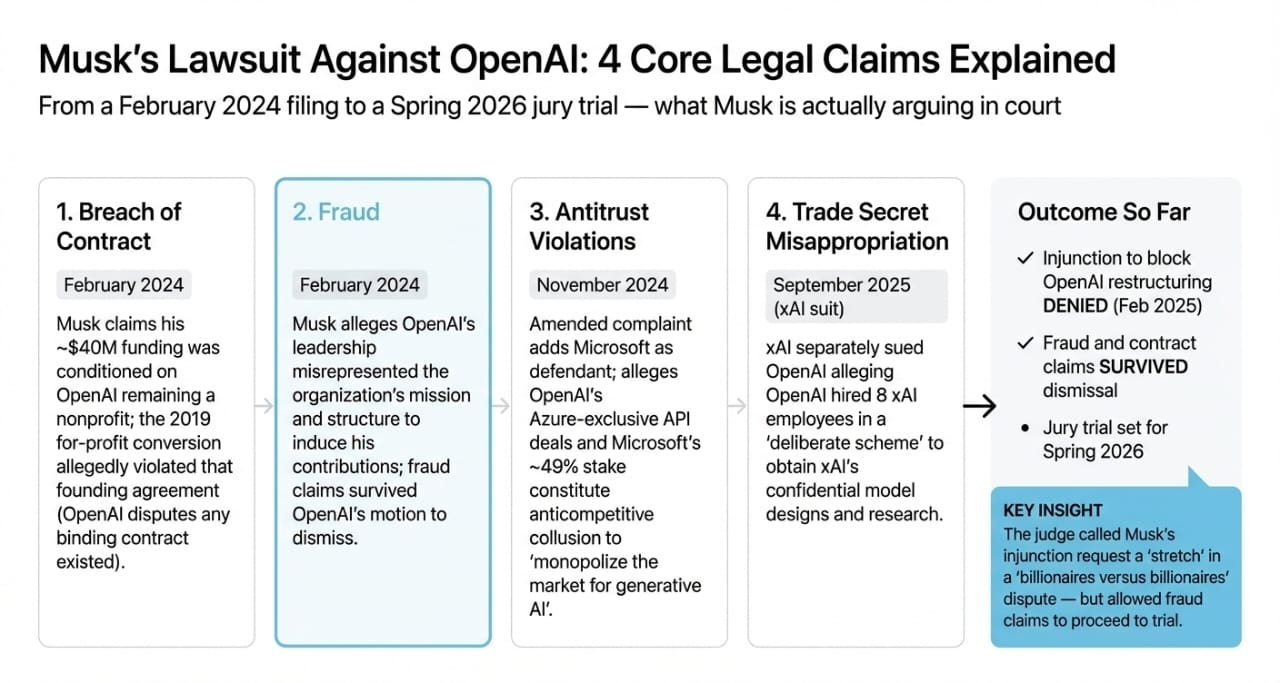
And maybe that is the part people underestimate most. They think AI attribution will mainly reward the right contributors and make the ecosystem more transparent. That may be true on the surface. But underneath, every new layer of legibility also creates a new layer of contestability. The more precisely you define contribution, the more precisely someone else can challenge it. The more financially important the attribution becomes, the more aggressively the definition itself gets tested. In that sense, an attribution protocol is not just a credit system. It is also a claim-generation system. It tells the market what can be argued about, what can be priced, and what can be converted into recurring value.
So when I look at $OPEN now, I do not just see a token attached to AI infrastructure. I see the possibility of a broader coordination layer for disputed influence. That may sound abstract, but it is actually a very practical problem once AI outputs begin generating repeated economic effects. If a model’s output can be reused, licensed, ranked, or rewarded over time, then the history behind that output becomes financially relevant. And if the history is incomplete, overlapping, or contested, the infrastructure has to decide what to do with that uncertainty. It can ignore it, but then it is choosing convenience over precision. It can delay it, but then it is choosing friction over finality. Or it can operationalize it, which means it is turning uncertainty itself into a managed financial state.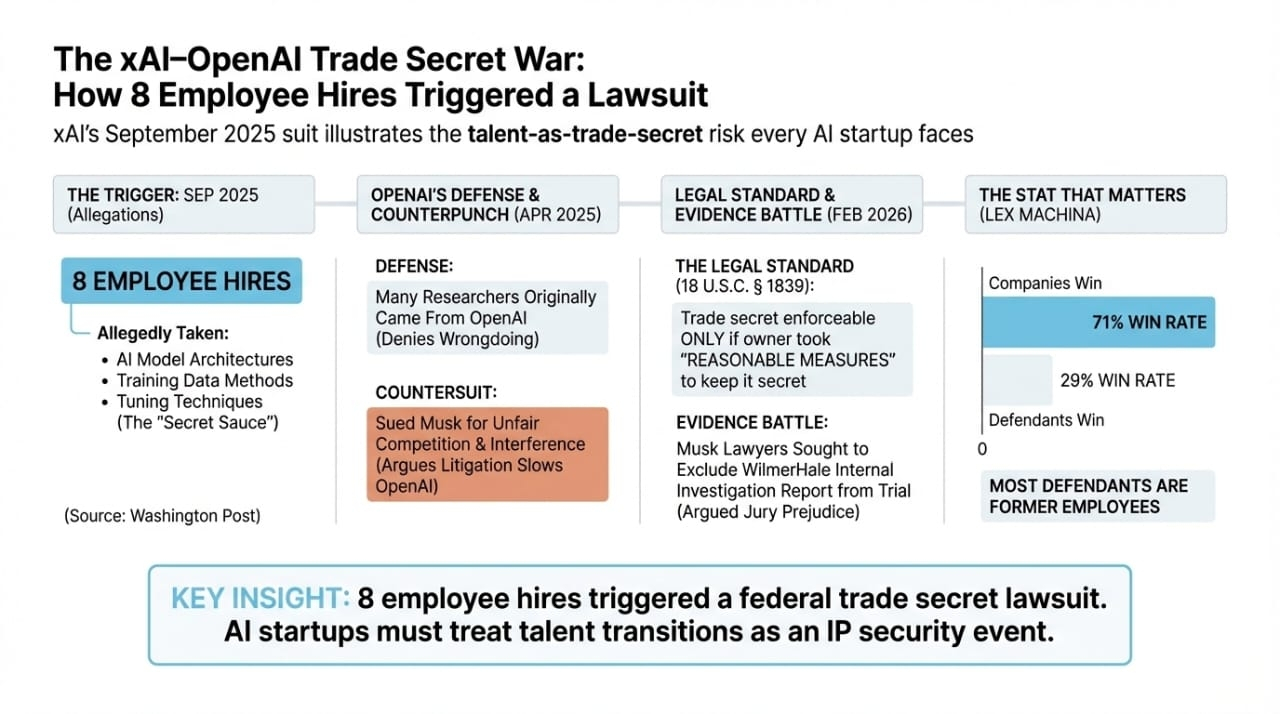
That is the strange possibility I cannot quite shake. Maybe OpenLedger is not just building a nicer way to say “you contributed.” Maybe it is helping define the machinery for deciding what counts as a valid claim when contribution and compensation are no longer separable. If that is true, then the real innovation is not attribution in the old sense. It is the conversion of influence into a dispute-ready financial object. And once that happens, the system is no longer just about recognition. It is about who gets to participate in the economics of contested intelligence.