
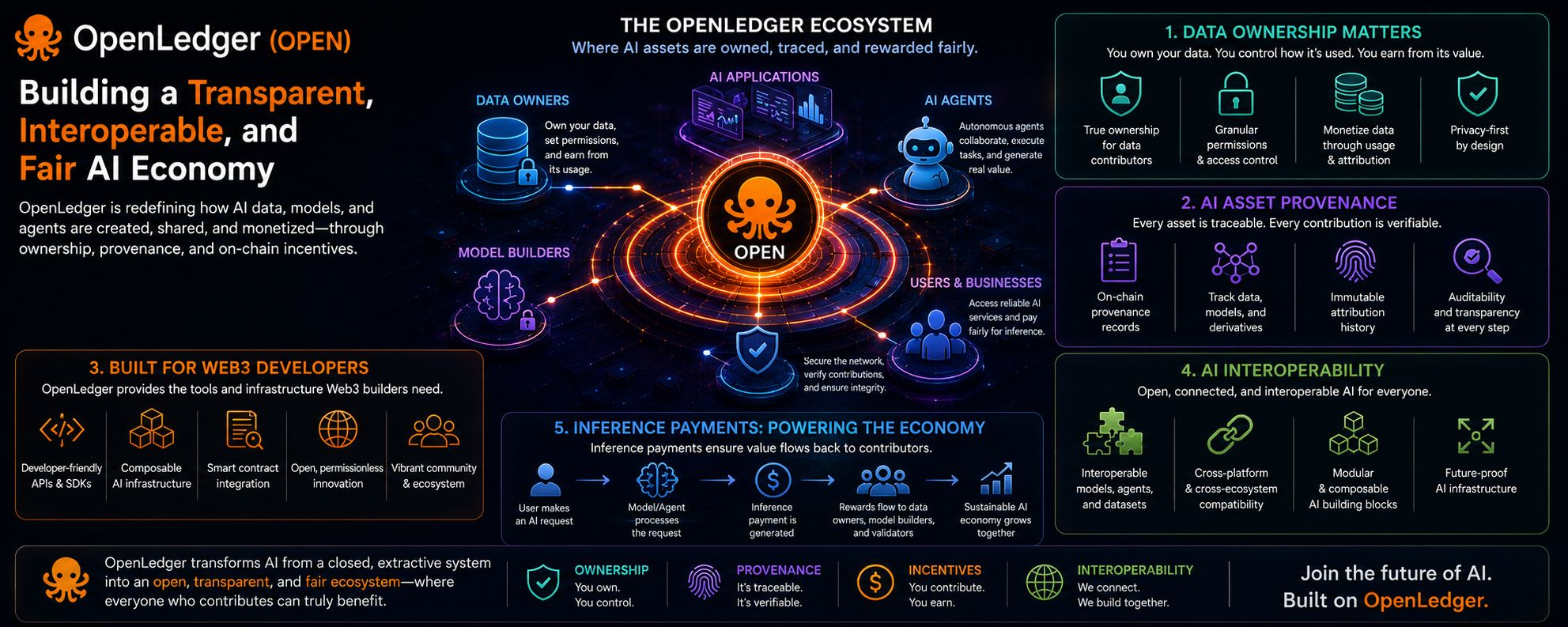


I have Been sitting with OpenLedger again, and I think the project is quietly attacking one of the most overlooked problems in AI: ownership. Everyone talks about models and compute power, but almost nobody talks about who actually owns the raw intelligence feeding these systems 😂 Right now, data gets scraped, reused, fine-tuned, and monetized at massive scale while contributors usually lose visibility and control entirely.
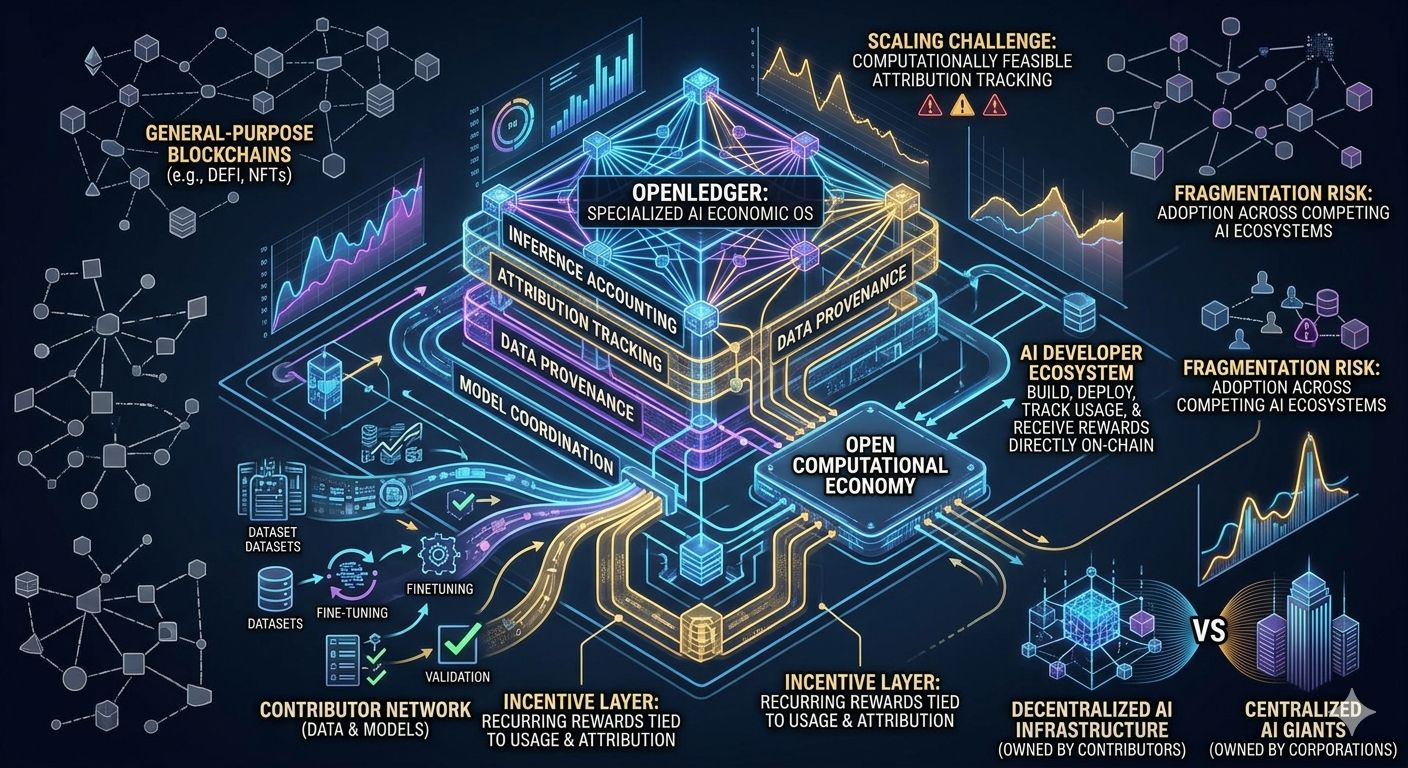
That’s where OpenLedger’s whole architecture starts getting interesting.
What I kept coming back to is how seriously the network treats data ownership and provenance. Instead of datasets becoming invisible backend resources, OpenLedger tries to turn them into traceable economic assets. Every contribution can theoretically carry attribution metadata through the lifecycle of model training, deployment, and inference generation. That provenance layer matters more than people realize because AI systems are becoming increasingly composable. Models build on datasets, agents interact with other agents, and outputs evolve across multiple layers of intelligence infrastructure.
Without provenance tracking, nobody really knows where value originates anymore.
And honestly, that’s also why Web3 developers seem naturally drawn toward this ecosystem. OpenLedger doesn’t just bolt blockchain onto AI narratives for marketing. The chain itself is structured around transparent attribution, decentralized coordination, and programmable economic incentives. Developers can deploy AI applications, integrate datasets, coordinate agents, and receive inference-based rewards directly on-chain without relying entirely on centralized AI providers.
The interoperability angle is underrated too. Most AI systems today operate like isolated kingdoms with limited communication between models, datasets, and infrastructures. OpenLedger pushes toward shared economic interoperability where AI agents, applications, and models can interact through standardized attribution and payment layers. That creates a more modular AI economy instead of fragmented ecosystems locked behind corporate APIs.
And the inference payment mechanism might actually be the core engine behind everything. Whenever AI outputs generate value, payments can theoretically flow back through the network toward contributors whose datasets, models, or agents enabled that inference. That changes AI economics from extraction into participation. Instead of one company capturing all downstream revenue, the system attempts distributing rewards proportionally across contributors.
But the tension here is obvious too.
Attribution-heavy systems become incredibly difficult to maintain as AI interactions grow more autonomous and layered. The more interoperable the ecosystem becomes, the harder it is to calculate fair ownership boundaries accurately. There’s also the risk that tokenized contribution systems incentivize quantity over quality.
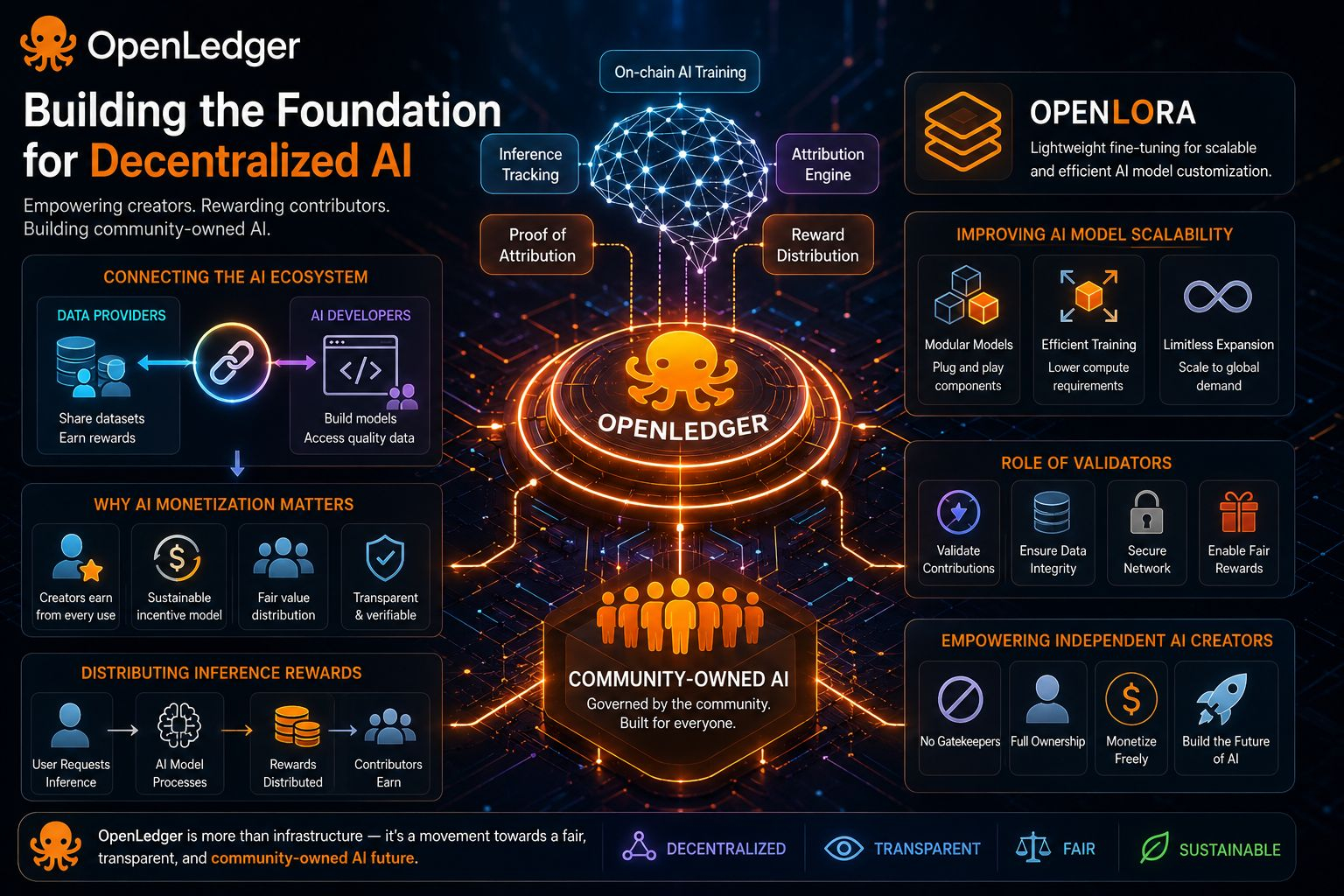
Still, OpenLedger feels directionally important because it reframes AI data as owned infrastructure rather than free public fuel. The real question is whether decentralized provenance systems can stay scalable once AI economies become too complex for humans to fully audit themselves.
