
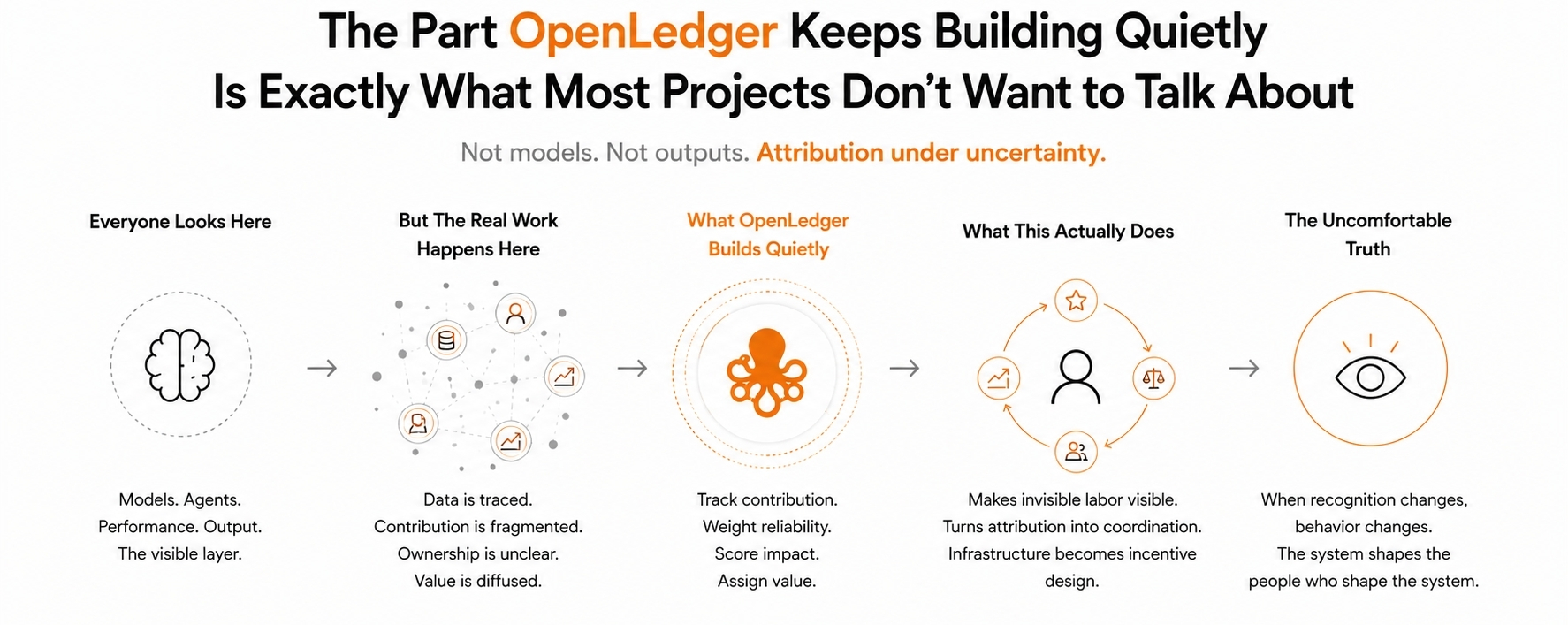
Something about this kept bothering me lately. Not because it is new, but because it feels like most people are looking at the wrong layer.
Not because it is new, but because it feels like most people are looking at the wrong layer.
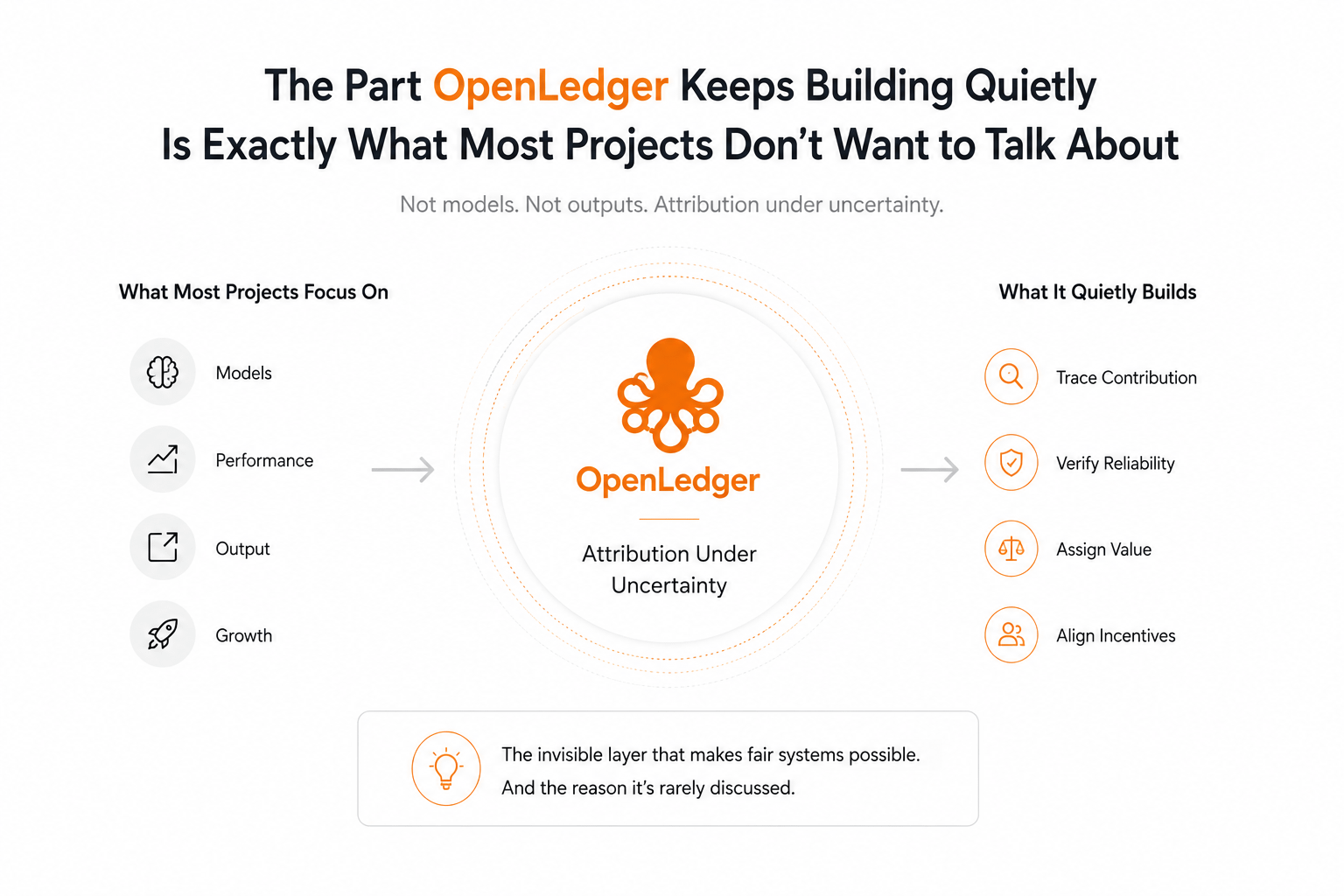
Everyone talks about models, agents, performance, output. But very few talk about what happens before the output even exists the messy, uncomfortable part where data is traced, contribution is fragmented, and value has to be assigned to something that doesn’t have a clear owner.
At first I thought this was just a tooling problem. Better pipelines, cleaner datasets, faster coordination.
But the more I looked at systems like OpenLedger, the more I started to feel that the real issue is not generation at all. It is attribution under uncertainty.
The problem is not intelligence. It is coordination under invisible labor.
Somewhere in the background, infrastructure like OpenLedger keeps trying to solve something most projects quietly avoid: how to track contribution when contribution is probabilistic, partial, and continuously reused.
And that creates a strange tension.
Because once you start pricing reliability, weighting data sources, and scoring contribution, you are no longer just building infrastructure. You are shaping behavior.
People optimize for what gets recognized. Not necessarily what creates value. And that gap slowly becomes the system itself.
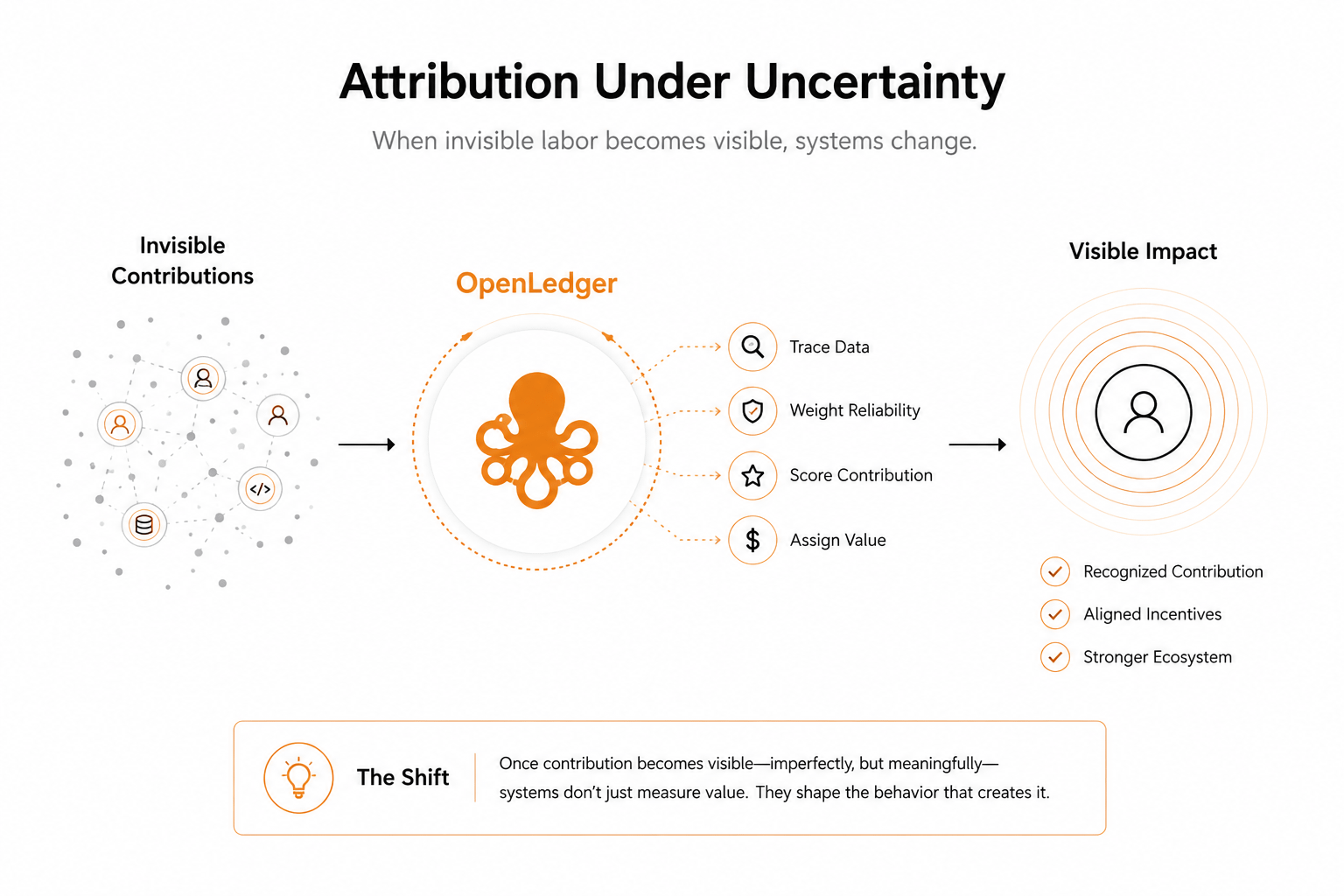
Maybe I’m overstating it. Still early obviously. But I keep wondering what happens when invisible contributors become visible, not perfectly, but just enough to distort incentives.
If this actually works, the uncomfortable part is not technical. It is behavioral.
The question is no longer what OpenLedger is doing… it is what kind of human behavior a system like this selects for when nobody is watching.