
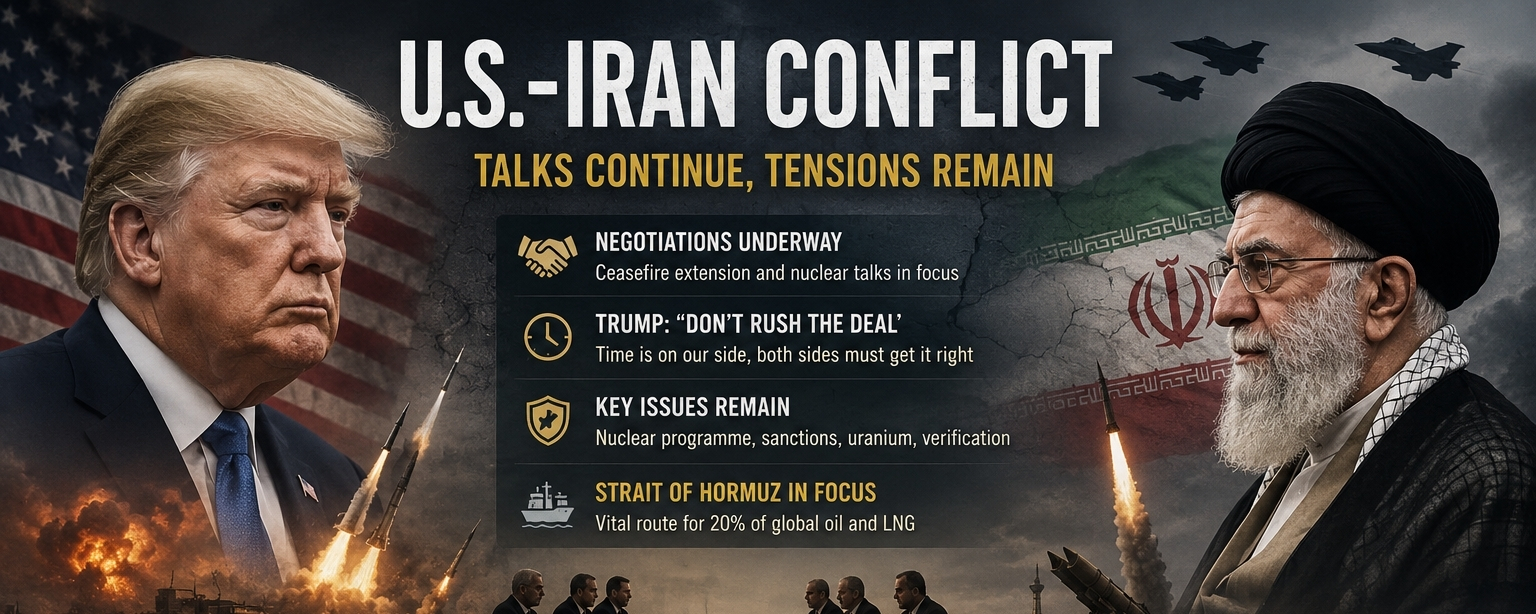
Negotiations between the United States and Iran are entering a more complex and deliberately paced phase with signals pointing toward progress but not completion.
Donald Trump has instructed US negotiators not to rush the ongoing talks emphasizing that “time is on our side” and that any agreement must be carefully structured. This comes shortly after earlier remarks suggesting that a deal was “largely negotiated” creating a tension between perceived proximity and actual unresolved details.
At the center of the current framework is a multi-layered arrangement reportedly involving a temporary ceasefire extension potential reopening of the Strait of Hormuz and continued dialogue over Iran’s nuclear programme. While these elements suggest movement toward de-escalation officials on both sides confirm that key disagreements remain unresolved.
Iranian representatives have acknowledged progress but simultaneously clarified that significant gaps still exist particularly around verification mechanisms and core strategic concessions. On the US side the position remains conditional sanctions pressure and maritime restrictions are being maintained until a fully signed and enforceable agreement is reached.
Politically the deal is also exposing internal divisions. Some factions argue that the proposed terms risk over-concession while others view the negotiation itself as a strategic containment success that has forced structured engagement rather than escalation.
From a market structure perspective the most sensitive variable remains the Strait of Hormuz. Any credible pathway toward normalization of maritime flow would materially impact global energy pricing with downstream effects on inflation expectations and risk asset positioning.
However the critical takeaway is not resolution but pacing.
This is a negotiation phase defined by controlled pressure partial progress signals and strategic ambiguity. Markets typically do not trend decisively in such environments they oscillate between optimism on progress and caution on execution risk.
Until formal agreement is signed certified and operationalized the system remains in a high-friction equilibrium rather than a resolved outcome.
In simple terms
Progress is visible but certainty is still absent and that gap is where volatility continues to live.