
Something about this kept bothering me, not in a dramatic way, but in the slow way certain ideas sit at the back of your mind and refuse to disappear.
It started when I read how OpenLedger frames something most AI systems quietly avoid talking about: not just what the answer is, but where the answer actually came from.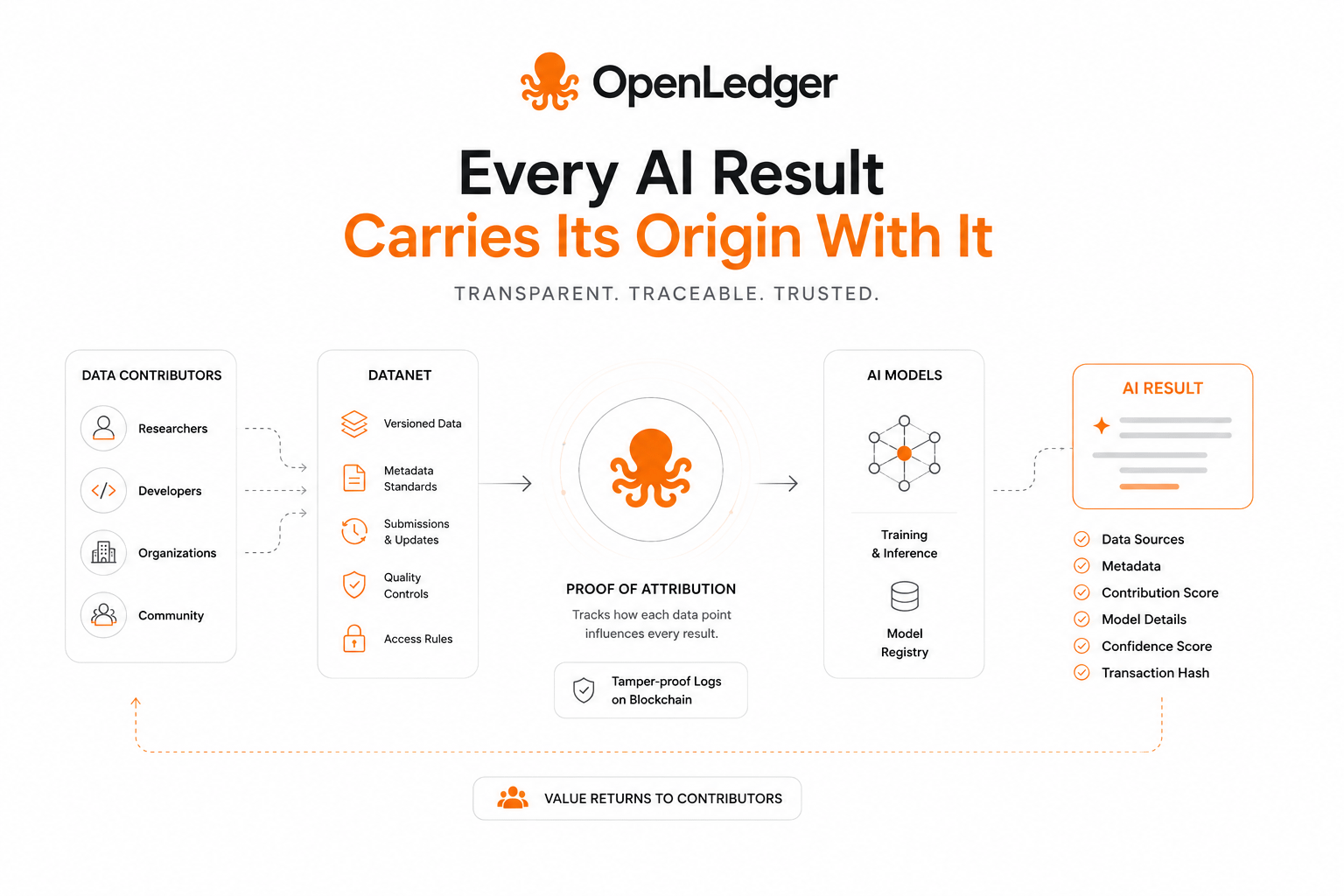
At first, I thought this was just another “transparency” narrative. The kind you see often in new infrastructure projects. A clean story added on top of complex systems.
But the more I stayed with it, the more it felt like the focus was not on explaining results better, but on refusing to let results exist without history.
That shift sounds small. It isn’t.
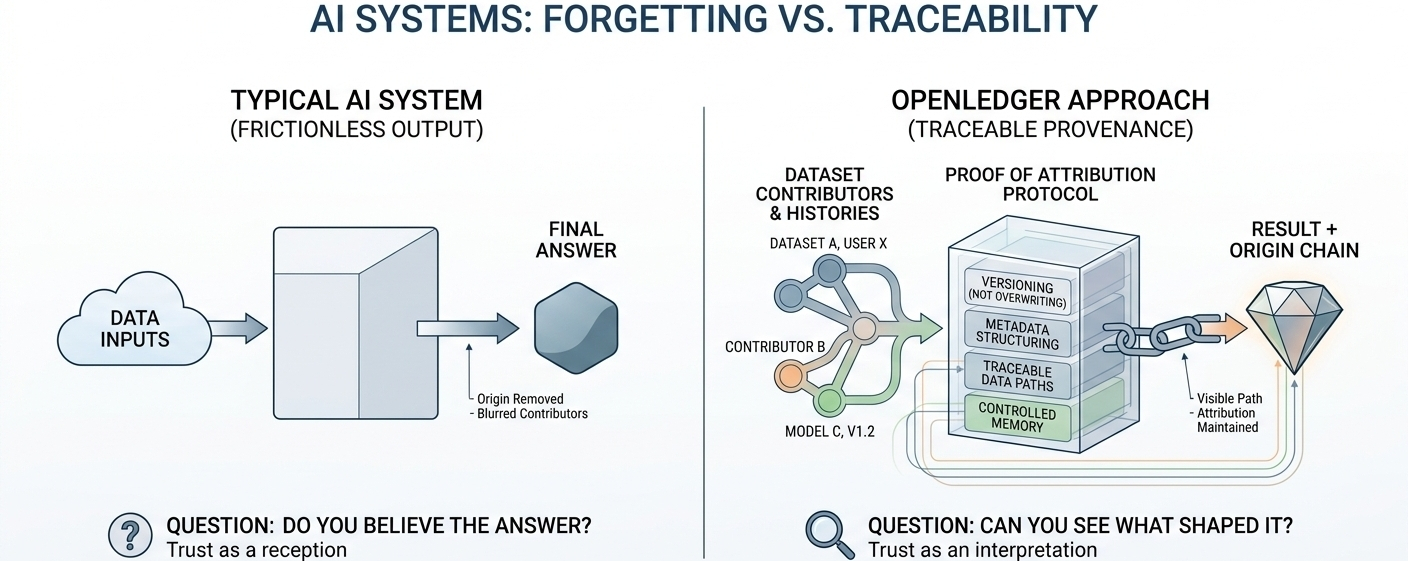
Because most systems today are built to optimize the opposite: remove friction, compress origin, smooth over contribution, and present outputs as if they emerged from a single clean intelligence.
OpenLedger moves against that instinct. It tries to keep the origin inside the result itself.
And that changes the psychological structure of trust.
Not “do you believe the answer,” but “can you see what shaped it.”
The common narrative around AI is still stuck at capability. How smart, how fast, how accurate.
But the deeper constraint is not intelligence. It is attribution.
Who contributed. What influenced what. Which data mattered. Which paths got erased during compression.
Once you look at systems through that lens, even something like Datanet stops feeling like a data pipeline and starts feeling like a controlled memory environment where nothing is allowed to become invisible too quickly.
Versioning instead of overwriting. Limits instead of endless ingestion. Metadata attached not as decoration, but as structure.
It is a quiet rejection of the idea that data should become anonymous just because it is usable.
Still, I’m not fully convinced this alone resolves anything.
Because even if you make origin visible, you still have to decide how much origin matters.
And that’s where things get complicated.
Proof of Attribution sounds clean in theory, but in practice it sits inside messy realities: overlapping datasets, uneven influence, indirect contributions that don’t map neatly to tokens or traces.
Some contributions will always be harder to measure than others.
And I keep wondering whether making everything traceable actually produces clarity, or just a new layer of structured disagreement.
Maybe I’m overstating it. Hard to know yet.
But there is something meaningful in the direction itself.
A system that refuses to let outputs detach from their history is, in a quiet way, challenging one of the most accepted assumptions in modern AI: that usefulness requires forgetting.
And maybe the more interesting tension is not technical at all.
It is behavioral.
What happens when users stop interacting with “answers” and start interacting with visible chains of influence? Do they trust more, or does trust become heavier because it is now something they have to interpret instead of receive?
There is also a human cost hidden inside this. Contributors, dataset builders, smaller participants in the chain people who usually disappear once the model is trained. Bringing them back into visibility sounds fair, but visibility also creates friction: disputes, negotiations, comparisons, disagreements that were previously absorbed by abstraction.
Still, something about this approach feels like it is pointing at a real fracture in the current AI economy.
We built systems that generate results faster than we can explain them.
And for a while, that imbalance was acceptable.
But as soon as outputs become economically meaningful, the absence of origin stops being a technical detail and starts becoming a coordination problem.
If OpenLedger is right about anything, it is not that attribution is solvable, but that ignoring it might be the more expensive choice long term.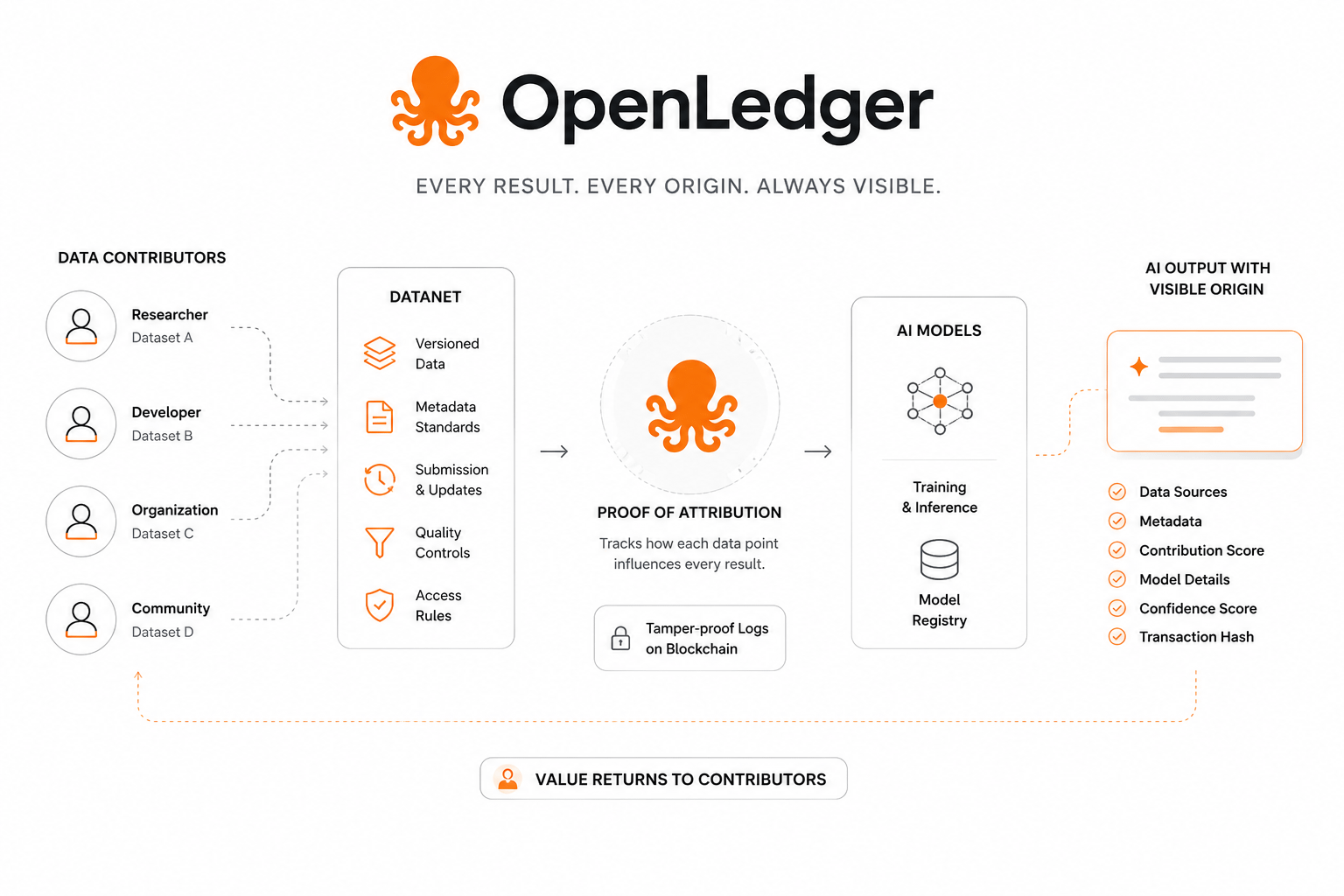
I’m still unsure where this leads.
A more transparent system could mean better trust.
Or it could mean a more complicated version of the same uncertainty, just with more visible edges.
Either way, the real question doesn’t feel answered yet.
It feels postponed into the next layer of the system itself.