


I've put capital into restaking systems before and gotten burned not because the mechanism failed but because I didn't read what I was actually signing up for.
So when I saw OpenLedger's restaking mechanics promising amplified yield on top of network security contributions, I didn't reach for the calculator first. I reached for the fine print.
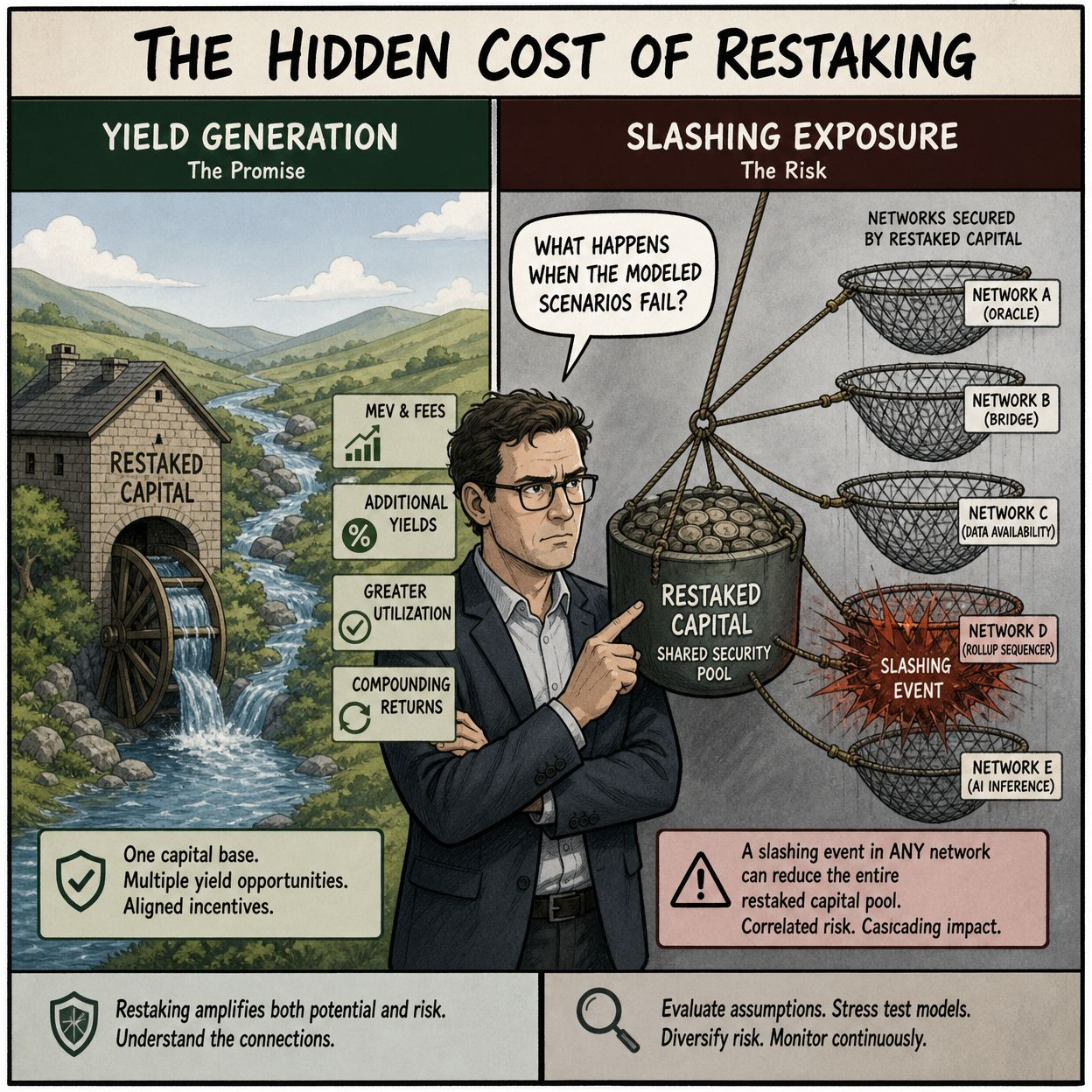
Here's what restaking actually means in OpenLedger's context. You stake capital to secure the network. That same capital simultaneously earns yield from OpenLedger's economic activity, data marketplace fees, compute settlements, attribution transactions. The pitch is that your capital works harder without being deployed twice. More yield, same principal, one commitment.
I've heard cleaner versions of that pitch collapse under conditions nobody modeled for.
The risk that restaking introduces isn't theoretical and it doesn't show up in the yield calculations. It shows up in slashing exposure. Your staked capital is now subject to slashing conditions across every network it's simultaneously securing. One slashing event in one network touches capital you thought was doing something else entirely. The more networks your restaked position covers, the more ways it can be reduced without you making a single bad decision yourself.

OpenLedger's slashing conditions are where I slowed down longest. What specific behaviors trigger a slash. Who makes that determination. What recourse exists if the decision is disputed. I found the documentation gestured toward these questions without fully answering them. For a mechanism where the downside is permanent capital reduction, gestured-toward is not good enough.
The yield itself is variable in a way the headline numbers don't always make obvious. OpenLedger's restaking rewards come from network transaction volume. Data purchases, compute fees, attribution settlements. When the network is busy and growing, that yield compounds attractively. When activity drops, the yield compresses. And in a bear market, yield compression and asset price decline tend to move in the same direction at the same time. That's the scenario I always want to see modeled and almost never do.
The security argument for restaking is the part I find most straightforward. More capital staked behind OpenLedger's infrastructure means a higher cost of attack. An actor trying to manipulate the network's outcomes needs to acquire enough capital to overcome the restaked security layer before the attack becomes viable. At meaningful restaking depth that cost becomes prohibitive. This is what EigenLayer's model was designed to achieve and OpenLedger inherits that logic reasonably.
What I find genuinely interesting is the alignment restaking creates between security providers and network health. If you're restaking to secure OpenLedger, your yield comes from OpenLedger's activity. You have a financial reason to want the network to succeed that goes beyond the base staking obligation. That alignment is more direct than most security models produce.
Whether it holds when things get difficult is the question I always end up at. When slashing risk is elevated, yield is compressed, and withdrawal is the easiest decision, the alignment gets tested in ways that good conditions never reveal. No restaking mechanism has faced that stress at meaningful scale yet. OpenLedger's will eventually.
I'm not saying don't participate. I'm saying know exactly what you're participating in before the yield number makes the decision for you.
The yield is real. So is everything attached to it.