
OpenLedger is one of those projects that sounds like it should annoy me.
AI blockchain. Data. Models. Agents. Token. Liquidity.
Look, I’ve been around long enough to know how this usually goes. Someone takes a real problem, wraps it in five layers of crypto language, adds a ticker, and suddenly everyone acts like the future has arrived. Then six months later, the “future” is a dead Discord, a half-working dashboard, and a token chart nobody wants to talk about.
So no, I don’t look at OpenLedger and instantly feel excited.
I feel suspicious first.
And honestly, that’s probably healthy.
The thing is, OpenLedger is touching a problem that actually exists. AI runs on data, and most of that data has been treated like free raw material. People create things, write things, label things, train things, share things, and somewhere up the chain, value gets extracted. The original contributors usually get nothing. Maybe a vague promise. Maybe a “community” role. Maybe not even that.
That’s the mess.
Crypto has its own version of this trauma too. We’ve all seen fake users farming airdrops. Wallets pretending to be people. Points systems turning everyone into bots. Projects rewarding the loudest farmers instead of the people who actually helped. Liquidity appears for a season, drains out, and everyone acts shocked.
Same story. Different dashboard.
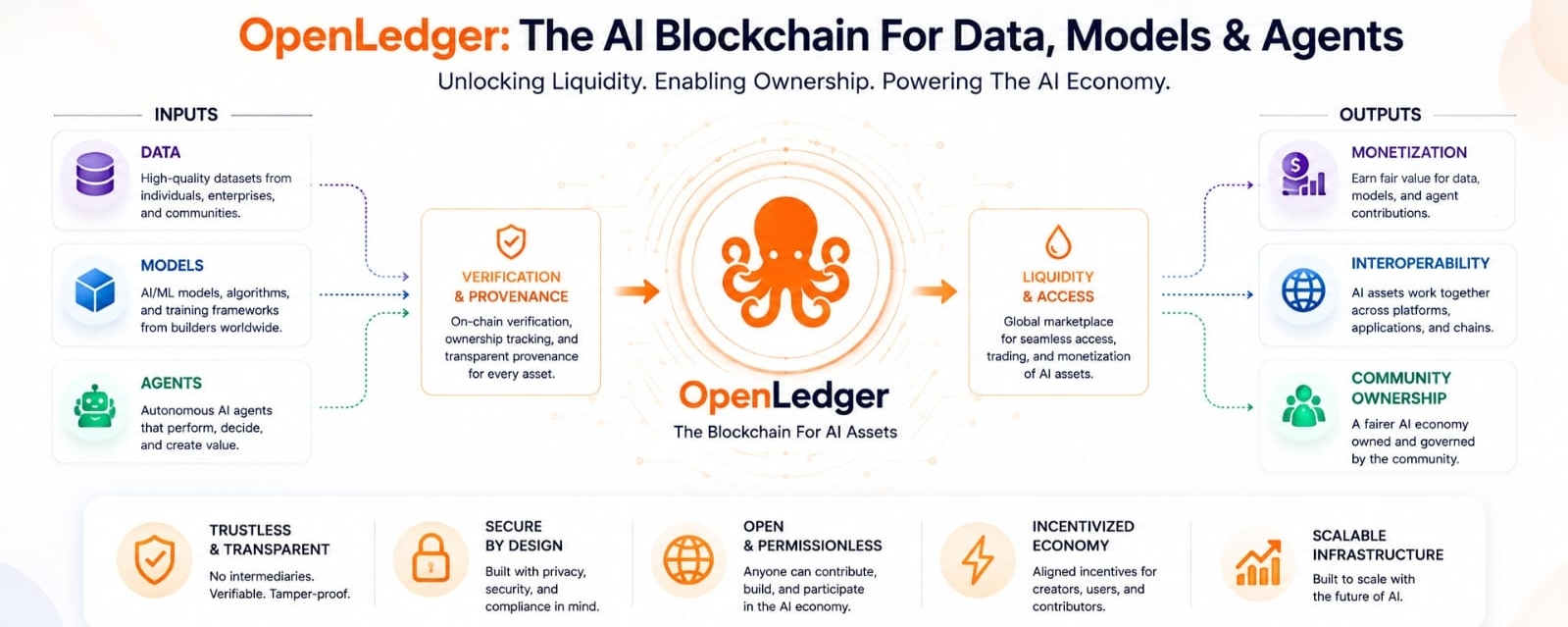
So when OpenLedger talks about creating infrastructure around data, models, and agents, I don’t hear some magical AI future. I hear plumbing.
Boring plumbing.
And maybe that’s the only part worth taking seriously.
Because if AI is going to keep growing, someone has to deal with what’s under the hood. Where did the data come from? Who owns it? Who gets paid? Which model used what? Can an agent pay for access without turning everything into another scammy incentive farm?
Not flashy questions.
Just necessary ones.
OpenLedger seems to be trying to build around that layer. Not the cute AI demo layer. Not the influencer-thread layer. The ugly layer underneath, where ownership, access, payments, reputation, and usage actually need to work.
That’s a hard place to build.
And it might take time.
Honestly, it may also fail, because this space is brutal. Data markets are not easy. People love saying data is valuable, but not all data is valuable. Some of it is garbage. Some of it is copied. Some of it is outdated. Some of it is legally questionable. Some of it looks useful until someone actually tries to use it.
Putting it on-chain doesn’t fix that.
That’s the part people skip.
A blockchain can show that something happened. It can show who interacted with what. It can help with records, access, and incentives. But it can’t magically turn bad data into good data. It can’t make a weak model useful. It can’t make an AI agent trustworthy just because it has a wallet.
Look, crypto people love confusing activity with adoption.
We’ve seen this too many times.
A project launches, users flood in, everyone farms, dashboards look alive, and then the rewards dry up. Suddenly nobody is there. The “community” was just mercenary traffic wearing a hoodie.
OpenLedger has to avoid that trap.
If the system only attracts people trying to farm OPEN or chase the next AI narrative, then it’s just another short-lived crypto machine. Loud for a while. Empty later.
But if actual data providers care, if AI builders actually use the network, if model creators find a reason to stay, if agents become more than buzzword decorations, then maybe there’s something real under the noise.
Maybe.
That’s as far as I’ll go.
The token is another thing I can’t ignore. OPEN needs a reason to exist beyond speculation. I don’t want another token that “powers the ecosystem” in the same vague way every token supposedly powers every ecosystem. What does it actually do? Does it help coordinate supply and demand? Does it secure something? Does it reward useful behavior instead of fake behavior? Does real usage matter?
These questions are not FUD.
They’re basic survival instincts.
We’ve all watched projects with decent ideas get buried under bad token design. We’ve also seen useless products pump because the narrative was hot. Neither one proves anything.
OpenLedger sits in a tricky place because both AI and crypto are already overhyped on their own. Put them together and the noise gets unbearable. Every claim needs to be checked twice. Every partnership needs to mean something. Every metric needs to be questioned.
The thing is, I don’t think the idea is empty.
AI does need better infrastructure for data and models. People do need cleaner ways to monetize useful contributions. Agents, if they become real economic actors, will need rails to access services and pay for resources. There is a real gap here.
But the gap is not the product.
Execution is the product.
Trust is the product.
Quality control is the product.
OpenLedger can’t just say “data liquidity” and expect the market to fill in the blanks. It has to deal with the ugly stuff. Bad actors. Fake supply. Low-quality assets. Legal uncertainty. Users who don’t care about decentralization unless it solves a problem better than the centralized option.
That’s where most crypto projects break.
Not in the idea.
In the dirt.
Still, I’d rather see projects trying to build useful infrastructure than another meme wrapped in fake utility. OpenLedger at least points toward something that could matter if AI keeps eating more of the internet. It’s not glamorous. It’s not clean. It’s not the kind of thing that should be hyped with rocket emojis.
It’s plumbing.
And crypto needs more plumbing that actually works.
For now, I’m not calling OpenLedger a winner. I’m not calling it the future. I’m definitely not pretending the token answers every question.
I’m just saying the problem is real.
The solution is hard.
The hype should be kept on a leash.
Maybe OpenLedger becomes useful infrastructure for AI data, models, and agents. Maybe it gets swallowed by the same cycle that eats most crypto projects: attention first, usage later, disappointment after.
Honestly, I don’t know.
And that’s fine.
A project like this doesn’t need worship. It needs time, users, stress, failure, fixes, and proof that something real remains when the narrative cools off.
That’s where I’d leave it.
OpenLedger is worth watching, not blindly believing. The idea makes sense. The road is messy. The token deserves questions. The AI angle deserves even more questions. If it works, it’ll probably look less like a revolution and more like infrastructure quietly doing its job under the hood.
Which, in crypto, would already be a nice change.