


There’s a specific kind of exhaustion that comes from surviving multiple crypto cycles. It isn't the sudden market crashes or the brutal volatility you eventually develop a thick skin for those. Instead, it’s the relentless, draining repetition. Every few years, a new cycle arrives masquerading as a paradigm shift, dressed up in glossy terminology and revolutionary branding. Yet, if you look past the immediate noise, it’s always the same predictable patterns playing out under a different name.
I’ve watched projects raise millions before defining their utility. I’ve seen communities built entirely on incentives collapse the second those rewards dried up. After enough time, you stop reacting to the hype. You stop caring about dramatic roadmaps or hyper-edited launch videos. Most of it fades faster than it arrived.
That is precisely why OpenLedger caught my attention. Not with a loud bang but with a quiet, undeniable relevance.
The AI and blockchain narrative already feels overcrowded. Every week, another project claims to be building the future of decentralized intelligence. Most sound completely interchangeable, turning complex computational and ethical problems into catchy marketing slogans. But looking deeper into OpenLedger, it becomes clear they aren’t manufacturing a problem to sell a token they are actively addressing a foundational flaw in how the digital economy operates.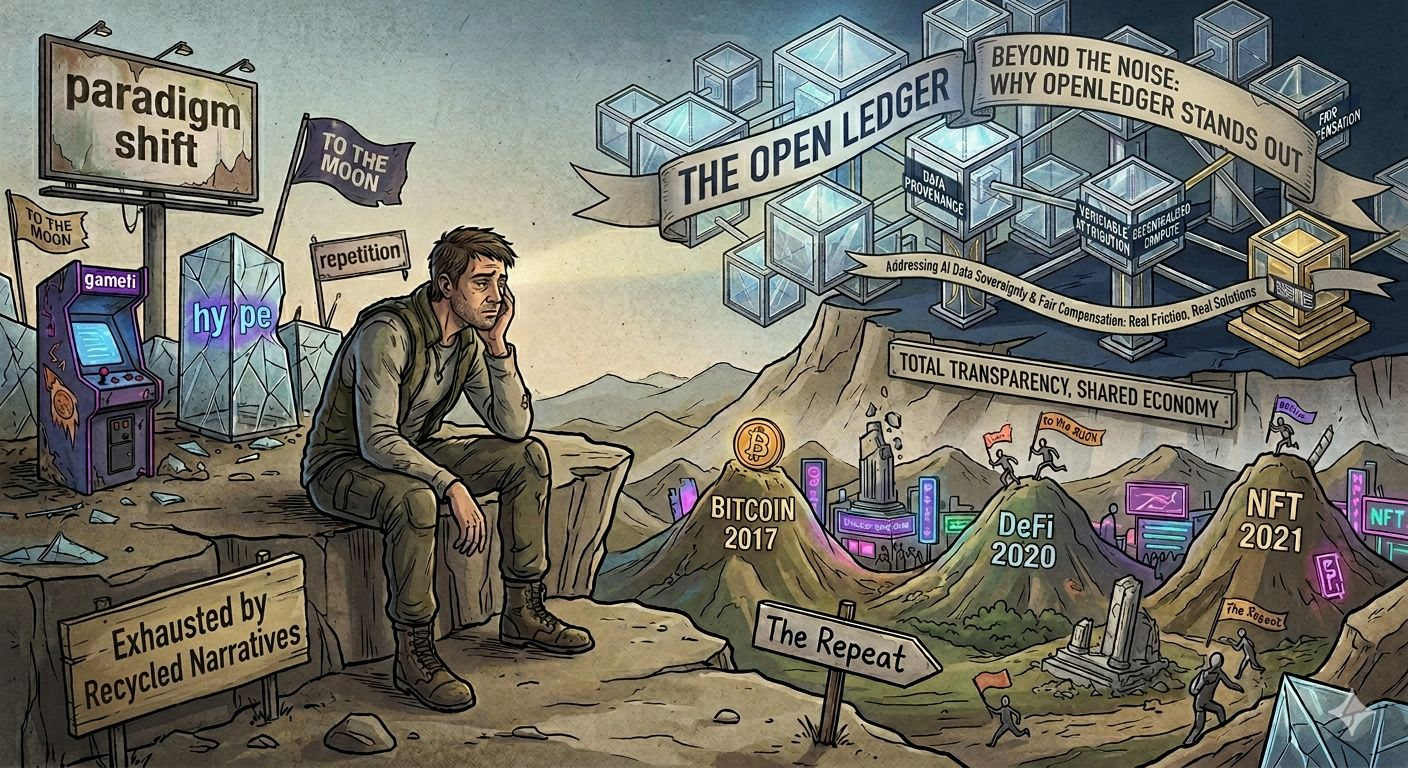
For years, the internet has trained us to give away our value for free. Every post, conversation, dataset and creative choice becomes fuel for larger systems. Now, with AI accelerating aggressively that extraction is getting worse. Centralized models become immensely valuable, corporate entities gain massive leverage and the human sources behind the data are entirely erased. We generate the value constantly, while remaining completely disconnected from the upside.
This is where OpenLedger shifts from a narrative into essential infrastructure. The core thesis creating a decentralized network where data provenance, model contributions and AI infrastructure can be transparently tracked, verified and tokenized is incredibly difficult to execute at scale. But at least it addresses a genuine, pressing friction point. It focuses on the foundational layers: Data sovereignty to prove ownership of training sets, verifiable attribution to ensure creators are recognized rather than scraped and decentralized compute to keep the intelligence supply chain out of the hands of a few tech giants.
This isn't to say it's immune to the typical traps of the space. Crypto has a habit of bending good intentions around aggressive incentives until the original purpose gets distorted. We've seen it with DeFi, NFTs and GameFi where genuine utility often morphs into optimization games, leaderboard races and forced engagement. While modern attention campaigns and point systems are simply the reality of building a web3 community today, the underlying architecture of OpenLedger feels heavy enough to outlast the marketing noise.
The AI industry has massive, unresolved questions around data ownership, fair compensation and centralized monopolies. These problems aren't imaginary, they are becoming more glaring by the month. Most people can feel the imbalance, even if they don’t know the technical language for it.
I’m not approaching this with blind optimism. I’ve been in this space long enough to know how dangerous certainty can be. Good ideas fail all the time, infrastructure takes years to mature and hype is a highly volatile currency. But OpenLedger feels slightly more thoughtful than the surrounding noise. It feels aware of the structural shifts happening in AI and is positioning itself to be the rails that high-quality data actually runs on.
It hasn't earned my unyielding trust yet nothing in crypto does. But it has earned my absolute attention. And after years of watching this market repeat itself, genuine attention is a much rarer commodity than optimism.