

I used to think token rewards were mainly about giving people a reason to join early, but now I see the deeper question differently. A reward can bring motion, but motion alone does not create trust. For Open Ledger Token, the real strength is not only in how many people receive value, but in whether that value is connected to useful work, real demand, and long-term belief.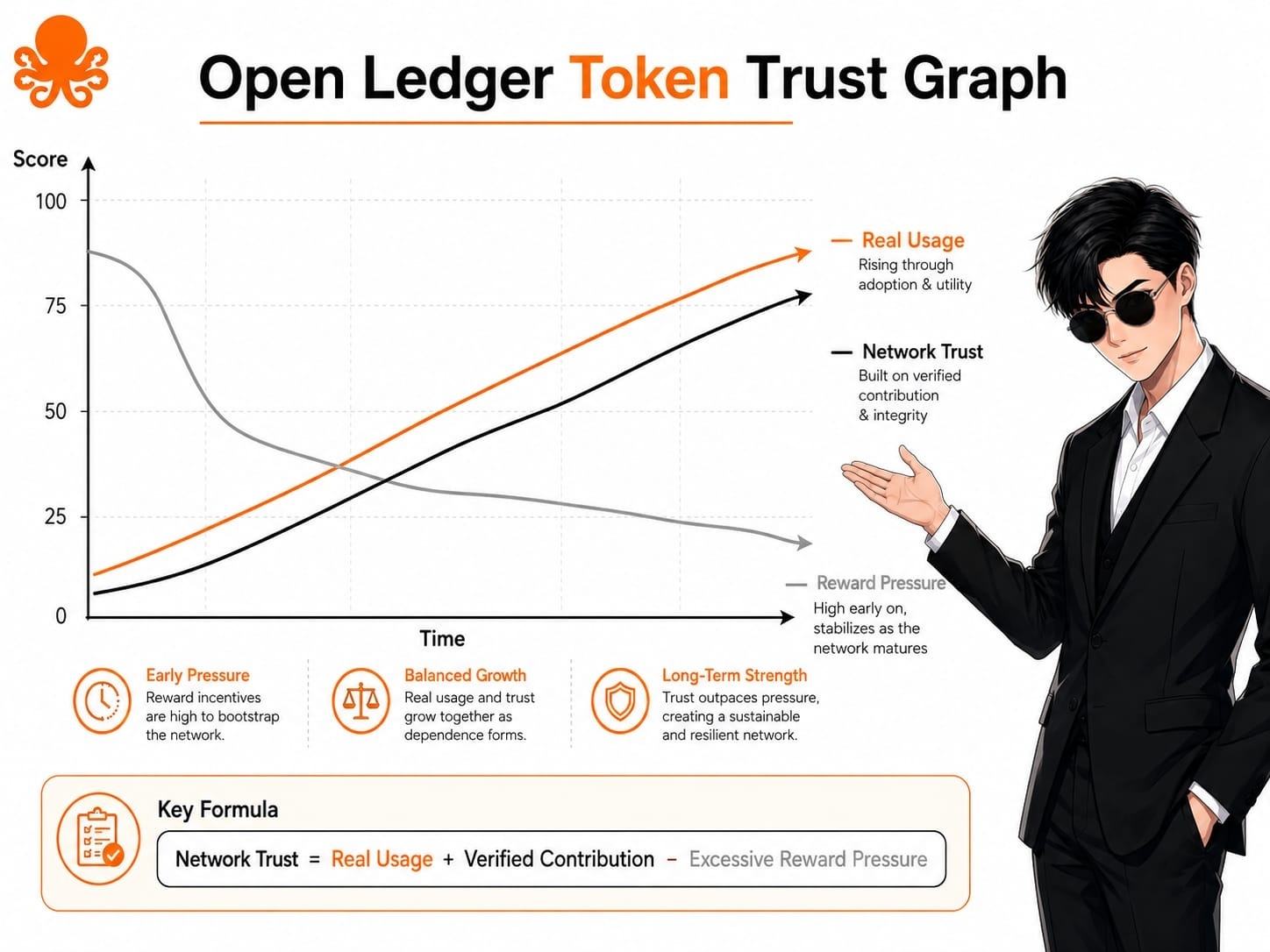
This is where sustainability becomes more than a promise. It becomes a ratio. If contributors are rewarded faster than the network creates real usage, the system may look active for a while, but underneath it can become heavy. I beleive the best token economies are not the ones that spend the most in the beginning. They are the ones that learn how to reward with discipline, patience, and purpose.
Contributors matter because they are not just names on a reward list. They bring data, models, validation, development, and practical energy into the network. Without them, Open Ledger Token would not have the same living base. But contribution also needs proof. A system becomes stronger when rewards go toward work that improves the network, not just toward activity that looks good on the surface.
That is why real usage has to stay close to rewards. If people use the network because the services are helpful, then rewards feel backed by something real. But if rewards grow while usage stays weak, the balance starts to feel fragile. To me, sustainable rewards should rise with verified impact, repeated demand, and useful participation. That kind of growth feels slower, but it is more honest.
Investors also have a place in this picture, and I do not think we should treat them as the enemy by default. Early capital can help build infrastructure before the network is fully mature. The problem begins only when investor timing moves faster than network trust. If too much supply enters before strong demand exists, people may read it as pressure instead of confidence. Patience matters here, because trust needs time to form.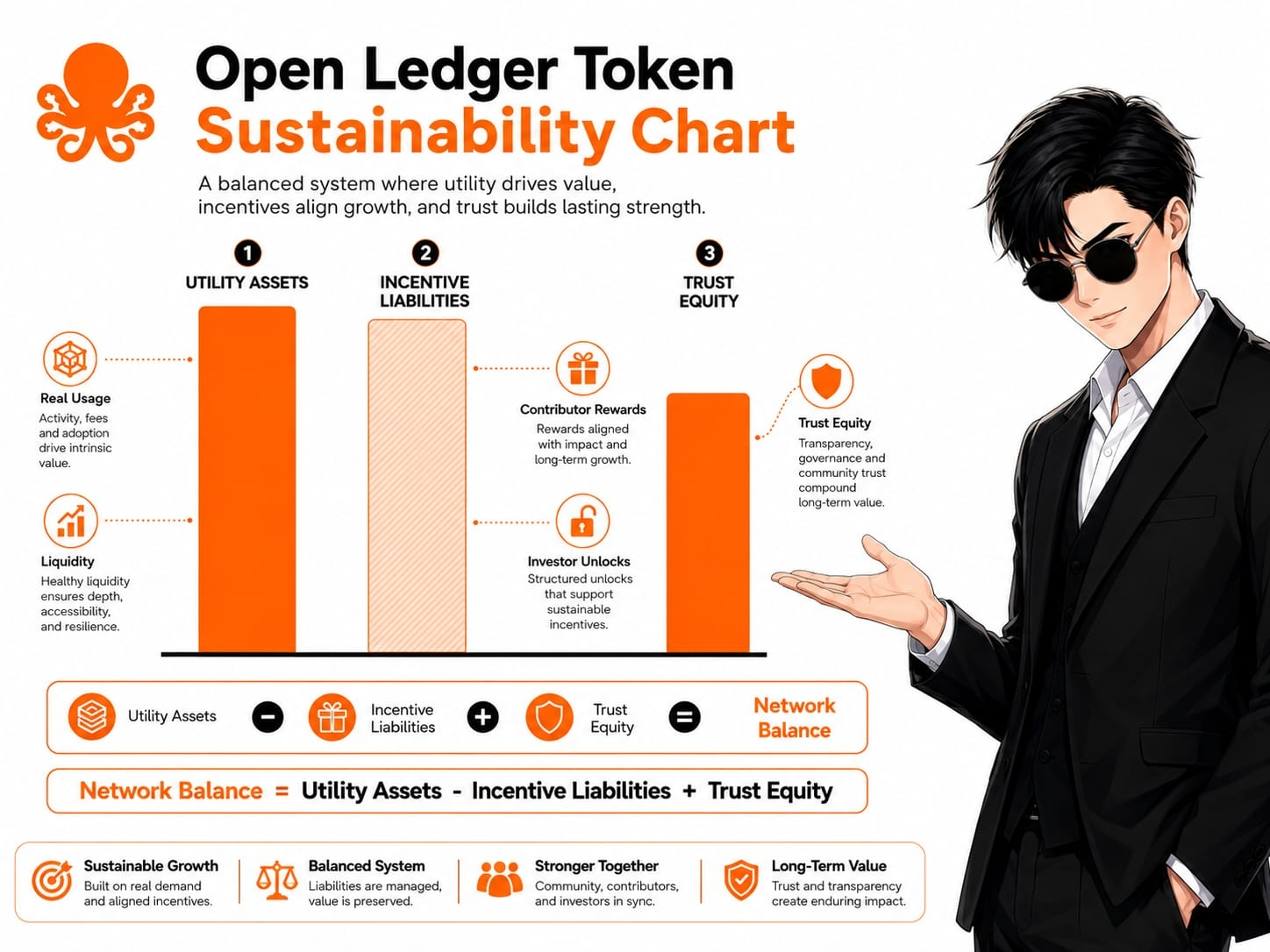
The most important reserve behind Open Ledger Token is not only token supply. It is trust. Trust means people feel that payouts are earned, unlocks are controlled, and utility is real. When every side takes too much too early, the system becomes weak. But when contributors, investors, builders, and users all move at a pace the network can support, the whole structure feels more stable.
I realy like the idea of looking at tokenomics like a balance sheet. Contributor rewards can be productive assets when they create better work and deeper value. Investor unlocks can become future pressure if demand is not ready. Liquidity can help people enter and move, but liquidity alone cannot create belief. Trust is the equity layer that absorbs stress when the network is still growing.
This is why the long-term math is quiet. Open Ledger Token does not need to prove everything through early excitement. It needs to show what remains after the first rewards slow down. Do contributors still care? Do users still return? Does useful work still get recognized? Does each new token release make the network stronger instead of more fragile? These are the questions that matter most.
For me, the positive lesson is simple. Sustainable tokenomics is not about making every side happy at once. It is about protecting the network long enough for real value to grow. Open Ledger Token becomes stronger when rewards are fair, investor incentives are patient, and usage keeps building trust step by step.
In the end, I think the best economy is not the loudest one. It is the one that can keep working when hype fades, when rewards become more selective, and when people stay because the system makes sense. That is the kind of slow, steady, usefull trust that can turn Open Ledger Token from a reward story into a lasting network story.
