
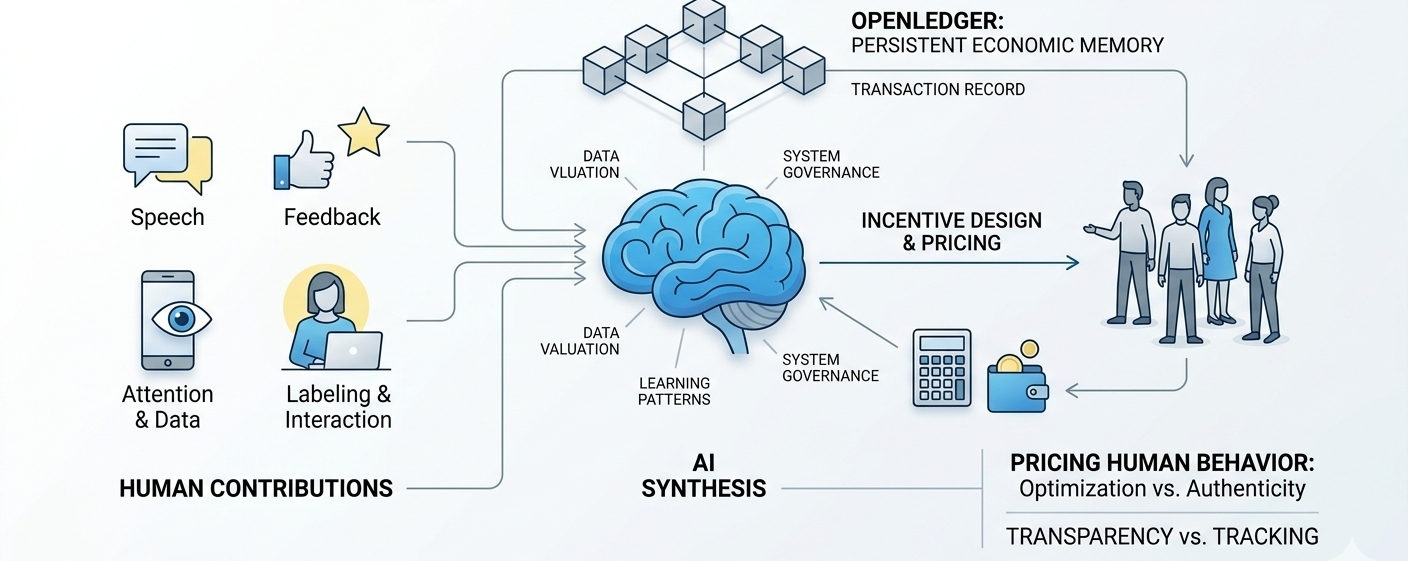
I used to think AI protocols like OpenLedger were mainly about fixing data ownership. A cleaner marketplace where people who generate value finally get something back. At first, that idea felt straightforward to me, almost obvious. If data is being used to train systems that generate massive value, then it makes sense that contributors should also share in that value.
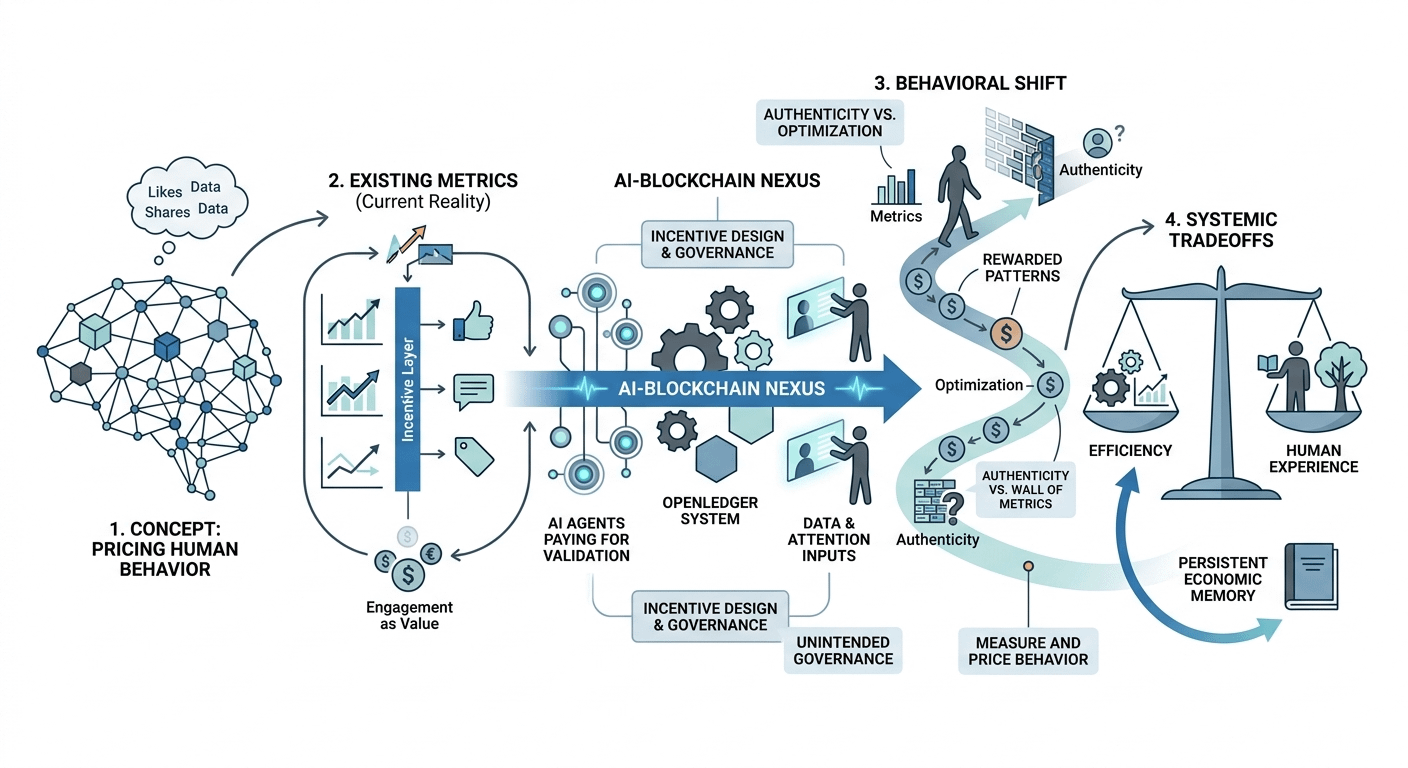
But the more I looked at it, the less simple it felt. I started noticing that the real shift isn’t just about ownership or fairness. It’s about what happens when human behavior itself becomes something priced, tracked, and continuously evaluated inside a system.
In the beginning, I assumed this was just another infrastructure upgrade for AI. A better accounting layer. Something that sits quietly in the background. But that assumption started breaking when I realized the system isn’t passive. It doesn’t just record behavior, it slowly shapes it.
What changed my perspective was the realization that incentives are not neutral. The moment you attach value to interaction, you change the nature of that interaction. People stop acting only out of curiosity or intent, and start acting with awareness of reward. It feels subtle at first, almost harmless, but it accumulates over time.
That made me think OpenLedger is less about data and more about behavior design. A system where AI, datasets, and human activity all become part of one measurable loop. In theory, it creates fairness. In practice, it introduces a hidden filter: what gets rewarded becomes what gets produced.
At scale, this starts to reshape ecosystems. Contributions that are easy to measure rise in importance, while messy or unquantifiable human input slowly loses visibility. That imbalance is not always obvious, but it changes the texture of participation. I’ve seen similar patterns in other systems where optimization quietly replaces spontaneity.
The tension for me is that this kind of structure solves a real problem while creating another one underneath it. It addresses the exploitation of user-generated value by platforms, but at the same time it risks turning everyday interaction into economic output. And once that shift happens, it becomes difficult to tell where genuine participation ends and optimized behavior begins.
There is also a deeper uncertainty around control. Even in systems that claim decentralization, some layer always ends up guiding behavior whether through validation rules, reputation weights, or incentive design. It’s not necessarily malicious, but it is directional. And direction, over time, becomes influence.
Zooming out, I keep coming back to the same question. If AI systems and blockchain networks both evolve toward recording, pricing, and preserving every interaction, what happens to the parts of human behavior that were never meant to be stored in the first place? The forgotten, the informal, the unoptimized moments that don’t fit into any reward structure.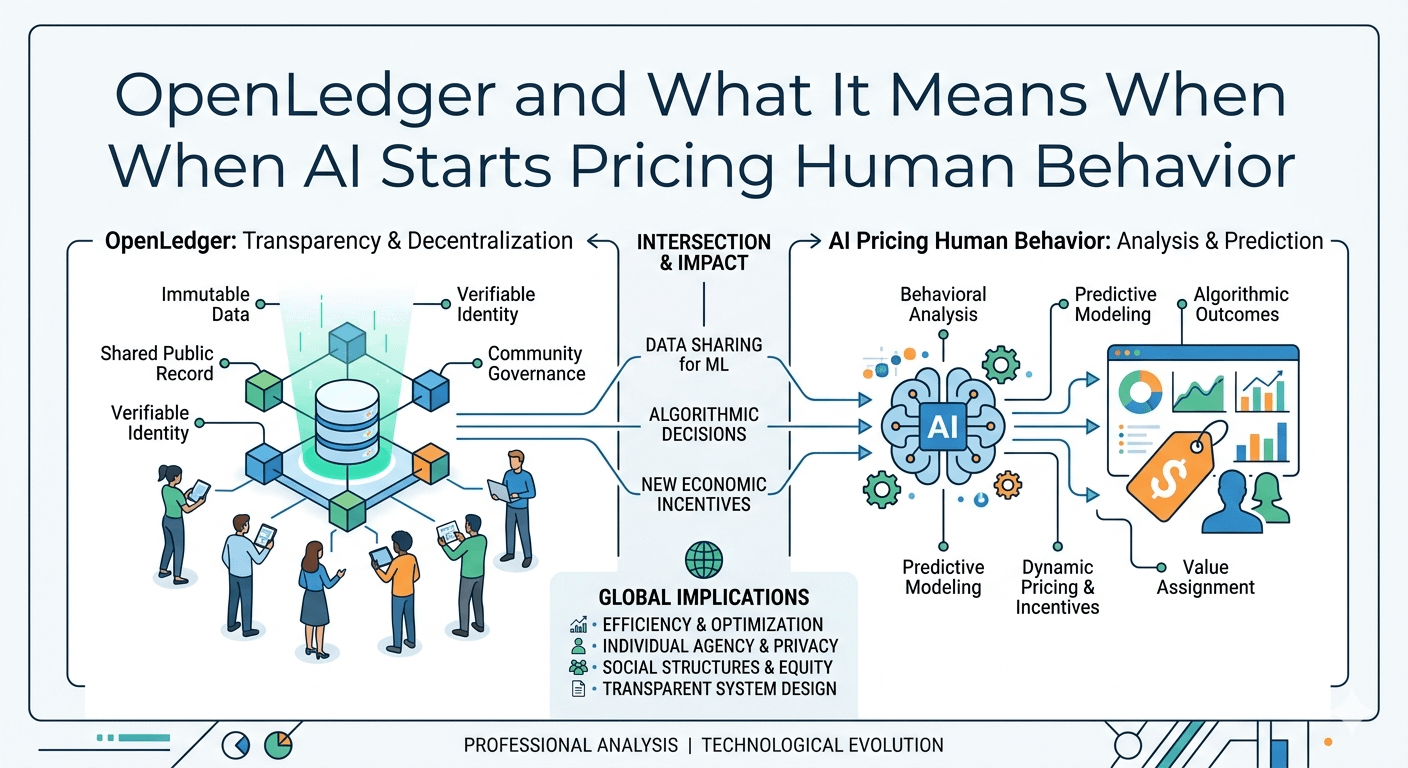
Maybe the bigger shift is not economic but psychological. A world where contribution is constantly measured might increase efficiency, but it could also change how people experience their own actions without them even noticing.
I don’t think I have a clear answer yet. OpenLedger might represent a step toward fairness, or it might be an early version of something more structured than we are comfortable admitting. Or maybe it’s both at the same time, depending on how the incentives eventually settle.