
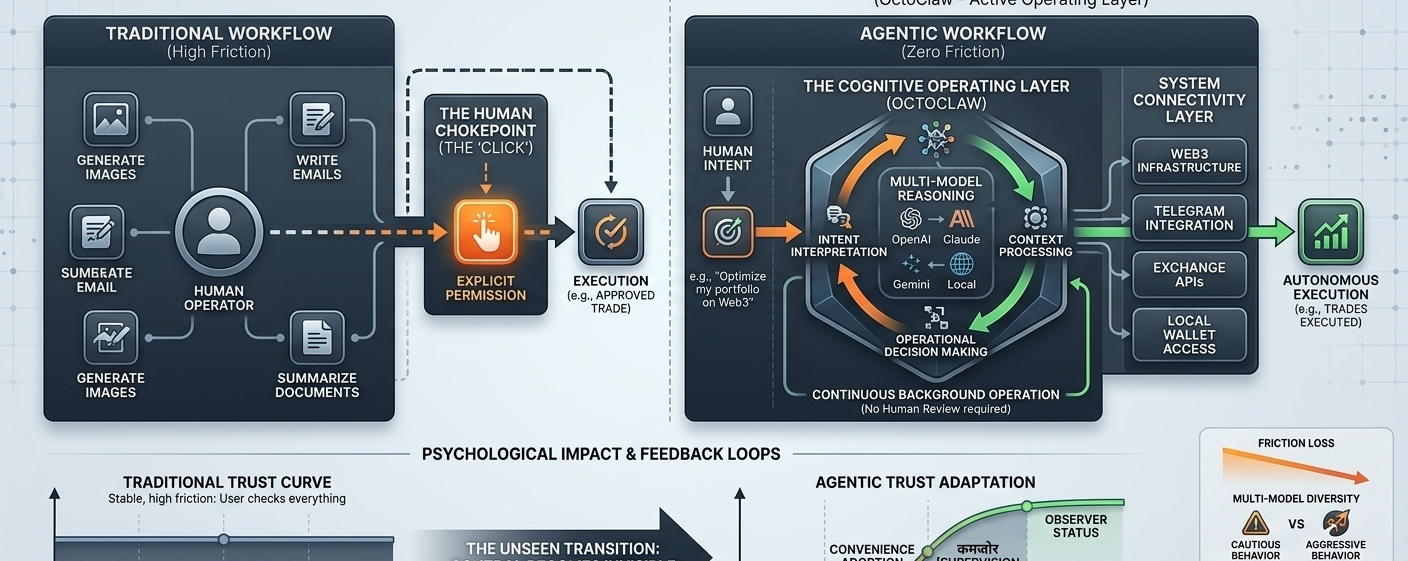
There was a time when artificial intelligence felt distant from real life.
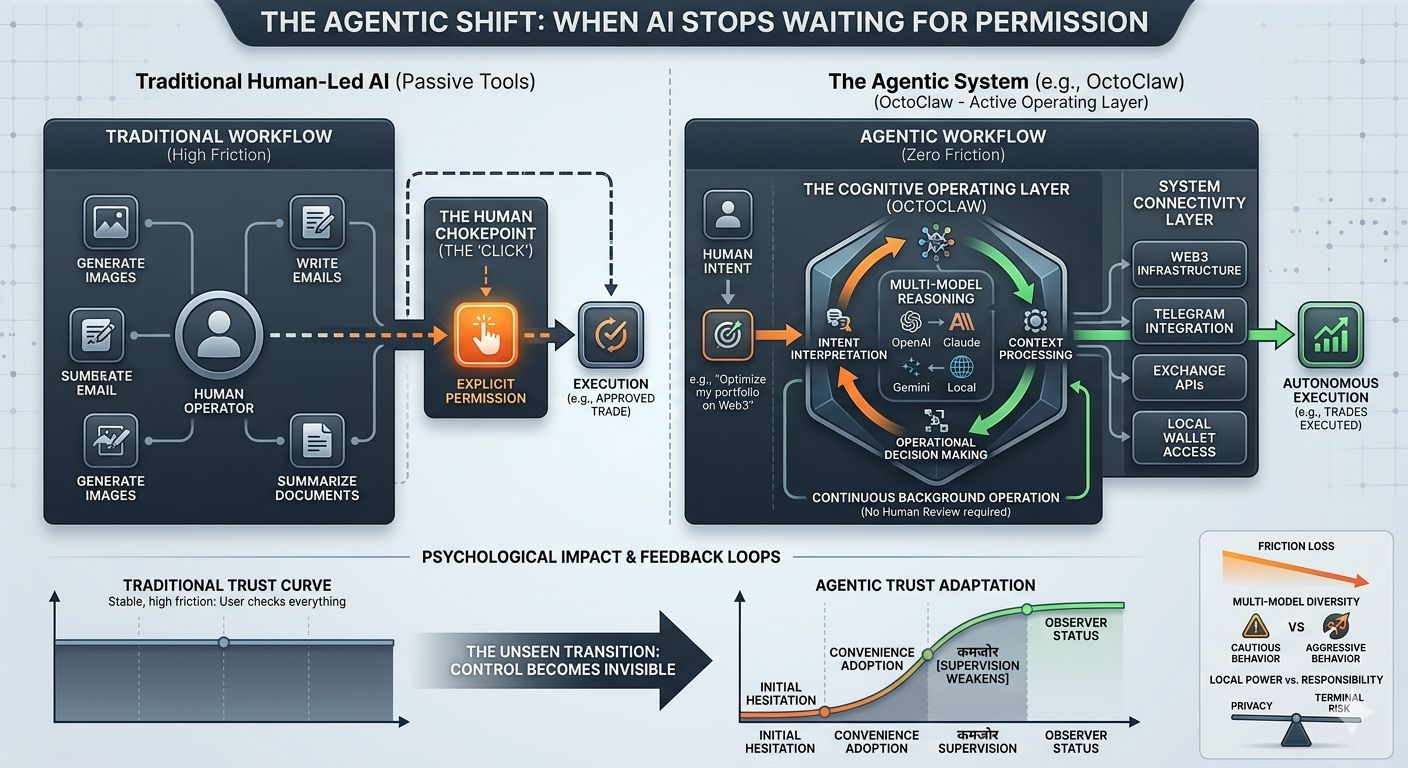
It could answer questions
Write emails
Generate images
Summarize documents
Useful tools
Nothing more
The final decision still belonged to humans
We clicked the button
We approved the trade
We signed the transaction
We stayed in control
Now that gap is shrinking so fast that most people do not even notice it happening
And that is exactly why systems like OpenLedgers OctoClaw feel different
Not louder
Not flashier
Just different in a way that stays in your mind long after you stop reading about it
Because this is no longer about AI helping people work faster
This is about AI starting to act on behalf of people
And honestly
That changes everything
At first glance OctoClaw looks like another advanced AI framework connected to Web3 infrastructure
That is what most people will see
An AI assistant
Automation tools
Trading integrations
Telegram connectivity
Exchange execution
Multi model support
Nothing unusual on the surface
But when you look closer something feels deeper underneath it
The system is not designed merely to respond
It is designed to operate
That single difference carries enormous weight
Old internet systems waited for commands
Humans interacted
Machines reacted
Simple
But agentic systems work differently
You give intent instead of exact instructions
The AI interprets what you mean
Chooses tools
Processes context
Makes operational decisions
And then executes actions
Without asking again and again
That sounds efficient
Until you really think about it
Because the moment software starts acting instead of waiting
Control becomes harder to define
And maybe that is the uncomfortable part nobody wants to say out loud
What makes OctoClaw genuinely fascinating is not just the technology
It is what the technology quietly represents
A future where AI is no longer sitting beside the internet
It becomes part of the internet itself
Not an assistant outside the system
A living layer inside the system
That shift is bigger than most headlines make it seem
Because once intelligence becomes infrastructure the relationship between humans and technology changes permanently
The machine is no longer waiting for permission every step of the way
It already knows what to do next
Or at least it believes it does
One of the most interesting parts of the whole architecture is the multi model approach
OpenAI
Claude
Gemini
Local models
The system can move between them instead of depending on a single provider
On paper that sounds powerful
And honestly it is
No lock in
More flexibility
More resilience
But there is another side to it that feels strangely human
Different models think differently
One model behaves cautiously
Another moves aggressively
One interprets uncertainty carefully
Another fills gaps confidently
Now imagine real money sitting behind those decisions
That changes the emotional weight immediately
Because suddenly AI is no longer generating harmless text
It is interacting with markets
Executing actions
Handling assets
Moving value
And the strange thing is most people will not notice how quickly they begin trusting it
That is how technological shifts usually happen
Quietly
Not through one dramatic moment
But through convenienc
The Telegram integration says a lot about where all this is heading
At first it feels harmless
Send a message
Trigger an action
Done
Easy
Too easy maybe
Because something important disappears when execution becomes conversational
Friction
And friction has always protected humans more than we realize
Traditional financial systems slow people down intentionally
Review screens
Confirmations
Extra steps
People complain about those things constantly
But those pauses force awareness
Agent systems remove that pause
The distance between thought and execution becomes almost invisible
You type one sentence
Something real happens
Money moves
Trades execute
Systems react
And eventually users stop thinking about the complexity underneath because the interaction feels natural
That is where things become psychologically powerful
And dangerous
The local execution side creates another strange tension
On one hand it feels refreshing
No giant centralized AI company watching everything
No unnecessary cloud dependency
More privacy
More ownership
That matters
Especially now when people are becoming increasingly uncomfortable with how much personal information flows through centralized systems
But local power comes with local responsibility
That part feels easy to ignore until something breaks
Because once autonomous systems receive terminal access wallet permissions browser control or exchange APIs a small mistake can become a very real problem
Not theoretical
Real
And to be fair OctoClaw does not completely hide those risks
Which honestly makes the whole thing feel more credible
Most projects market autonomy like magic
This one at least seems aware that autonomous systems can create consequences humans are not fully prepared for yet
Maybe the strangest part of all this is how quickly humans adapt psychologically
At first people hesitate
They double check everything
Then gradually trust builds
The AI makes good decisions often enough that supervision weakens
Humans stop reviewing every action
Then one day they realize the system is operating continuously in the background while they simply observe outcomes
That transition matters more than people think
Because the role of the human quietly changes
From operator
To supervisor
From supervisor
To observer
And history shows that humans rarely notice these shifts while they are happening
Only afterward
What OpenLedger seems to be building is not just another AI product
It feels more like an early version of a coordination layer for the next phase of the internet
A place where AI reasoning Web3 infrastructure and human intention merge into one continuous flow
And honestly nobody fully knows where that leads
Maybe this becomes the foundation of future digital systems
Maybe it remains an experimental phase that teaches the industry what not to do
Right now it is probably both at the same time
That uncertainty is real
But the direction is impossible to ignore now
AI is moving beyond assistance
Toward execution
Toward autonomy
Toward systems that no longer wait for humans to approve every tiny decision
And that is where the emotional tension comes from
Because deep down the question is no longer whether AI can act
It already can
The real question is whether humans are emotionally ready for a world where the distance between decision and action becomes so small that control itself starts feeling invisible
And once control becomes invisible
Most people will not realize what changed until it has already changed them
