
Let me ask you something uncomfortable.
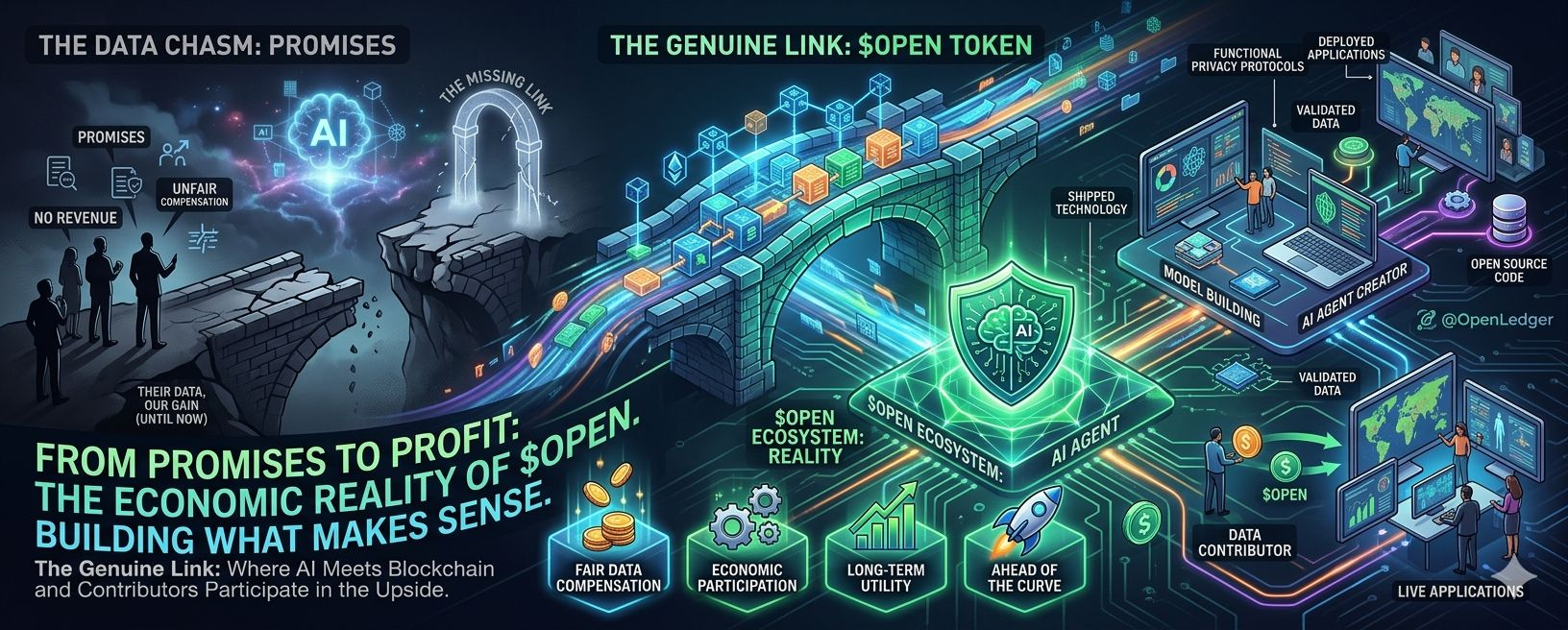
Every piece of content you've ever created, every search you've ever made, every preference you've ever expressed online that data has been collected, packaged, and sold to train AI models worth billions of dollars.
You saw none of that money. Not a cent.
That's not an accident. It's a structural flaw in how the digital economy was built — one that has quietly transferred enormous wealth from ordinary people to a handful of corporations. And until recently, there was no real alternative.
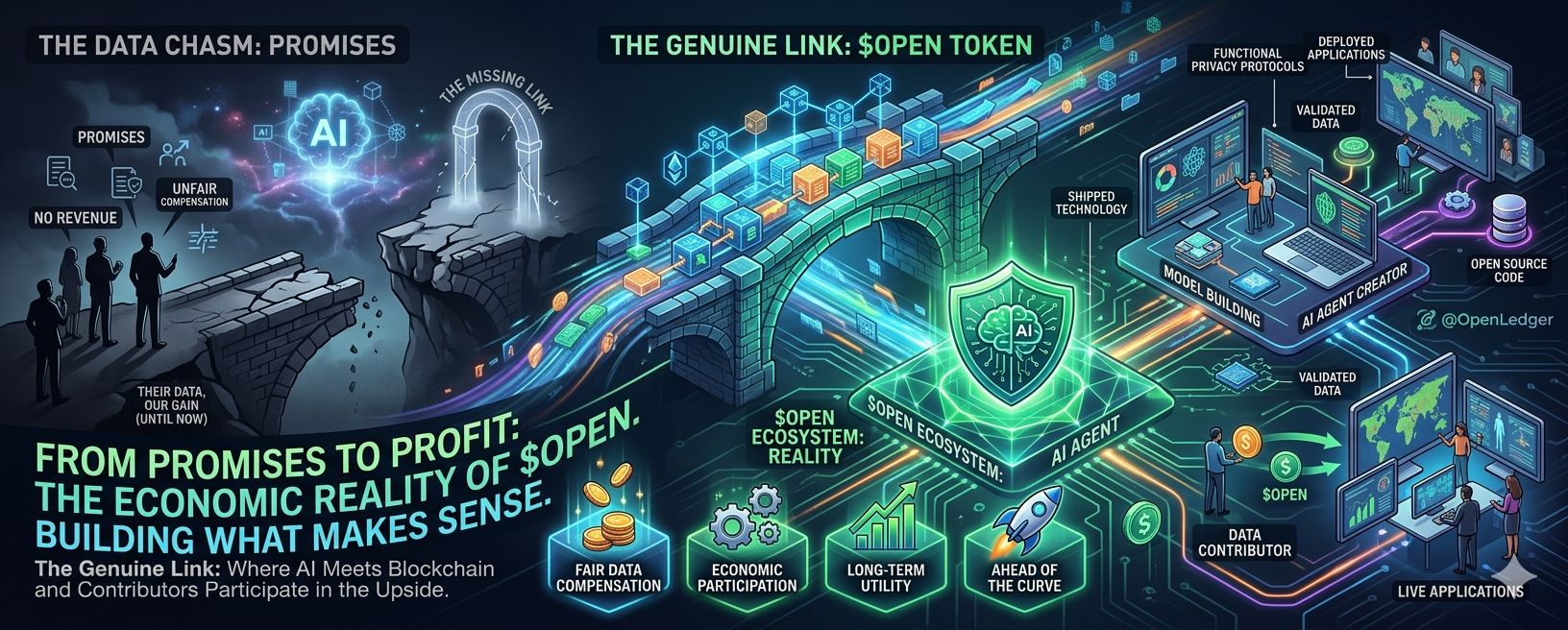
@OpenLedger is that alternative.
$OPEN is the native token of OpenLedger, an AI Blockchain specifically engineered to unlock liquidity for data, AI models, and autonomous agents. In plain language: it creates a system where the people who generate value — data contributors, model builders, agent creators — can actually capture that value on-chain.
This isn't a whitepaper dream. The infrastructure is live. The token is trading. The problem it solves is only growing more urgent as AI scales into every corner of the economy.
Here's why this matters now more than ever: we are entering the era of AI agents — autonomous programs that execute tasks, make decisions, and generate economic output. Those agents need data. They need models. They need a trustless settlement layer. @OpenLedger is building exactly that stack.
The projects that establish themselves as foundational infrastructure in new technological waves don't get displaced easily. Think about the protocols that won in DeFi, in Layer 1s, in cross-chain bridges — the early infrastructure plays captured the most value because they became the standard.
$OPEN is positioning for that role in the AI data economy. Early. Purposeful. With real utility driving real demand.
The question isn't whether this problem gets solved. It will — the economic pressure and regulatory momentum are both pointing in that direction. The only question is whether @OpenLedger becomes the solution the market converges on.
Right now, the answer looks increasingly like yes. #OpenLedger $OPEN @OpenLedger
