The longer I spend researching AI and crypto, the less interested I become in excitement.
That sounds strange in an industry built on narratives.
But after enough cycles, you start noticing something.
The projects everyone talks about today are not always the ones people depend on tomorrow.
And that realization changes how you look at everything.
The AI sector is moving at an almost impossible speed right now.
Every week brings a new model.
A new assistant.
A new agent.
A new breakthrough.
The headlines move so quickly that even major developments can feel old within days.
But underneath all that movement, I keep coming back to a quieter question:
What actually lasts?
Not what trends.
Not what goes viral.
What survives.
Because history suggests that sustainable ecosystems rarely emerge from attention alone.
They emerge from participation.
From contributors.
Builders.
Developers.
Users.
Data providers.
Researchers.
People who continuously create value inside a network.
That distinction feels especially important when thinking about the future of AI infrastructure.
Most discussions around AI still focus on outputs.
The chatbot response.
The generated image.
The autonomous agent.
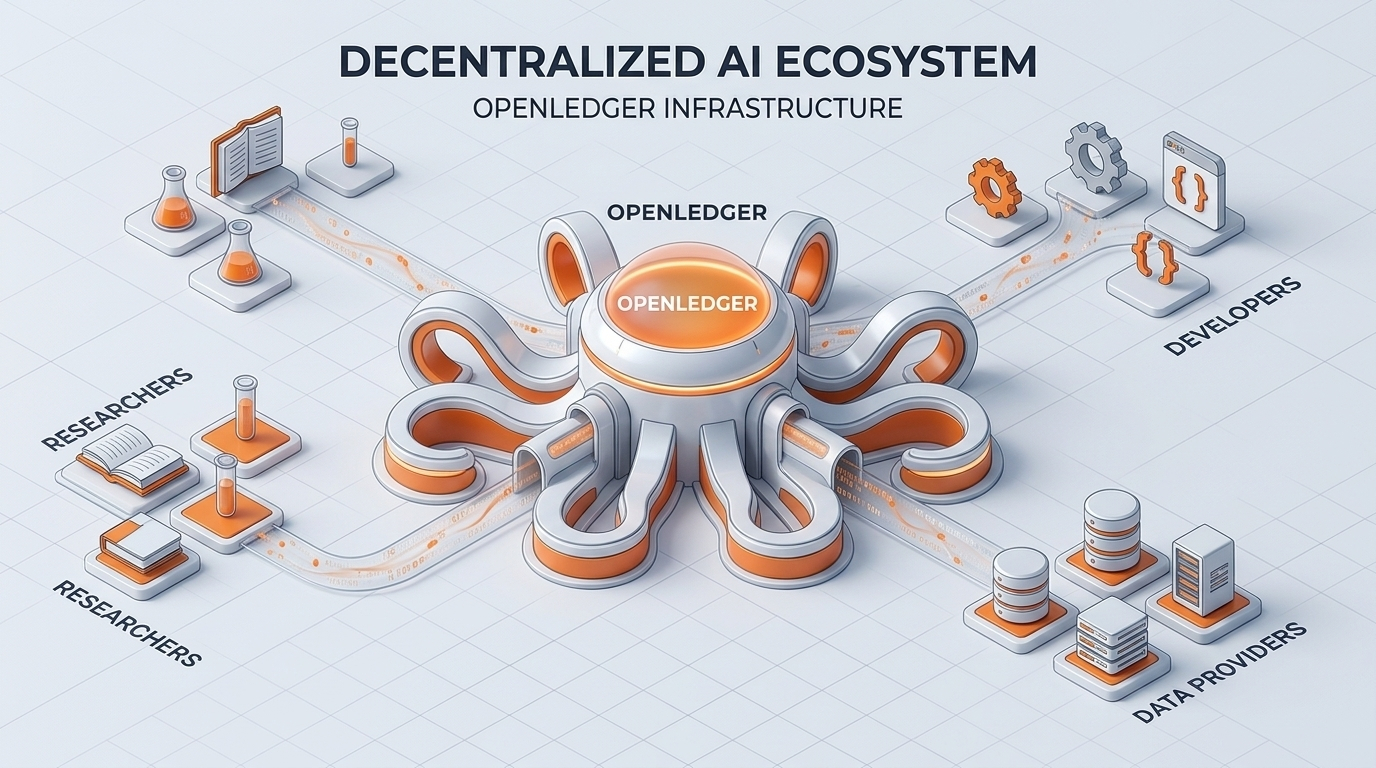
What gets less attention is the ecosystem supporting those outputs.
Where does the data come from?
Who contributes intelligence?
Who verifies information?
Who coordinates incentives?
Who benefits when the network grows?
Those questions may sound less exciting than a new AI demo.
But they're probably more important.
And honestly, they're the questions that led me toward projects like @OpenLedger ($OPEN).
Not because it's trying to win a short-term narrative battle.
Because it appears focused on something deeper.
The ecosystem layer.
The part that remains after the hype cycle moves somewhere else.
I've noticed something interesting about technology revolutions.
People often remember the products.
But the infrastructure usually creates the lasting value.
The internet wasn't ultimately defined by the websites people were obsessed with twenty years ago.
It was shaped by the protocols, networks, and infrastructure layers that enabled everything else to exist.
AI may follow a similar path.
Today, attention flows toward applications.
Tomorrow, value may flow toward coordination.
Because AI systems don't operate in isolation.
They rely on data.
They rely on contributors.
They rely on validation mechanisms.
They rely on economic incentives.
As AI becomes increasingly integrated into everyday life, these dependencies become harder to ignore.
And this is where ecosystem design starts becoming incredibly important.
A strong ecosystem doesn't just attract users.
It aligns participants.
That's a very different challenge.
If contributors create valuable datasets, they need incentives.
If developers build useful tools, they need opportunities.
If AI agents eventually interact autonomously, they need trusted coordination mechanisms.
Without alignment, ecosystems become fragile.
With alignment, they become resilient.
That's one of the reasons decentralized AI infrastructure feels increasingly relevant.
Not because decentralization automatically solves every problem.
It doesn't.
But because future AI economies may require broader participation than traditional centralized models can comfortably support.
The more intelligence becomes distributed, the more coordination matters.
OpenLedger sits directly inside that conversation.
Its broader vision around decentralized intelligence and AI data economies seems less focused on creating temporary attention and more focused on enabling ongoing participation.
That difference may sound subtle.
I don't think it is.
The internet's biggest platforms became powerful because they captured network effects.
AI ecosystems may evolve similarly.
The question is whether those network effects remain concentrated or become more widely distributed.
That's where things become interesting.
Because we're entering a period where intelligence itself is becoming economically valuable.
Not just software.
Not just content.
Intelligence.
Human knowledge.
Specialized expertise.
Data contributions.
Model improvements.
Agent interactions.
These are increasingly becoming productive assets within digital economies.
And whenever valuable assets emerge, questions around ownership inevitably follow.
Who owns the data?
Who owns the outputs?
Who owns the value generated by collective intelligence?
I don't think society has fully answered those questions yet.
In many ways, we're still at the beginning.
Which is why infrastructure discussions feel more important than they first appear.
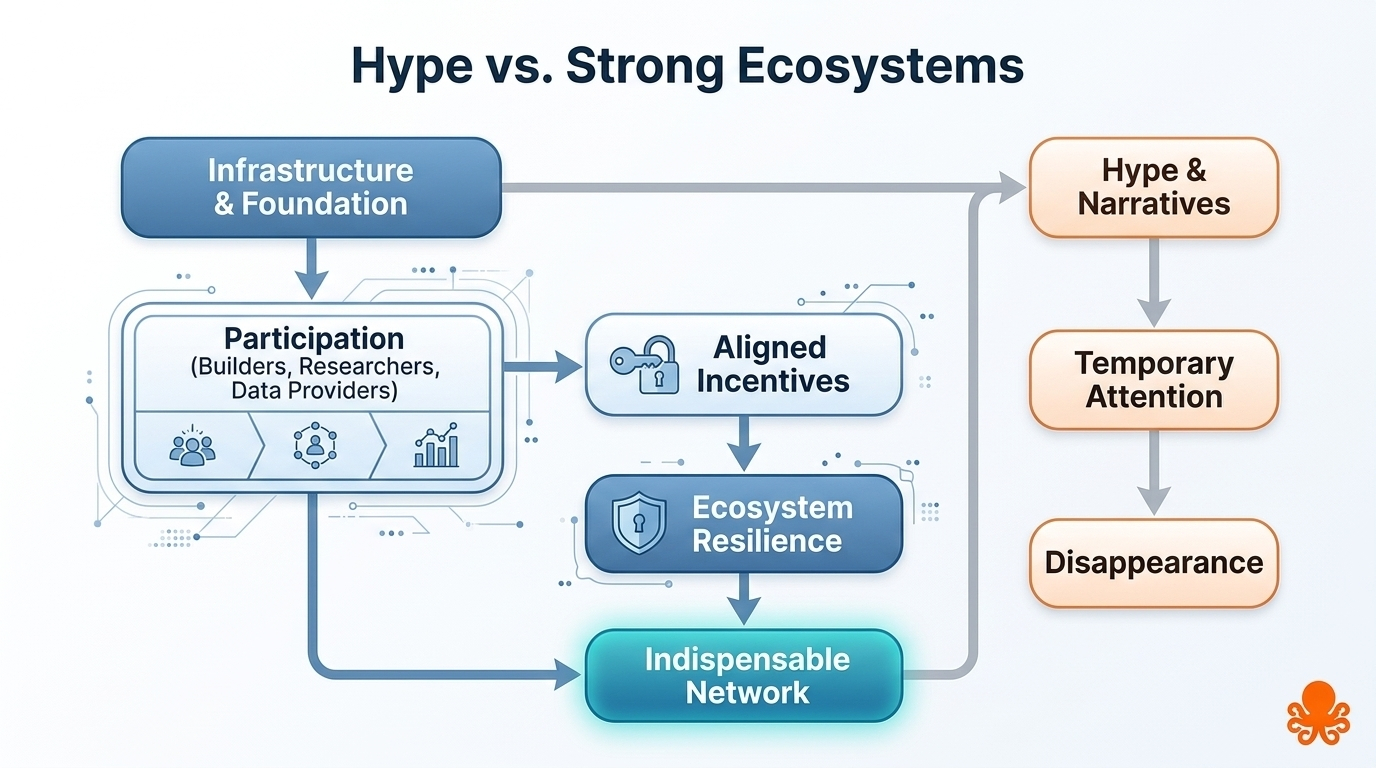
Infrastructure determines incentives.
And incentives shape behavior.
Behavior shapes ecosystems.
Then ecosystems shape industries.
That progression happens slowly at first.
Then suddenly.
The strongest networks often look unremarkable during their early stages because they're focused on building foundations instead of attention.
People notice the results much later.
I've seen this pattern repeatedly across technology.
Builders quietly build.
Communities slowly form.
Contributors gradually accumulate.
Then one day everyone realizes the ecosystem has become difficult to replicate.
Not because of marketing.
Because of participation.
That idea keeps coming back whenever I think about OpenLedger and the broader decentralized AI movement.
The most valuable thing may not be any individual application.
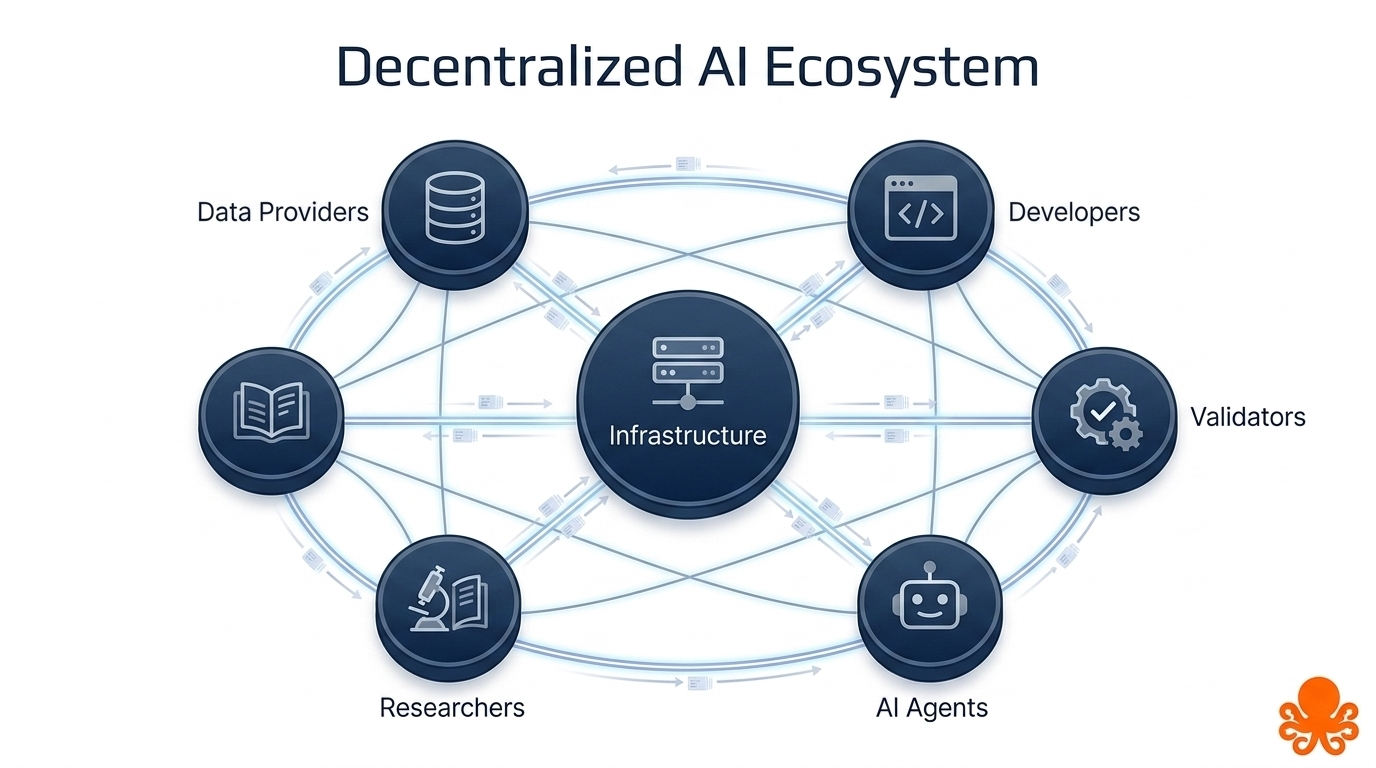
It may be the ability to coordinate thousands of participants around shared intelligence infrastructure.
Developers.
Data providers.
Validators.
Researchers.
AI agents.
Users.
All contributing to something larger than themselves.
And that's where the conversation becomes surprisingly human.
Because despite all the technical complexity surrounding AI, ecosystems are ultimately about people.
People choosing to contribute.
People choosing to build.
People choosing to participate.
Technology creates possibilities.
Communities create permanence.
Maybe that's why I find infrastructure projects increasingly compelling.
They're not necessarily the loudest part of the market.
They're often the quietest.
But they're usually thinking about what happens after the excitement fades.
What remains when attention leaves.
What continues growing when speculation slows.
What keeps creating value years later.
The truth is that hype has always been temporary.
Every cycle proves that.
The narratives change.
The trends rotate.
The attention moves.
But strong ecosystems have a different quality.
They compound.
Slowly.
Almost invisibly.
Until one day they become indispensable.
When I look at the future of AI, that's the question I find myself returning to most often.
Not which application wins next month.
Not which narrative dominates next quarter.
But which ecosystems are building the coordination, ownership structures, and participation layers that can support an AI economy for the long term.
Because if intelligence becomes one of the most valuable resources of the next decade, should that value be controlled by a handful of centralized systems—or should contributors have a meaningful role inside the networks they help make valuable?