
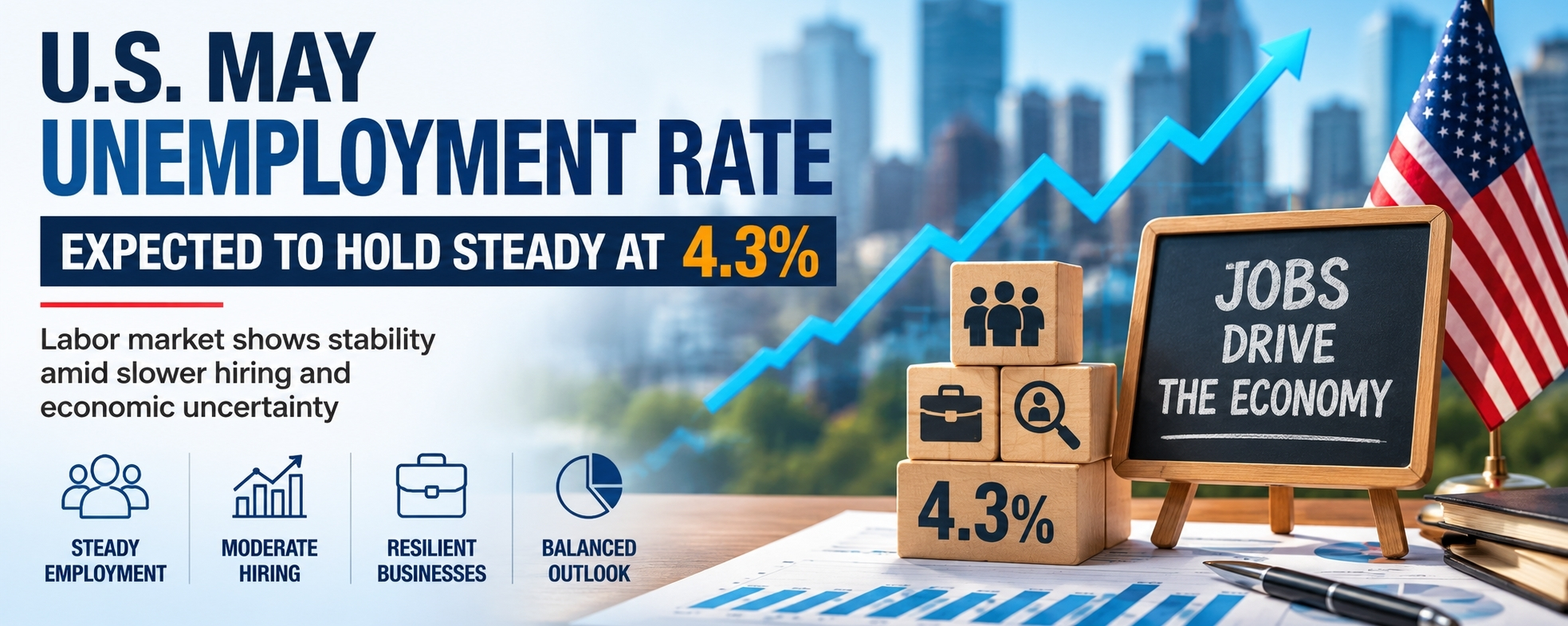
The U.S. labor market is entering another important month with economists expecting the unemployment rate to remain at 4.3% in May. While that figure is still low by historical standards, it reflects a noticeable shift from the exceptionally tight labor market that defined much of the post-pandemic recovery.

Over the past two years, the U.S. economy has demonstrated remarkable resilience despite aggressive interest rate hikes and persistent concerns about a slowdown. Hiring has moderated, job openings have become less abundant, and wage growth has cooled, but employment conditions have remained surprisingly stable.
A steady unemployment rate would reinforce the idea that the labor market is moving toward a more balanced phase rather than experiencing a sharp deterioration. Businesses appear to be adjusting to slower economic growth by reducing the pace of new hiring instead of implementing widespread layoffs. This gradual adjustment has helped prevent major disruptions while allowing inflationary pressures to ease.
Financial markets are paying close attention to the latest employment data because it could influence expectations for future monetary policy. A labor market that remains stable without overheating would support the narrative that the economy is achieving a difficult balance: slower growth without a significant rise in job losses.
At the same time, economists are watching for signs that underlying momentum may be weakening. Consumer spending, business investment, and labor demand have all shown pockets of softness in recent months. If these trends continue, the labor market could face greater challenges later in the year.
For now, however, a 4.3% unemployment rate suggests that the U.S. economy remains on relatively solid footing. The era of rapid job growth may be fading, but the broader employment picture continues to reflect an economy that is slowing in an orderly and controlled manner rather than heading toward a sudden downturn.This version reads more like a financial-news analysis piece rather than a standard economic update.