
Open is in a bearish consolidation phase right now, with price movement concentrated between a critical support level at $0.15 and a primary resistance level at $0.21, as the asset attempts to stabilize after recent volatility.
Consolidation phases have a reputation for being boring. For protocols with active development pipelines, they are often the most important period to pay attention to. The price is range-bound. The build is not.
What OpenFin Actually Adds to the Stack
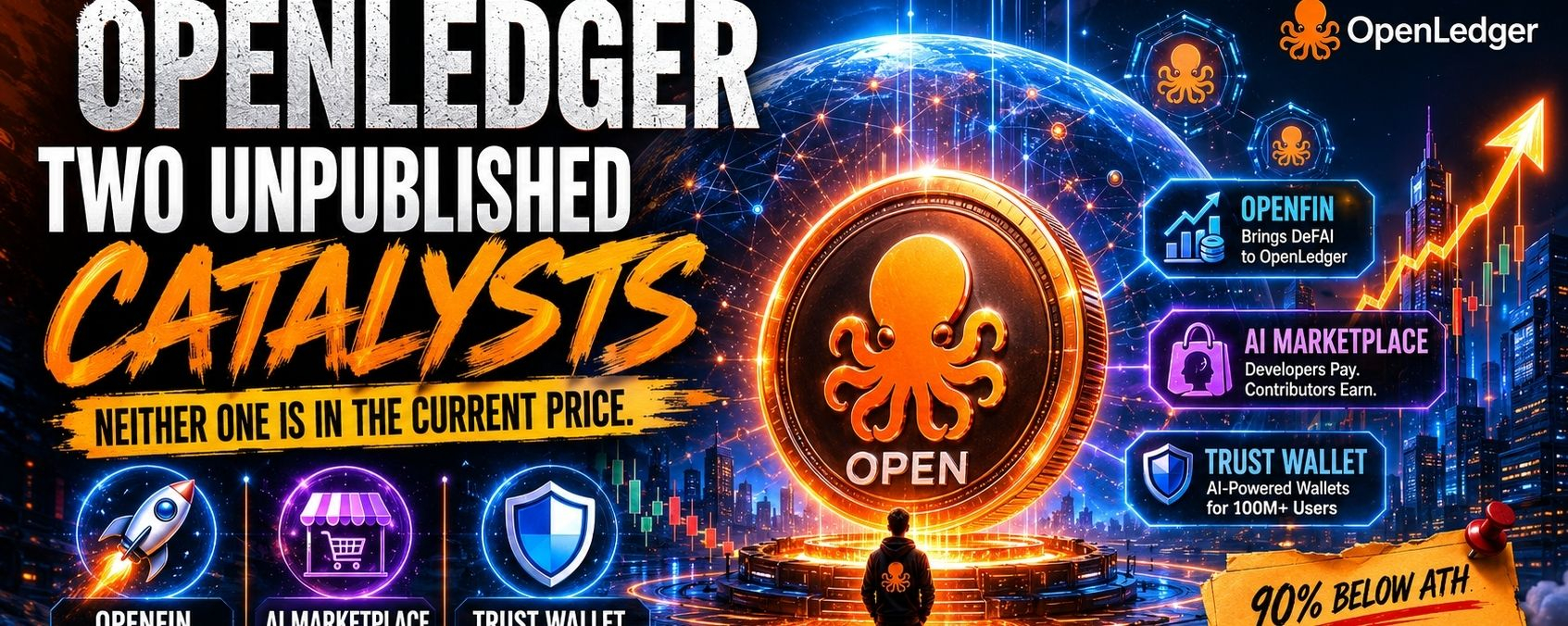
On March 23, 2026, @OpenLedger teased OpenFin, describing it as bringing DeFAI closer and representing a new product layer that merges decentralized finance with the existing AI blockchain infrastructure.
This is structurally different from everything built before it.
Every previous layer in the OpenLedger stack served the AI economy. Datanets served data contributors. ModelFactory served AI builders. OctoClaw served traders and agent deployers. ERC-4626 integration served yield strategy automation. All of it was building vertically within the AI infrastructure narrative.
OpenFin is a horizontal expansion. It brings the entire DeFi sector into contact with OpenLedger's attribution and execution layer for the first time as a dedicated product. Every DeFi action processed through OpenFin generates Open gas demand from a user segment that currently has no reason to touch the token. The risk is that vague teasers without concrete timelines can lead to unmet expectations, but the direction is bullish because it could expand $OPEN utility beyond data attribution into the large DeFi sector, attracting new users and capital.
The AI Marketplace and What It Changes for Contributors
The AI Marketplace is a key mid-term milestone described in OpenLedger's project documentation. It is designed as a decentralized platform where developers can deploy models and AI agents, with usage fees automatically routed to data contributors and model creators via smart contracts.
This is the commercial monetization layer for everything this series has been documenting.
Throughout this series, Open demand has been analyzed through gas consumption, attribution rewards, ERC-4626 vault interactions, and orchestration costs. All of those demand sources are real and growing. But they are usage-based. They scale with how much the network is used organically by its existing participants.
The AI Marketplace introduces a marketplace-based demand source. Developers pay to access deployed models. Usage fees clear automatically in OPEN. Contributors who built high-quality Datanets receive ongoing revenue streams from every model that trains on their data and every inference cycle that calls that model commercially.
If enterprises and AI developers seek compliant data solutions, Proof of Attribution could see significant demand, with utility-driven adoption increasing network usage and demand for Open for gas and payments, providing fundamental price support.
The AI Marketplace is what turns that theoretical utility into a functioning commercial layer.
The Distribution Channel Most People Missed
In August 2025, #OpenLedger partnered with Trust Wallet to launch AI-powered Web3 wallets.
Trust Wallet serves hundreds of millions of users across the global crypto ecosystem. Most of them have no direct awareness of OpenLedger or OPEN. AI-powered wallet features running on OpenLedger's attribution infrastructure bring the protocol's utility into a user interface those hundreds of millions already use daily. Distribution at that scale does not need aggressive marketing. It needs the product layer to work reliably every time someone opens their wallet.
The Window That Currently Exists
OPEN is currently trading near $0.175, sitting 90% below its all-time high of $1.82 and approximately 25% above its all-time low of $0.1394. OpenFin has no concrete launch date publicly confirmed. The AI Marketplace is mid-term roadmap. The Trust Wallet integration is live but still scaling.
The 2026 roadmap outlines a nine-layer platform for accountable AI, and success depends on attracting developers to build on its mainnet and Datanets, with community programs including a 2 million OPEN Yapper Arena prize pool aimed at driving engagement during this critical adoption window.
Three catalysts at different stages of activation. A token priced near its historical floor. A supply unlock schedule arriving in September that creates urgency around demonstrating utility-driven demand before new tokens enter the market.
The consolidation phase is not the story. What activates inside it is.