
 The AI industry loves talking about models. Bigger models. Smarter models. Faster models. Every few months there's another announcement about a breakthrough that supposedly changes everything. But the more I watch this space evolve, the more I keep coming back to a much simpler question: where does all that intelligence actually come from?
The answer isn't complicated. It comes from data.
Without data, AI is just an expensive collection of algorithms sitting on powerful hardware. It doesn't learn. It doesn't improve. It doesn't generate anything useful. Every chatbot response, every image generator, every recommendation engine and autonomous agent is built on top of information that came from somewhere. Usually from millions of people who never see a dollar from the value their data helps create.
That's the uncomfortable part of the AI boom that doesn't get enough attention.
Right now, some of the world's largest technology companies are building massive businesses on top of data collected from users, creators, researchers, businesses, and entire online communities. The value being generated is enormous. Yet the people who contributed the raw material often remain invisible. They create the fuel. Someone else owns the engine.
This is where OpenLedger enters the picture, and honestly, it's one of the reasons the project stands out from the endless stream of blockchain ventures that appear every year. Instead of creating another token with a vague promise of disrupting an industry, OpenLedger is trying to tackle a problem that's becoming harder to ignore as artificial intelligence moves deeper into everyday life.
The core idea is surprisingly straightforward. Data has value. Models have value. AI agents have value. So why shouldn't the people who create, improve, and maintain those assets have a direct way to participate in the economic upside?
Simple question.
Very difficult answer.
The real challenge is that today's AI economy doesn't have great systems for tracking who contributed what. Once data enters a training pipeline, it often disappears into a black box. A model gets trained. Products get launched. Revenue gets generated. Meanwhile, the original contributors are left completely disconnected from the value chain.
OpenLedger wants to change that.
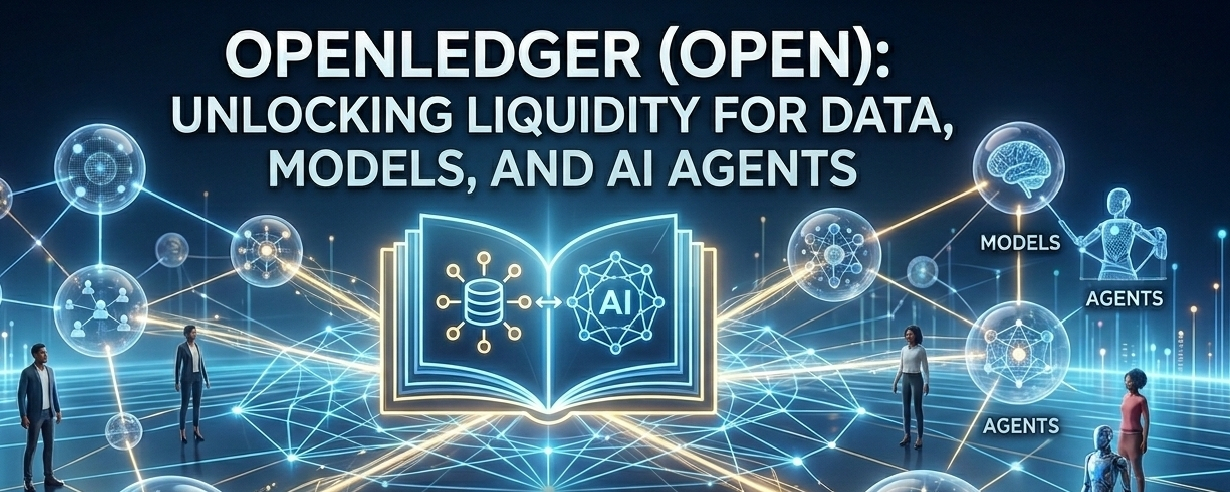
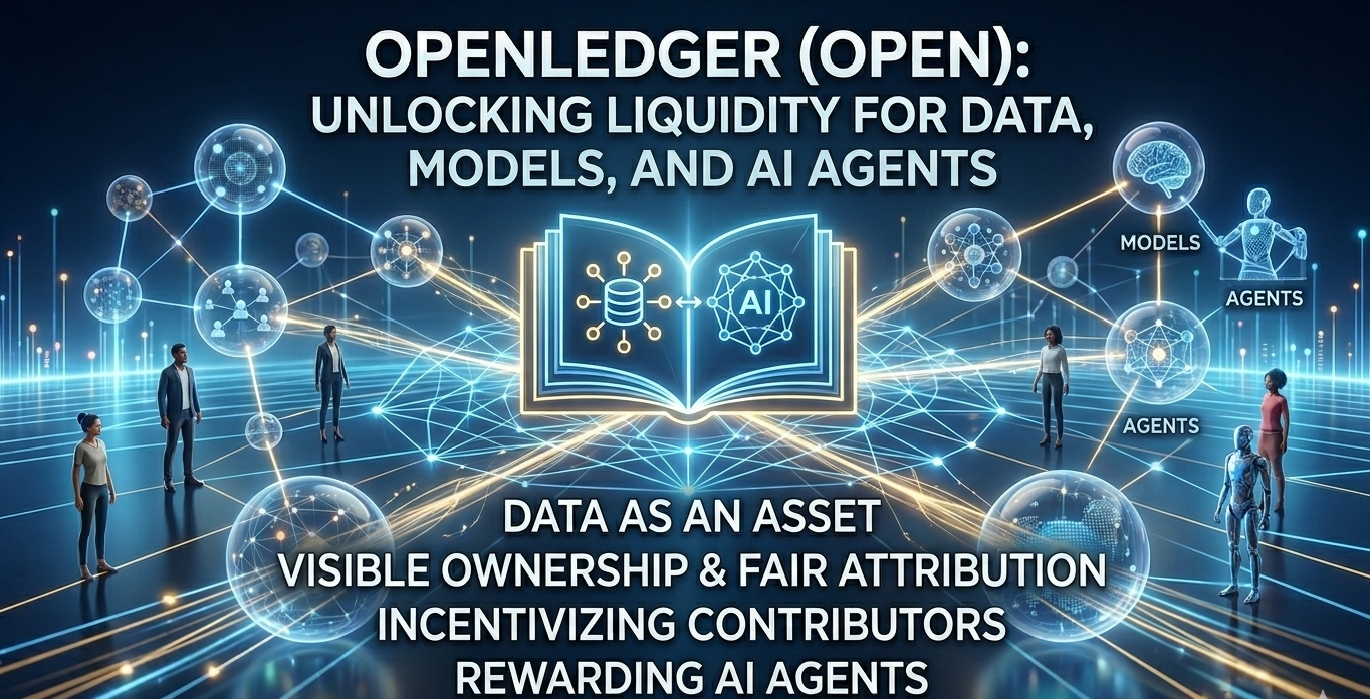
The project is building around the belief that data shouldn't simply be collected and consumed. It should function as an asset. Something that can be tracked, valued, exchanged, and monetized. The same logic extends to AI models and autonomous agents. In OpenLedger's vision, these aren't just technical components. They're economic assets that should exist inside an open marketplace where ownership and contribution are visible rather than hidden behind corporate walls.
The way I see it, that's where blockchain actually starts making sense in the AI conversation.
For years, people have tried to force artificial intelligence and blockchain together because both were trendy technologies. Most of those efforts felt artificial. A lot of projects seemed to be adding AI labels to blockchain products or blockchain labels to AI products without solving a real problem.
OpenLedger feels different because the issue it's targeting is real. Attribution matters. Ownership matters. Incentives matter. If AI is going to become one of the defining technologies of the next decade, then figuring out who gets rewarded for contributing to it isn't some side discussion. It's a fundamental question.
And the stakes keep getting bigger.
The rise of AI agents makes the situation even more interesting. These systems are no longer limited to generating text or images. They're beginning to perform tasks, make decisions, manage workflows, and interact with digital environments in increasingly sophisticated ways. In other words, they're starting to behave less like software tools and more like economic participants.
That creates a whole new set of questions.
Who owns an agent?
Who earns revenue from its actions?
Who gets rewarded when multiple people contribute to the data, infrastructure, and models that power it?
Nobody has fully solved these problems yet.
That's why OpenLedger's focus on agents matters. The project isn't just looking at today's AI landscape. It's positioning itself around where the market may be heading over the next several years. If autonomous agents become a major part of the digital economy, the need for transparent ownership and reward systems could become impossible to ignore.
Of course, having a compelling vision is one thing. Turning it into reality is something else entirely.
This is where things get difficult.
Really difficult.
Measuring the value of data isn't easy. In fact, it's a massive hurdle. Not all data contributes equally to a model's performance. Some datasets may dramatically improve outcomes while others add very little. Figuring out how to fairly distribute rewards across thousands or even millions of contributors is the kind of challenge that sounds simple in a pitch deck and becomes incredibly messy in practice.
OpenLedger's success will ultimately depend on whether it can solve that problem in a way that works at scale.
Because that's the make-or-break moment.
The technology industry is filled with projects that had brilliant ideas but failed to execute them. Markets don't reward good intentions. They reward systems that people actually use. OpenLedger needs developers. It needs data providers. It needs businesses. It needs an ecosystem that creates real economic activity rather than speculative excitement.
And yet, despite all those challenges, I think the project is tapping into something important.
The AI economy feels incomplete right now.
There's a growing sense that enormous amounts of value are being created while the mechanisms for distributing that value remain heavily concentrated. Whether OpenLedger becomes the solution or not, the problem it highlights isn't going away. If anything, it's becoming more obvious every year.
Look around. Artificial intelligence is moving into healthcare, finance, education, entertainment, research, manufacturing, and nearly every other industry imaginable. As that happens, questions about ownership and compensation will move from niche debates into mainstream discussions.
Who owns intelligence?
Who benefits from it?
Who deserves a share of the value it creates?
Those questions are still looking for answers.
OpenLedger is essentially making a bet that the future AI economy will need better infrastructure for tracking contributions and rewarding participants. It's a bold bet. Maybe even an ambitious one. But sometimes the most interesting projects aren't the ones solving today's problems. They're the ones trying to solve the problems everyone else will be talking about three or four years from now.
Whether OpenLedger ultimately succeeds remains uncertain. That's simply the reality of emerging technology. But the conversation it is pushing forward feels increasingly relevant. Data is becoming more valuable. AI models are becoming more powerful. Autonomous agents are becoming more capable. The systems that connect those pieces together are still being built.
And that's exactly where OpenLedger wants to be.