
Before shipping containers became standard, global trade was surprisingly inefficient. Goods moved across oceans, but every port handled cargo differently. Products were unloaded manually, repacked repeatedly, transferred between incompatible systems, and delayed by coordination problems that had nothing to do with production itself. What changed global trade wasn’t simply larger ships or better cranes. It was standardization. Once ports, rail systems, trucking companies, and shipping operators adopted common containers, value started moving differently. Suddenly, the cost of coordination collapsed. The container itself looked simple, but the invisible infrastructure around it changed global economics.
This comparison came to mind when I started thinking more deeply about @OpenLedger . Most AI conversations today still focus almost entirely on visible outputs: models, applications, agents, interfaces. But underneath all of this sits a more fundamental economic question: how does value actually move between people contributing data, building models, creating resources, and deploying systems? Infrastructure problems usually look boring until scale arrives. Railroads connected producers with consumers. Payment networks connected merchants with buyers. Internet protocols connected independent machines into global systems. Historically, growth accelerates when previously disconnected participants suddenly gain common coordination layers.
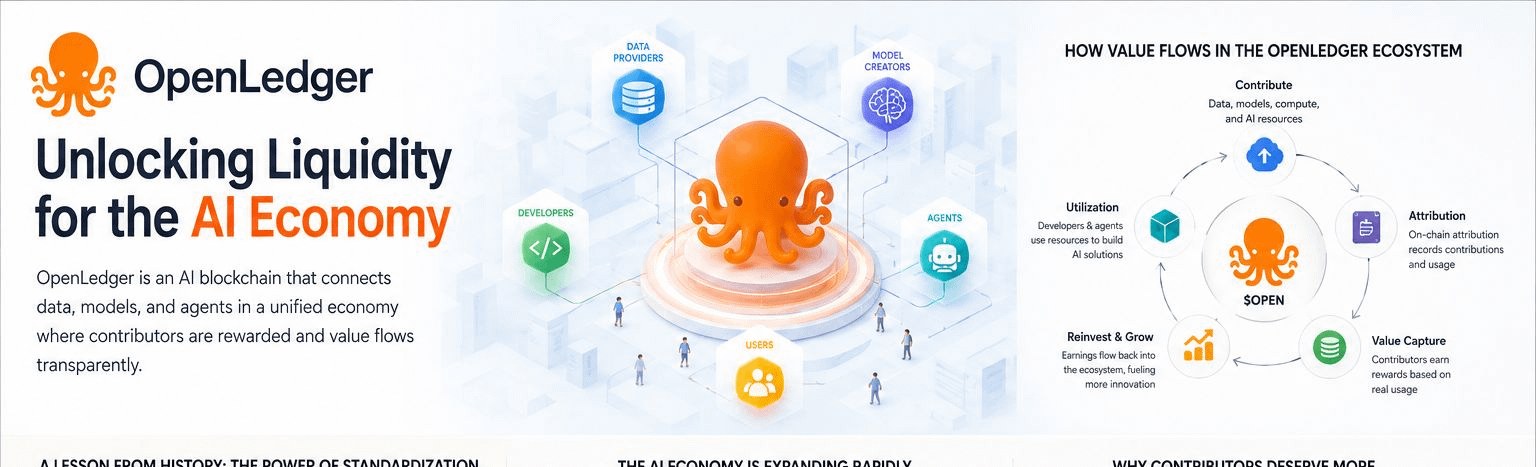
What makes infrastructure interesting is that it changes relationships before it changes products. @OpenLedger feels less interesting to me as a standalone application and more interesting as an attempt to create economic coordination around AI participation itself. The deeper thesis may not be about models at all. It may be about attribution, incentives, and creating environments where contributors participate within shared economic systems rather than fragmented ecosystems. When participants can coordinate more efficiently, value flows differently, and entirely new behaviors become economically rational.
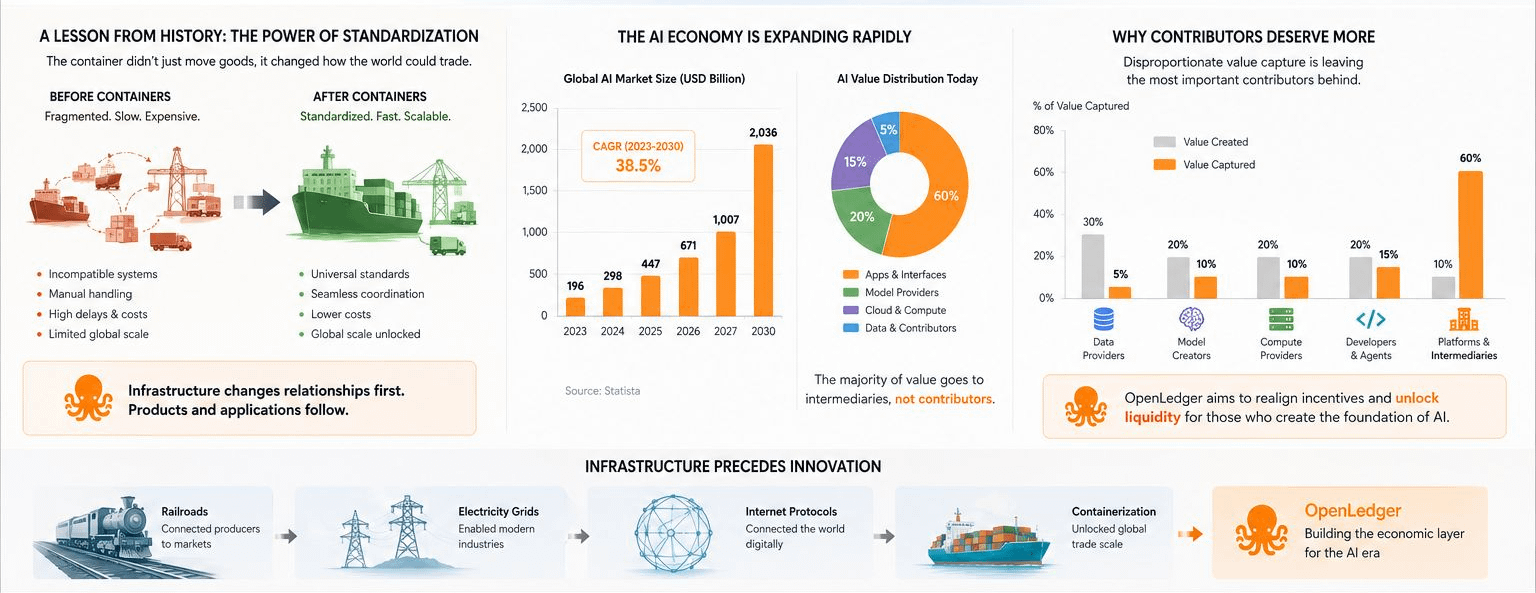
Invisible infrastructure rarely attracts attention while it is being built. Most people noticed container shipping after global trade expanded. Most people noticed online businesses after internet standards already existed. Economic shifts usually happen when movement becomes easier rather than destinations becoming prettier. That changed how I think about projects like OpenLedger. Maybe the larger bet isn’t applications. Maybe it’s standards. Maybe the opportunity isn’t owning what people see, but owning pieces of the systems that allow everything else to coordinate.
