


Habibies! Do you know? When I first looked at OpenLedger through this title, I thought the idea was mostly about rewarding data.
That felt too simple after sitting with it for a while.
The shallow assumption is that an AI contribution has one main moment.
Someone uploads knowledge, the system uses it, and then the reward question is mostly finished.
But AI does not really behave like that.
A contribution can enter once and keep working underneath the model for months, maybe longer, shaping answers, routing decisions, agent behavior, or future fine-tunes in ways that are not easy to see.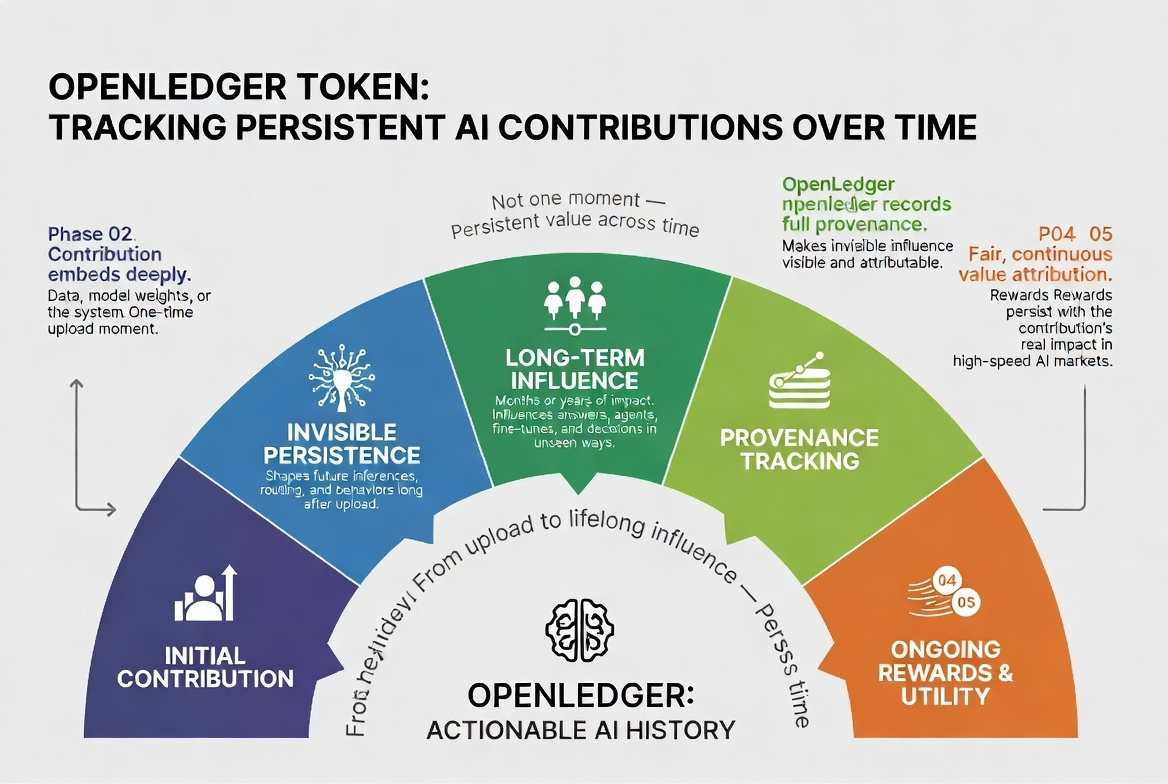
That is where OpenLedger becomes more interesting to me.
Not as a loud promise of fair rewards, but as a quiet attempt to ask a harder question.
How long should a useful contribution remain economically visible?
On the surface, this looks like attribution.
Attribution simply means knowing where something came from.
But underneath, the real issue is duration.
If intelligence keeps extracting value from an input, then a one-time recognition event starts to feel structurally weak.
It solves the first transaction, maybe.
It does not solve the long tail.
I keep coming back to this one detail: AI systems can remember patterns while forgetting the people, datasets, and corrections that made those patterns usable.
That is not only a technical flaw.
It becomes an economic friction.
If serious contributors believe their signal will be absorbed and then erased from the value path, they may stop bringing high quality knowledge into the system.
Or they bring less of it, more guardedly.
That changes the market from underneath.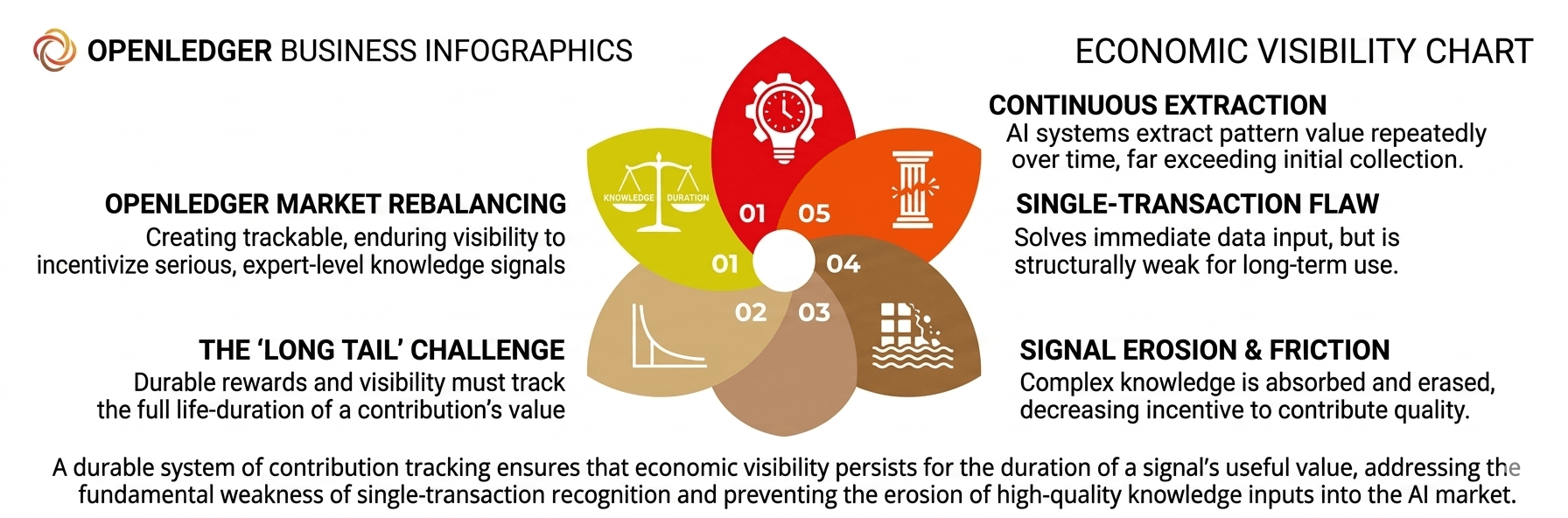
OpenLedger’s contribution-rights idea matters because it points toward a memory layer.
By memory layer, I mean a record that keeps linking contribution to later usage, instead of treating data like a disposable input.
If this holds, the contributor is not just a seller of raw material.
They become part of the infrastructure that keeps intelligence useful.
That sounds clean, but it is not clean in practice.
There is a reasonable case for the opposite view.
Too much attribution can create noise, disputes, and fake contribution claims.
A system that tries to remember everything may end up proving very little.
That risk is easy to miss.
Verification has to be strict, and verification here simply means the system must show why a contribution mattered, not just that it existed.
Without that boundary, long-lived rights could turn into long-lived confusion.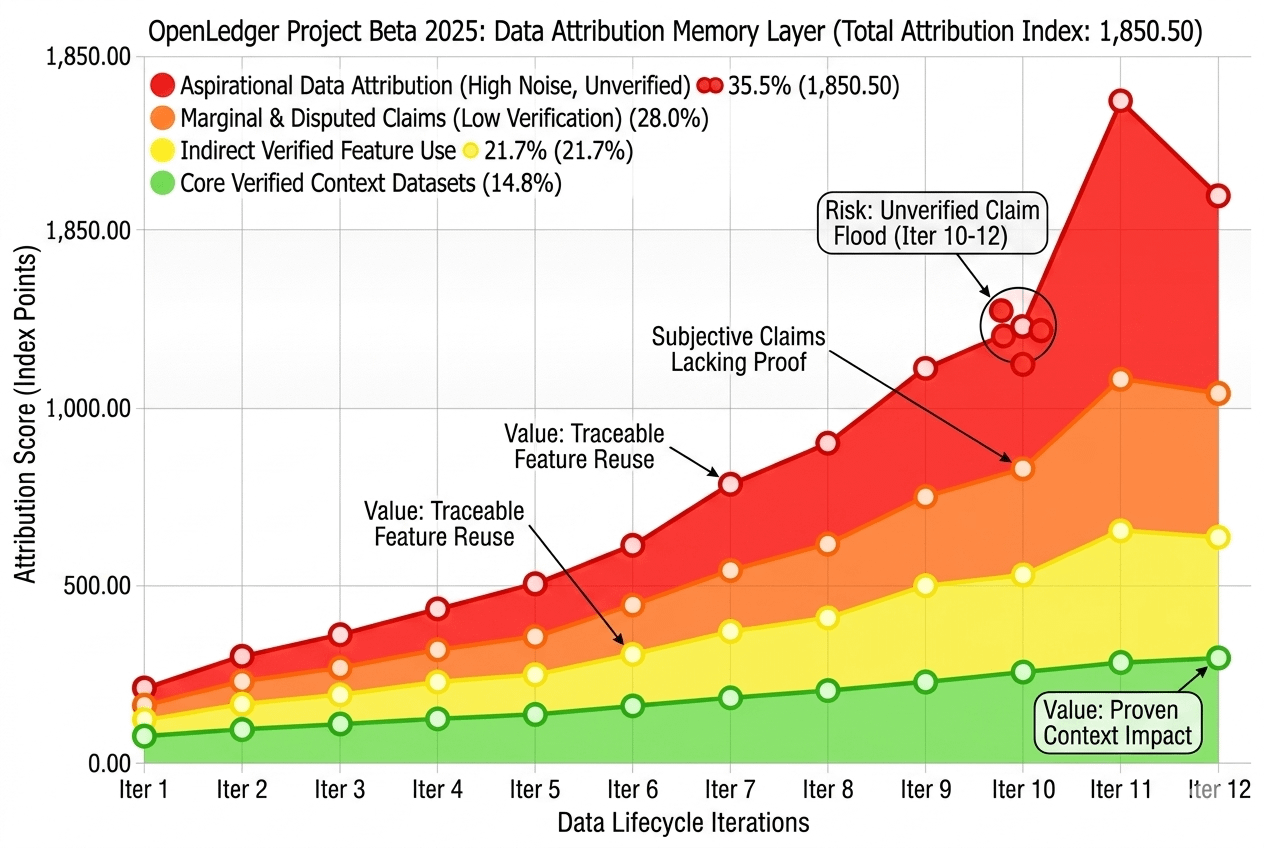
Still, I would not treat the old model as enough.
One-time payment thinking was built for simpler ownership paths.
AI bends those paths.
A dataset may not be valuable because it was included once.
It may be valuable because it keeps changing behavior later, quietly and again again.
That is the pressure OpenLedger is really sitting inside.
The market does not only need faster models or bigger claims.
It needs a steadier structure for remembering influence.
Maybe that is where AI and crypto start to overlap in a less obvious way.
Not around hype.
Around audit, eligibility, exposure, and the right to stay visible when value keeps moving.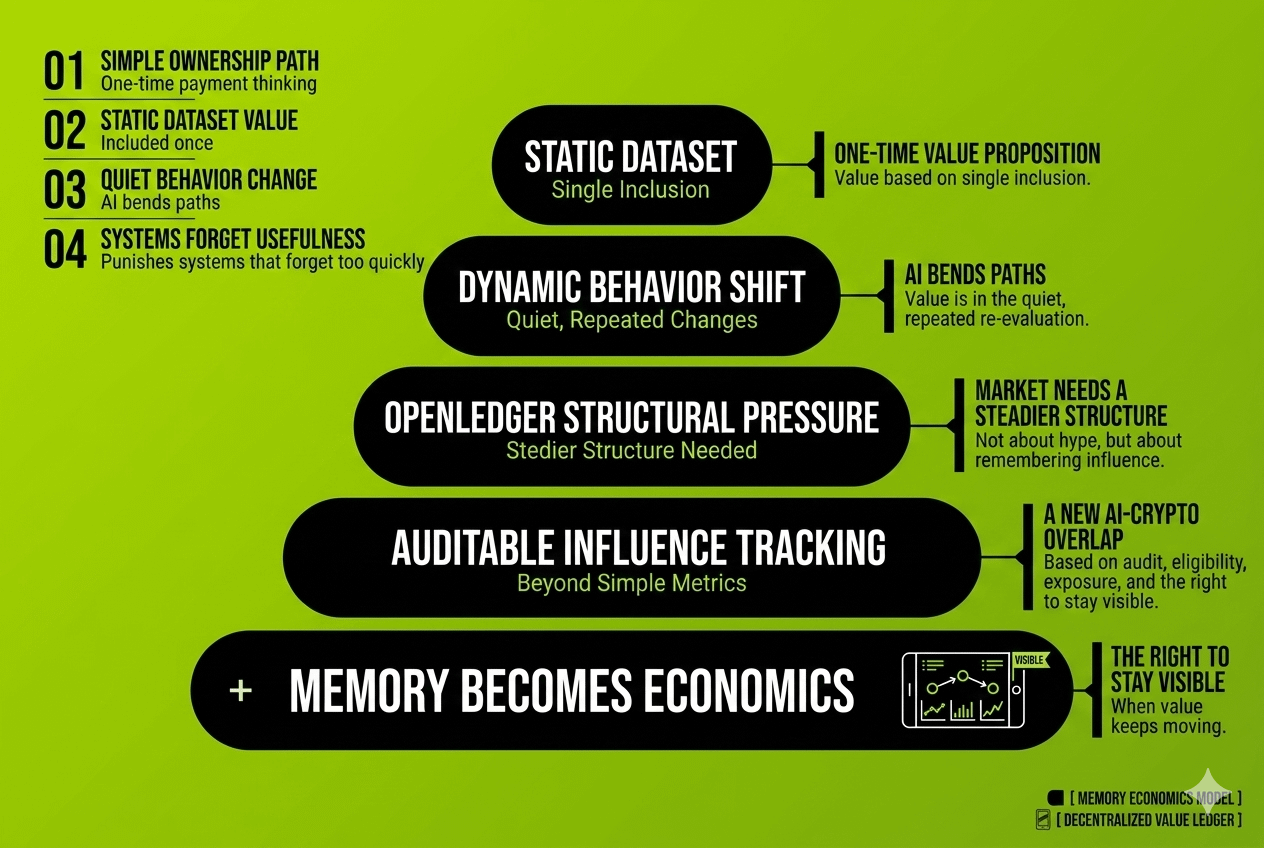
The future may not reward every contribution forever.
But it may punish systems that forget useful ones too quickly.
Memory becomes economics.


