
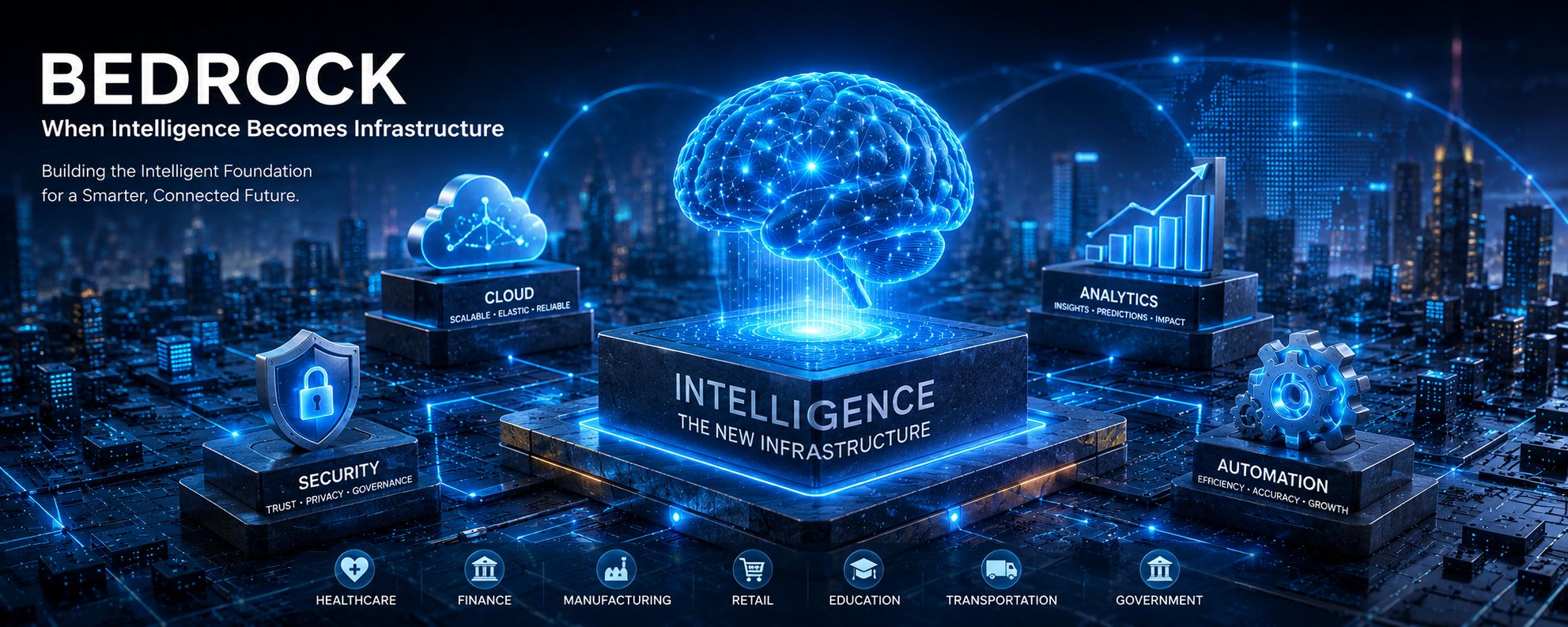
When I look at how quickly the world is changing, one thing feels very clear to me: intelligence is no longer just a feature, it is becoming the foundation. I see this shift in business, technology, education, healthcare, and even in the way people make everyday decisions. The idea behind “Bedrock: When Intelligence Becomes Infrastructure” is simple but powerful. It means that AI is moving from something people use occasionally into something that quietly supports the systems we rely on every day.
In the past, companies treated intelligence like a separate tool. They used software for reports, automation, or customer support, but the real structure of the business still depended on people and traditional systems. Now, that is changing. I think we are entering a period where intelligence sits inside the core of operations, just like electricity, cloud computing, or the internet. It is no longer an extra layer. It is becoming part of the base.
What stands out most to me is how fast this change is happening. A few years ago, many organizations were still testing AI in small pilot projects. Today, they are building real products and serious workflows around it. Generative AI, large language models, cloud platforms, and better data tools have made this possible. Businesses do not need to build everything from scratch anymore. They can plug into advanced systems that help them analyze data, assist customers, write code, improve workflows, and make faster decisions. That is a major change in how modern work gets done.
I also notice that the conversation around AI has matured. It is not just about what AI can do anymore. It is also about whether it is secure, trustworthy, and useful in real business settings. Companies now want systems that protect privacy, follow regulations, and work reliably at scale. That tells me something important: AI is being treated less like a shiny experiment and more like infrastructure that has to hold up under pressure. That is a huge sign of progress.
The impact is already visible across industries. In healthcare, intelligent systems are helping doctors and researchers deal with massive amounts of information more efficiently. In finance, they are improving fraud detection, customer service, and risk analysis. In manufacturing, they are helping teams reduce waste and keep operations smoother. In retail, they are making shopping more personalized and helping companies understand demand better. These are not small improvements. They are examples of intelligence becoming part of the operating system of entire industries.
Another thing I appreciate about this shift is accessibility. Advanced intelligence is no longer reserved only for giant corporations with huge budgets. Smaller businesses can now use tools that were once out of reach. That matters because it gives more people a chance to compete, create, and grow. I see that as one of the biggest long-term benefits of intelligence becoming infrastructure. It opens the door for more innovation instead of keeping power locked in a few places.
Looking ahead, I believe the benefits will grow even more. Organizations will save time by automating repetitive work. Teams will make better decisions because they’ll have faster access to insights. Employees will be able to focus more on creativity, strategy, and human connection instead of being buried in routine tasks. Over time, intelligent infrastructure could also support breakthroughs in science, education, public services, and product development.
To me, the bigger message is this: intelligence is becoming as essential as the systems that carry it. Just as roads connect cities and cloud platforms connect digital services, AI is becoming the bedrock that supports modern progress. The businesses and institutions that understand this early will be better prepared for the future. They will not just use intelligence. They will build on it. And that is where the real transformation begins.