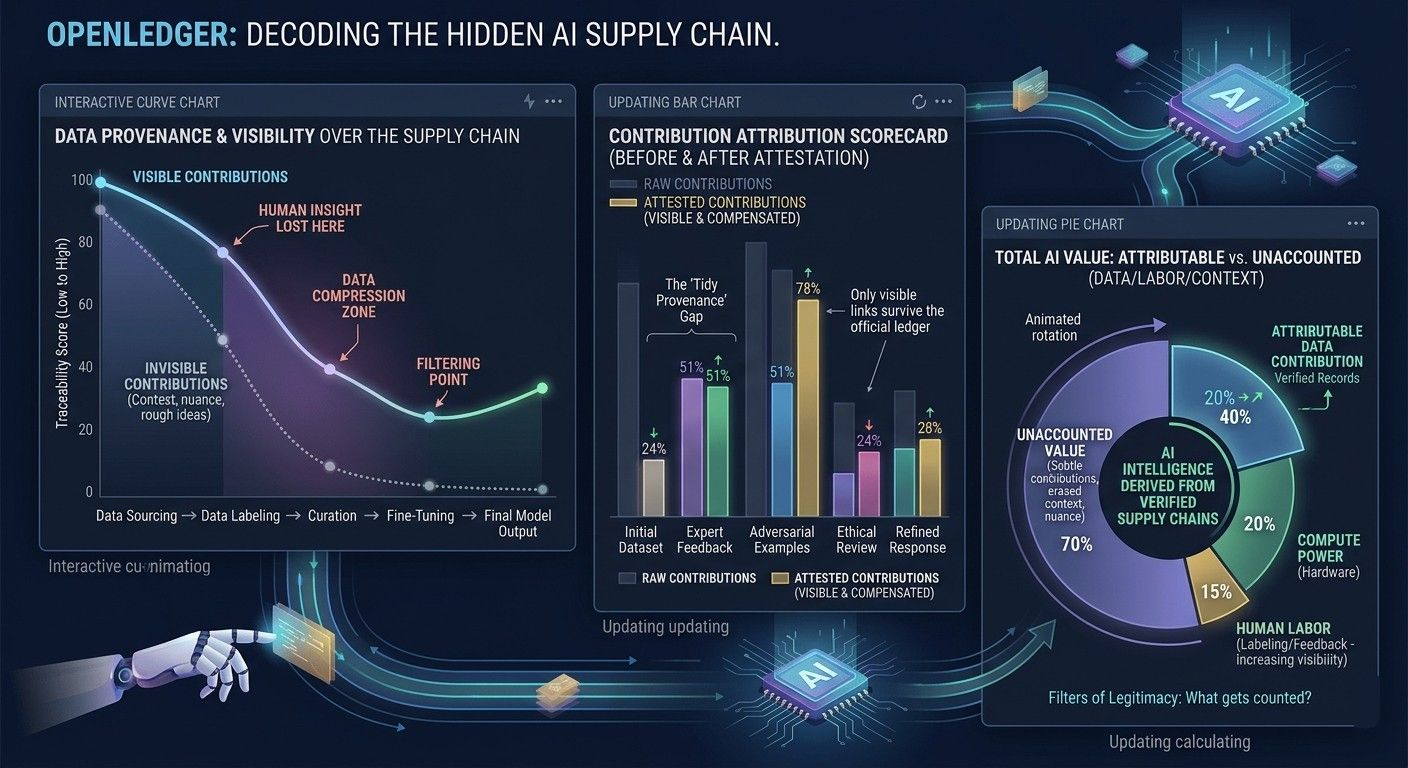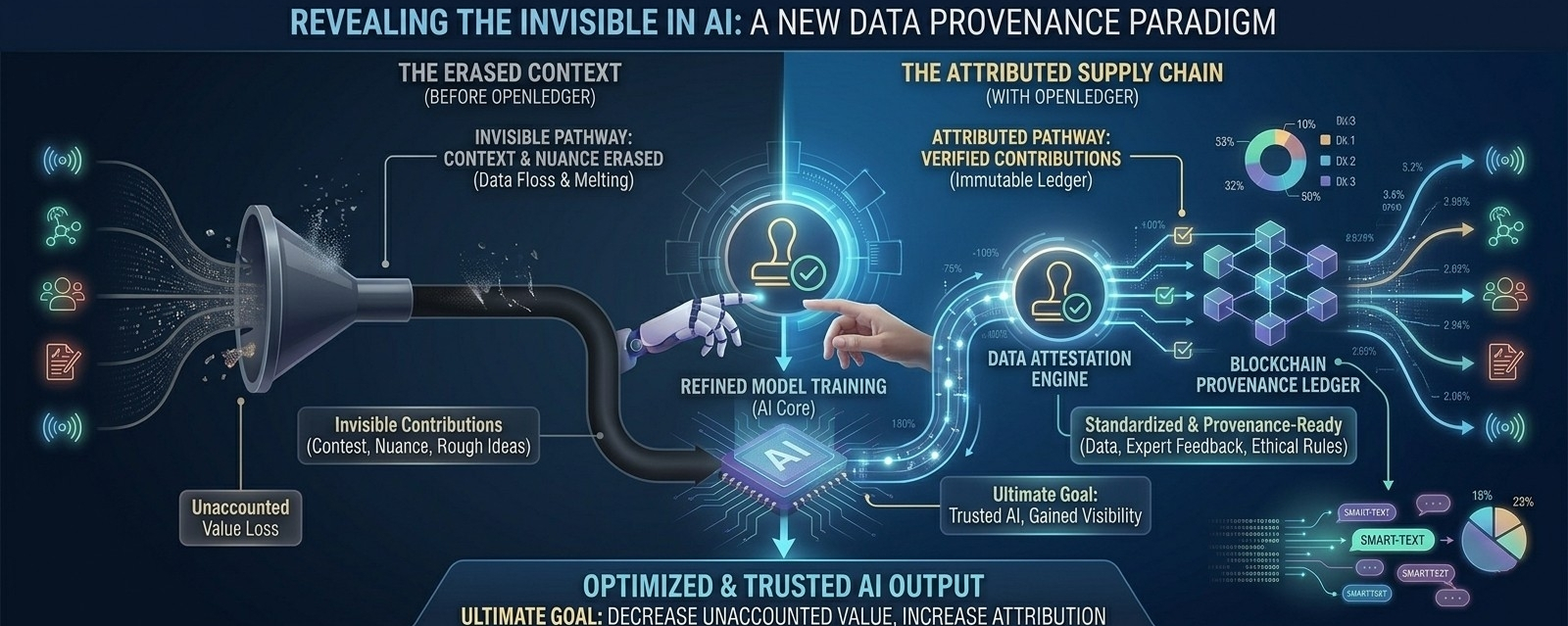

I think I’ve been looking at this all wrong for a while now. When AI infrastructure came up in conversations, my brain would immediately jump to the flashy bits—massive models, lightning-fast responses, endless compute power. It felt simple: you feed something in, and out comes the smarts. Everything important happened right there in the spotlight, and the messy stuff behind it? Just invisible scaffolding I didn’t need to worry about.
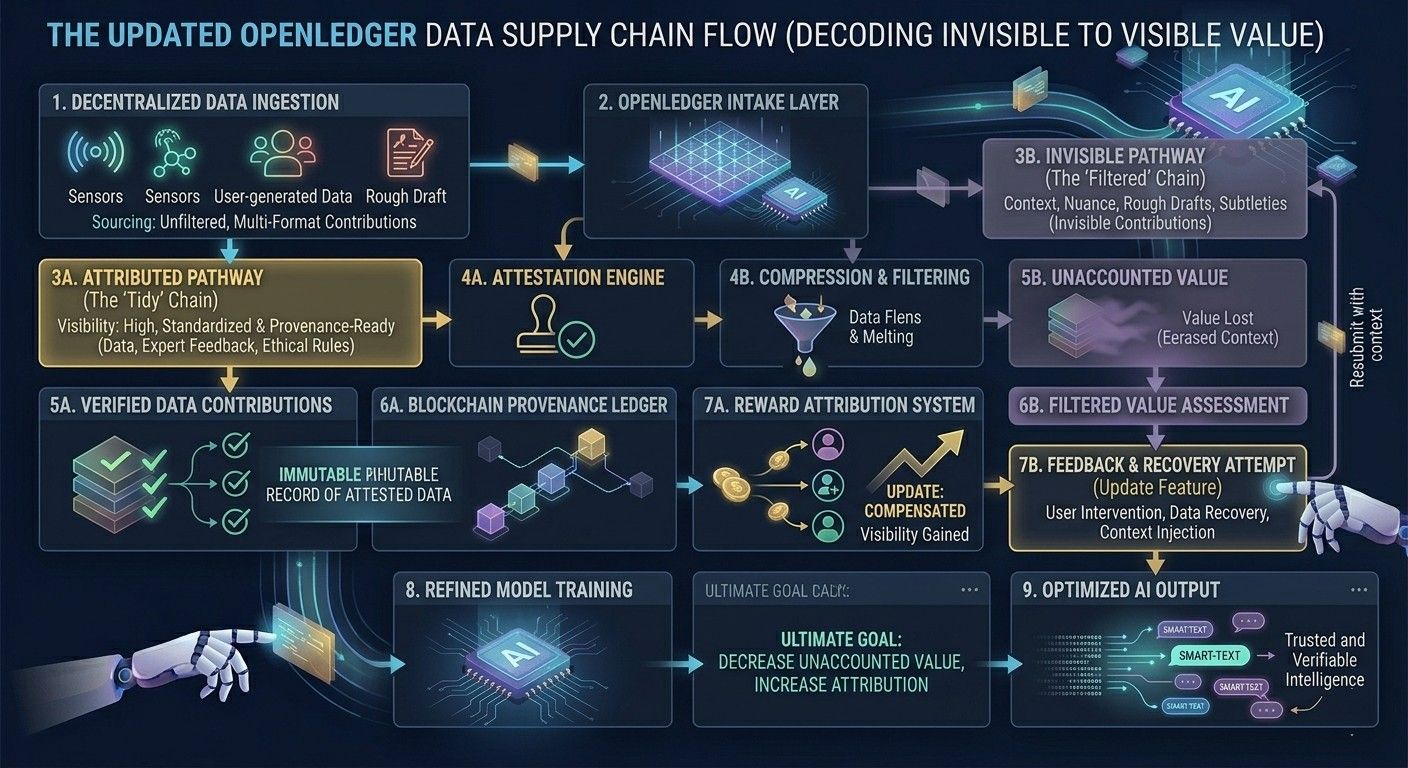
But then OpenLedger kept pulling me back in, and slowly the picture started flipping. What if the biggest shift happening in AI isn’t the intelligence we see, but these hidden supply chains quietly holding it all together? It sounds almost obvious once I say it out loud—every real industry runs on supply chains—but somehow AI talk still acts like the final answer just pops into existence, fully baked and ready to go. We get excited about the polished output, while the long journey that made it possible quietly slips away: all that training data melting into abstract vectors, the people who shaped and cleaned it fading into the background, the tough calls and contradictions either smoothed over or dropped entirely. By the time it lands in front of me, the response feels effortless, almost magical, because most of its real story has already been wiped clean.
OpenLedger isn’t promising to magically dig up every lost piece or connection. What it does, though, is make me pause and ask: what is this system really choosing to count? Once you start treating attribution like it matters economically, AI stops feeling like some pure piece of code and starts looking a lot more like logistics—data flowing from one hand to another, evidence getting checked and passed along, different people adding their bits at different moments. The “intelligence” we notice becomes less of a lone spark and more like the final delivery at the end of that whole chain.
It reminds me of what I’ve seen in creator spaces and those ranking systems we all scroll through. We stare at the top spots, the big numbers, the apparent influence. But those lists only ever capture what hung around long enough to be measured. The rough drafts that never quite clicked, the ideas that felt true but couldn’t prove themselves fast enough—they vanish before anyone tallies the score. They’re simply not there.
I’m starting to feel like AI is drifting the same way. The response we read isn’t really the heart of the thing anymore. The supply chain is. And honestly, the intelligence part might be turning into one of the less fascinating elements in the bigger story.
What gets under my skin is how this quietly reshapes who wins. When rewards start linking to what can be clearly traced and proven, it’s not just about creating sharper thinking. It’s about making your contribution visible inside that chain—something the systems downstream can actually notice, verify, and compensate. Someone might pour their heart into work that runs deep but stays hard to pin down. Another person adds something lighter but neatly traceable. Over time, I catch myself wondering which one ends up mattering more in the record.
It’s not that the whole setup ignores truth. It’s that it has to compress reality just to keep moving. Every supply chain does. You can’t haul around the full weight of everything forever; it needs to shrink into something verifiable and shareable. But that squeezing always leaves bits behind—not because they were worthless, but because they didn’t fit neatly into the format when it counted.
Lately that’s what’s been on my mind more than anything. Not whether models will keep getting smarter, but what gets left out before the package ships. What real contributions helped shape the result but never quite made it onto the official ledger? What mattered in the background yet disappeared the second the evidence layer locked in? The tools and apps downstream don’t touch raw truth—they run on clean records, attestations, tidy provenance. Helpful stuff. Reliable stuff. But always incomplete.
OpenLedger feels like it’s quietly highlighting this uneasy spot we’re in: a future where the real shortage isn’t more data or power, but simply being seen as a legitimate part of the systems that turn information into something trustworthy enough for others to build on. The thing we finally see looks solid and whole. What didn’t survive to reach that point? Those ripples keep spreading in ways we barely notice.
And that’s the part I can’t stop turning over—not just racing toward brighter intelligence, but getting honest about the quiet filters deciding what gets to count as part of it in the first place.