
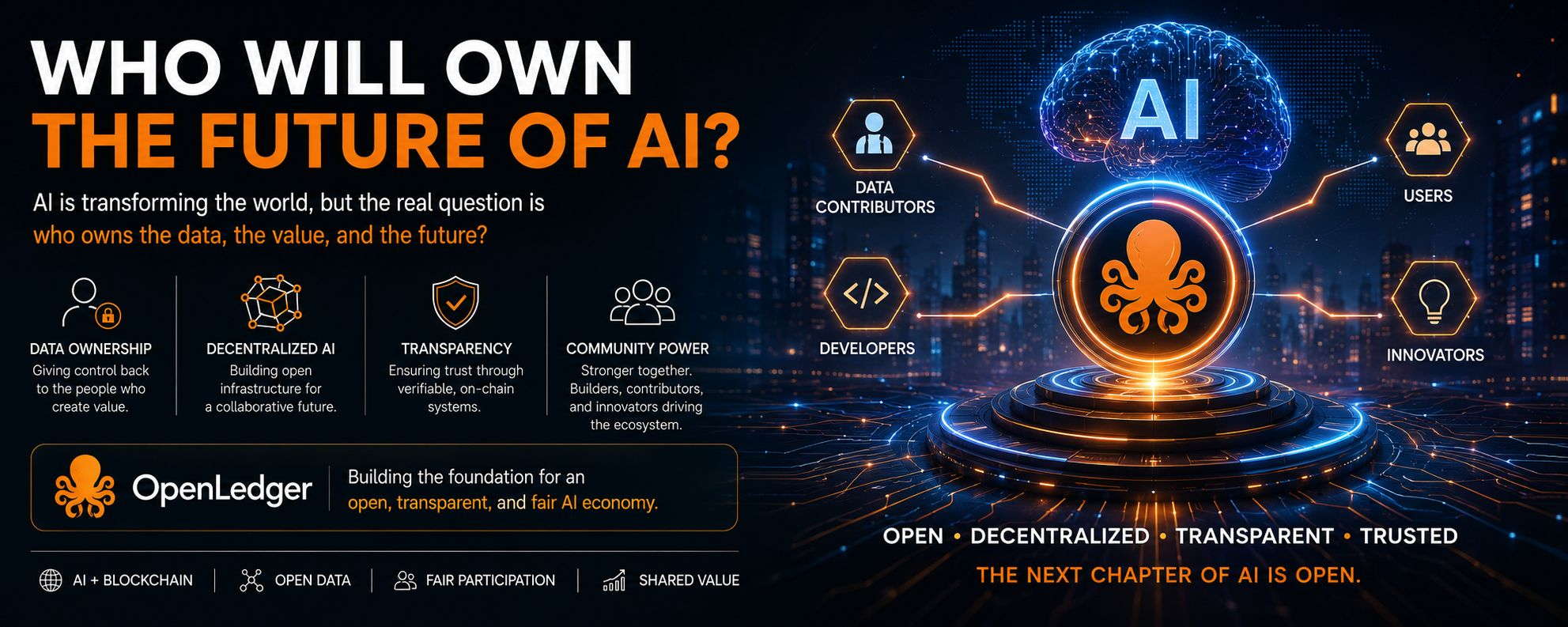
Artificial intelligence is rapidly becoming one of the most influential technologies of our time. Every day, AI is helping businesses automate processes, improving decision-making, generating content, and transforming entire industries. While the world continues to focus on faster models and smarter systems, an equally important question is beginning to emerge:
Who will own the value created by AI?
This question is becoming increasingly relevant because AI does not exist in isolation. Every intelligent system depends on data, contributors, developers, and communities. Without these elements, even the most advanced AI models would have little practical value. Yet in many cases, the benefits generated by AI are not distributed evenly among the people who help create that value.
As the technology matures, the conversation is gradually shifting away from pure innovation and toward transparency, ownership, and participation. The future of AI may not be defined solely by how intelligent machines become, but by how fairly ecosystems reward those who contribute to their growth.
This is where projects like OpenLedger enter the discussion.
OpenLedger is exploring an idea that many believe could become increasingly important in the coming years: creating a more open relationship between artificial intelligence, data, and blockchain technology. Rather than concentrating solely on technological advancement, the project appears focused on building infrastructure that encourages transparency and collaboration within the AI economy.
One of the biggest challenges facing modern AI systems is the question of data ownership. Data has become one of the most valuable resources in the digital world. Every search, interaction, transaction, and contribution generates information that can be used to improve intelligent systems. However, the individuals responsible for generating this data often have limited visibility into how it is utilized or how value is created from it.
As awareness around this issue grows, demand for more transparent systems is likely to increase. People want greater control over their digital contributions. They want accountability, fairness, and clarity regarding how information is collected, shared, and rewarded.
Blockchain technology offers potential solutions to many of these challenges. By introducing transparency, verifiable records, and decentralized participation, blockchain can create environments where trust does not rely entirely on centralized organizations. When combined with artificial intelligence, this approach may open new possibilities for collaboration and innovation.
The intersection of blockchain and AI is particularly exciting because both technologies complement each other in meaningful ways. AI excels at processing information and generating insights, while blockchain provides transparency, security, and traceability. Together, they have the potential to create systems that are not only intelligent but also accountable.
However, technology alone is never enough.
History shows that successful ecosystems are built by communities. Behind every major technological breakthrough is a network of developers, contributors, educators, supporters, and users who help transform ideas into practical solutions. Community participation often determines whether a project can sustain momentum beyond its initial launch.
This is why ecosystem development remains one of the most important indicators of long-term potential. Projects that continue attracting builders and contributors often demonstrate stronger resilience during periods of market uncertainty. While trends may come and go, active communities frequently become the foundation that supports future growth.
Another important factor is consistency. The cryptocurrency industry has witnessed countless projects rise quickly on excitement and speculation. Many attract attention during favorable market conditions, only to disappear when enthusiasm fades. Sustainable growth usually follows a different path.
Projects that focus on continuous improvement, ecosystem expansion, and real-world utility often have a greater chance of remaining relevant over time. Progress may be slower, but the foundations tend to be stronger. Long-term success is rarely built overnight.
OpenLedger appears to be positioning itself within this long-term perspective. Its focus on decentralized AI infrastructure, transparency, and participation aligns with several major trends currently shaping the technology sector. As AI adoption continues to accelerate globally, the demand for trustworthy and collaborative ecosystems may become increasingly important.
Of course, every emerging project faces challenges. Execution, adoption, competition, and technological development all influence future outcomes. No project is guaranteed success, and investors should always conduct their own research before making decisions.
Nevertheless, the broader vision behind OpenLedger reflects an important shift taking place across the digital economy. The conversation is evolving from simply building smarter systems to creating fairer and more transparent ecosystems.
The next chapter of artificial intelligence may not belong exclusively to the companies with the largest models or the most computing power. It may belong to the ecosystems that successfully combine innovation with transparency, ownership, and community participation.
As blockchain and AI continue moving closer together, projects exploring this intersection could play a meaningful role in shaping the future. OpenLedger is one of those projects, making it a platform worth watching as the next generation of technology continues to unfold.
What are your thoughts on the future of decentralized AI and the role OpenLedger could play in this evolving landscape?