


Bitcoin recently bounced back toward the $65,000 area after a short pullback, helped by improving sentiment around possible U.S.-Iran peace talks. Traditional markets reacted strongly to the optimism, with U.S. equities moving closer to record highs. Bitcoin, however, has not shown the same level of strength.
The market is also focused on the upcoming Federal Reserve decision. The two-day FOMC meeting is set to conclude on June 17, with Fed Chair Kevin Warsh expected to announce the rate decision. According to market expectations, interest rates are likely to remain unchanged in the 3.50% to 3.75% range.
Even if the rate decision comes in as expected, Bitcoin could still see short-term volatility around the announcement. Macro events often create sharp moves in crypto, especially when traders are already cautious.
The recent BTC recovery appears to have been driven more by optimism than strong demand. Spot trading volume has been falling, which suggests buyers may not be fully confident yet. This makes the move vulnerable if market sentiment weakens again.
Bitcoin’s latest rally failed to break through the important $70,000 resistance area. Some analysts believe the recent move toward $67,300 may already have marked a local top unless fresh buying pressure enters the market.
On-chain data is also showing stress among Bitcoin miners. After BTC dropped to around $59,100, miner selling pressure increased sharply. This usually happens when miners face lower profits and are forced to sell part of their holdings to cover operating costs.
Bitcoin’s hashrate has reportedly fallen by around 28% since last October, adding more weight to the idea that miners are under pressure. The situation looks similar to earlier phases when weak prices pushed miners to send more BTC to exchanges.
Another important point is Bitcoin’s production cost. If the average cost to mine BTC is around $76,000 while the market price is much lower, many miners may be operating under financial pressure. This can increase selling activity and slow down recovery attempts.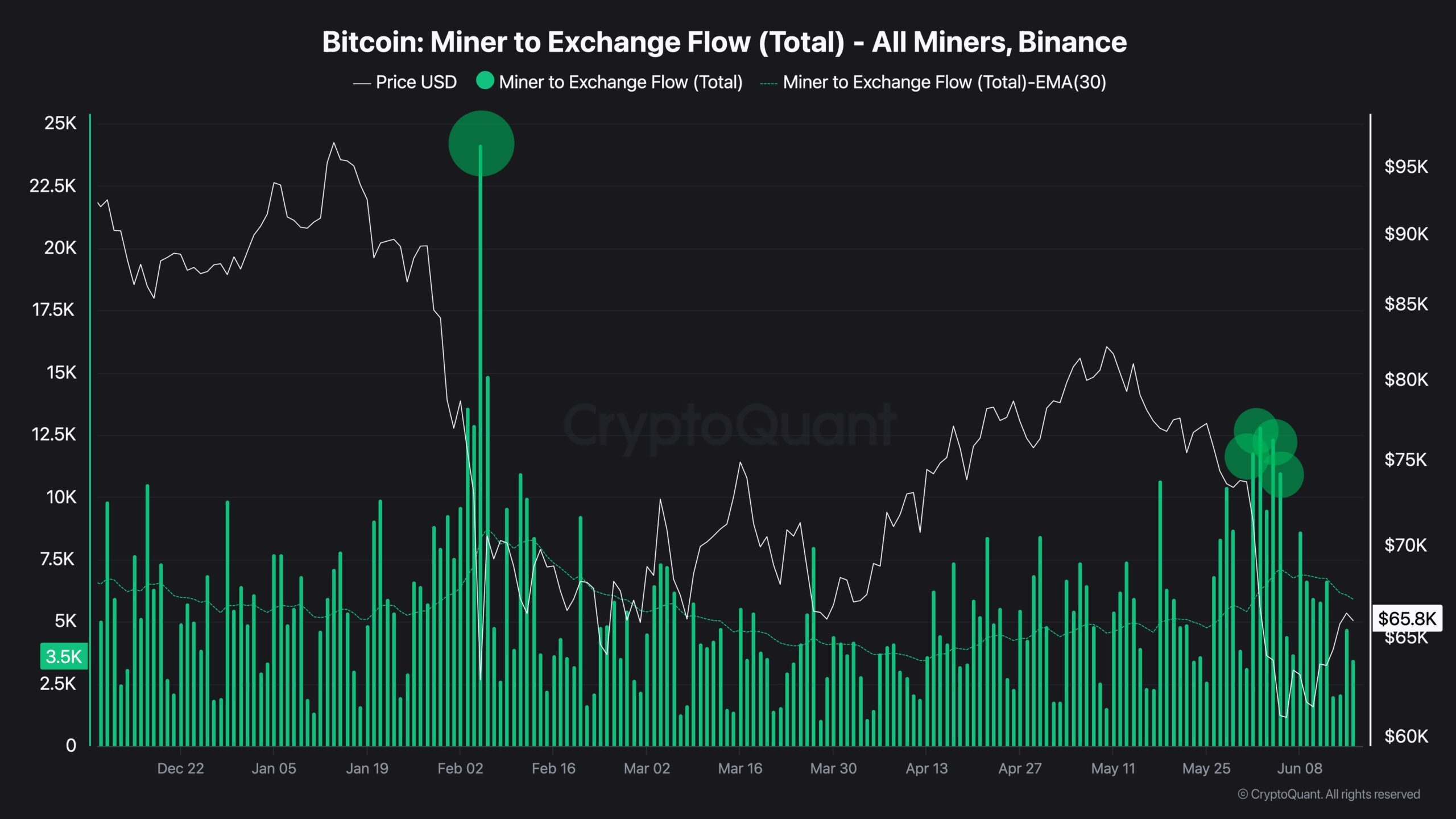
Cycle-based indicators also suggest Bitcoin has not yet reached its deepest bearish stage. In past market cycles, BTC usually moved through several phases before reaching an extreme bear zone. Current data shows that this final capitulation phase may not be complete yet.
From a technical perspective, Bitcoin remains weak across multiple timeframes. The weekly, daily, and 4-hour structures continue to show bearish pressure. The recent bounce reached near the 50% retracement area around $66,800, but sellers quickly stepped back in.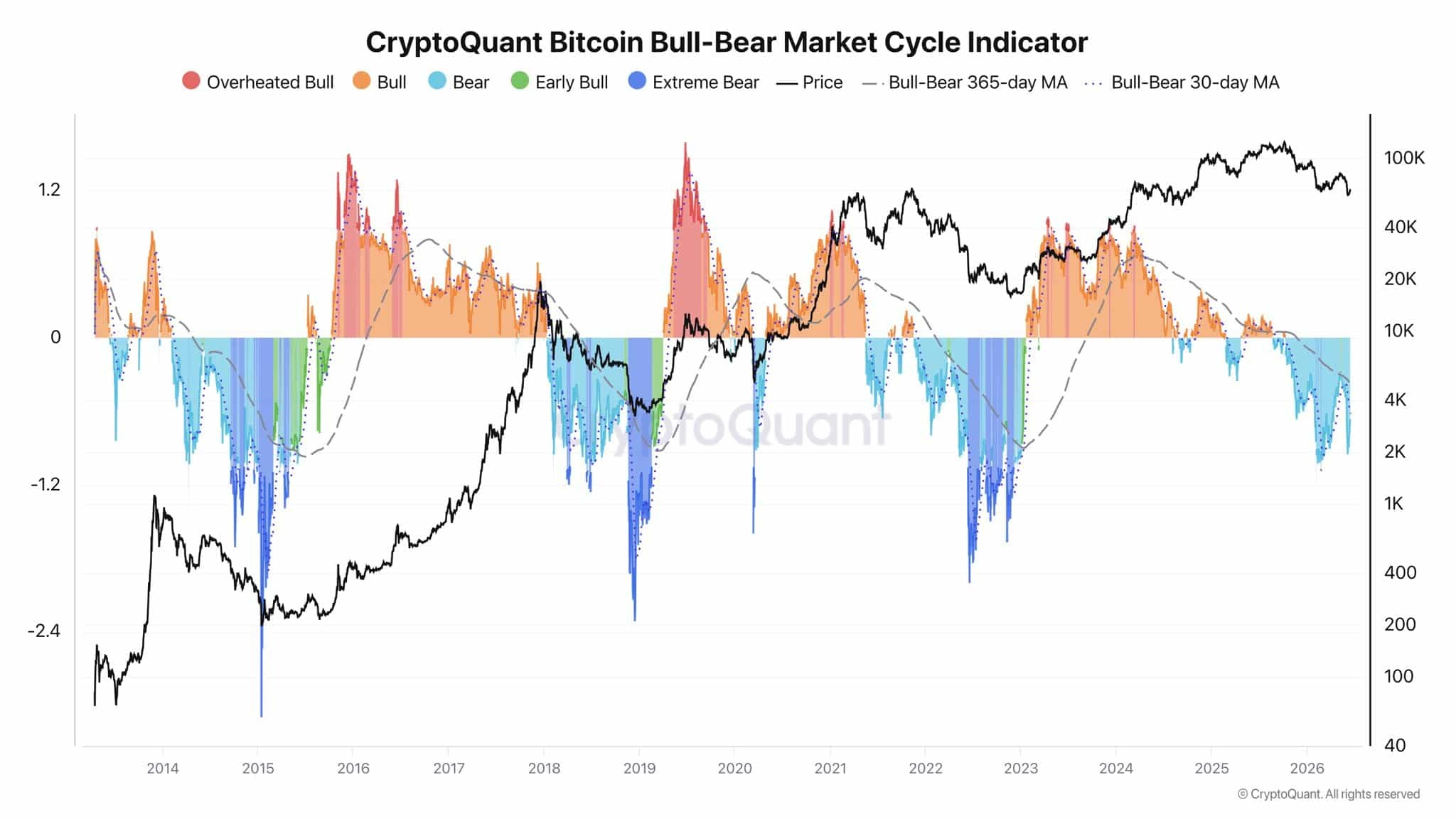
The $64,000 zone is now an important support level. If Bitcoin loses this area, the probability of another move toward $59,100 would increase. A break below that level could confirm that the downtrend is still active.
For now, the market is stuck between macro optimism and weak crypto-specific signals. Peace talk headlines helped improve sentiment, but they were not enough to push Bitcoin toward $70,000.
Unless Bitcoin sees stronger spot demand and a clear breakout above resistance, another sell-off remains possible. The key level to watch is $64,000. If BTC falls below it, bearish momentum could return quickly.