
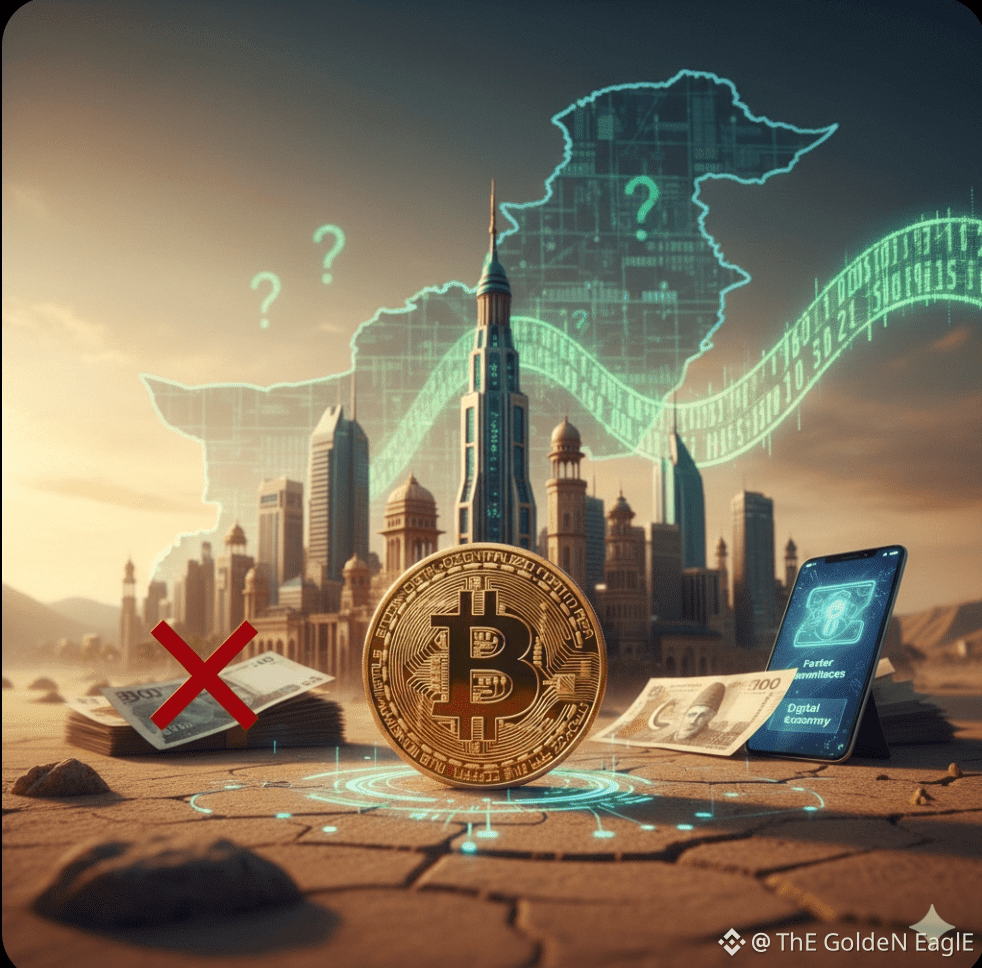
The story of Bitcoin $BTC in Pakistan has been a rollercoaster. For years, the official stance has been "stay away," but as the world changes, many are wondering if Pakistan will eventually change its mind.
The Current Situation
Right now, the State Bank of Pakistan (SBP) does not recognize Bitcoin $BTC as legal. In 2018, they warned banks not to handle crypto transactions, citing risks like money laundering and fraud. Because of this, most Pakistanis who trade Bitcoin do so through "peer-to-peer" methods or international apps, which can be risky and unregulated.
Why Things Might Change
Despite the restrictions, Pakistan has one of the highest rates of crypto adoption in the region. There are three big reasons why the government might reconsider:
Cheaper Remittances: Millions of Pakistanis live abroad and send money home. Using Bitcoin $BTC or blockchain could make these transfers much cheaper and faster than traditional banks.
Economic Growth: A regulated crypto market could attract foreign investment and create jobs in the tech sector.
Financial Inclusion: Many people in Pakistan don't have bank accounts. Mobile crypto wallets could give them a way to save and move money digitally.
The Challenges Ahead
The government is hesitant for a few major reasons. First, they worry about financial stability—Bitcoin’s price goes up and down very fast. Second, there is pressure from international organizations (like the FATF) to ensure that digital currency isn't used for illegal activities.
What’s Next?
The future likely isn't an "overnight" legalization. Instead, we might see:
A Pilot Program: The government might create a "sandbox" where a few companies can test crypto services under supervision.
Digital Rupee: The State Bank is exploring a Central Bank Digital Currency (CBDC), which is like a digital version of the Rupee. This could be a "middle ground" between paper cash and Bitcoin.
The Bottom Line: Pakistan is currently at a crossroads. While the ban remains, the growing interest from the public and the potential for economic benefits mean the conversation is far from over.
