
As more people start using Web3 applications, the amount of data being created is growing very fast. Every interaction, transaction, and activity adds more information that needs to be stored and accessed. This puts serious pressure on blockchain networks, which were not originally designed to handle massive data at scale. To move forward, Web3 needs storage solutions that are both reliable and truly decentralized.
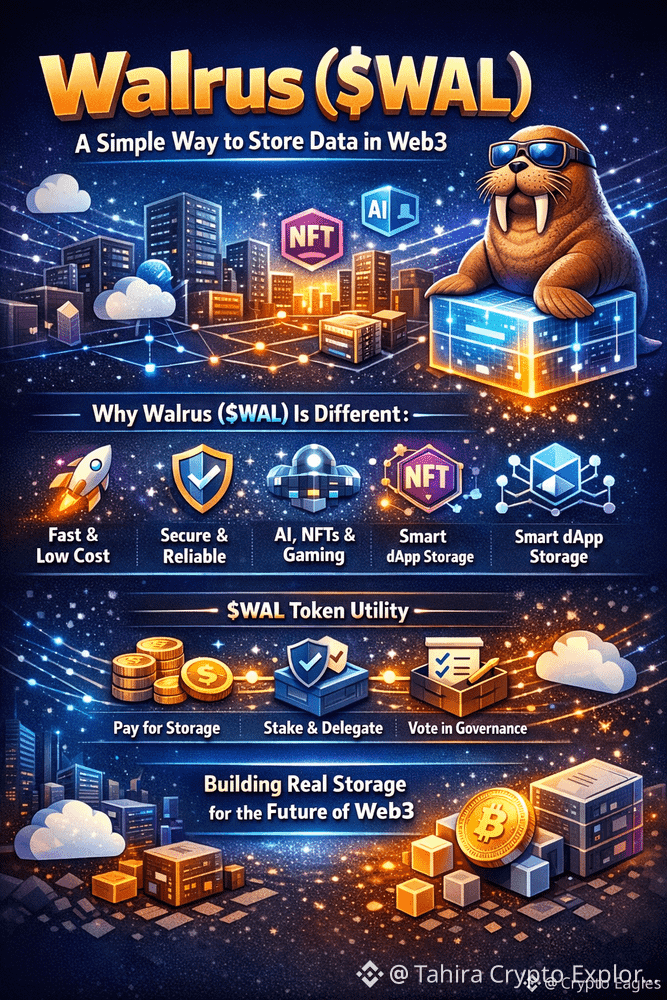
This is where Walrus Protocol comes in.
Walrus Protocol is built to help blockchains and Web3 apps manage large amounts of data without slowing down or losing decentralization. Instead of relying on traditional centralized servers, Walrus offers decentralized storage and data availability tools that keep information secure, accessible, and distributed across the network.
For developers, this makes building much easier. They can create fast and scalable decentralized applications without worrying about data bottlenecks or system failures. Walrus ensures that data remains available when users need it, while still following the core principles of Web3—openness, security, and decentralization.
At the center of the ecosystem is the $WAL token. It is used to support network operations, incentivize participation, and keep the system running smoothly. By powering essential functions, $WAL helps maintain the long-term stability and growth of the Walrus network.
As Web3 continues to expand, solutions like Walrus Protocol will play a key role in supporting the next generation of decentralized applications—making them faster, more scalable, and ready for real-world adoption.
In my view, as Web3 continues to grow, data scalability will become even more important. Solutions like Walrus Protocol can play a meaningful role in making Web3 more practical and reliable.

