

The first time I really understood why “real-world assets on-chain” is such a hard problem wasn’t from reading a whitepaper. It was from watching a friend try to tokenize something simple: a small piece of local real estate. The crypto part was easy. A token can represent anything. The hard part was everything around it: legal ownership, investor eligibility, disclosures, custody, trading restrictions, what happens if someone loses access, and whether regulators treat it like a security. That’s the gap most RWA narratives skip. And it’s exactly where Dusk’s approach gets interesting, because it starts from the boring truth: in real finance, the law isn’t optional.
Tokenization sounds magical at first. You take a bond, a stock, a fund share, even an invoice, and you represent it as tokens so it can move faster, settle instantly, and trade globally. But in regulated markets, assets don’t just “move.” They transfer under rules. Ownership must be provable. Transfers may require KYC. Some buyers are allowed, others are not. Certain data must remain private, but regulators still need audit access. And the moment you bring investors into the picture, you’re operating under securities law, not crypto culture.
That’s why most RWA tokenization attempts either feel like private databases with tokens attached, or they become grey-zone DeFi wrapped in legal marketing. Dusk’s unique angle is that it tries to make the legal and compliance layer native to the chain rather than bolted on afterward. It’s been building since 2018, not as a “DeFi chain,” but as infrastructure meant to handle regulated financial workflows where privacy and oversight both matter.
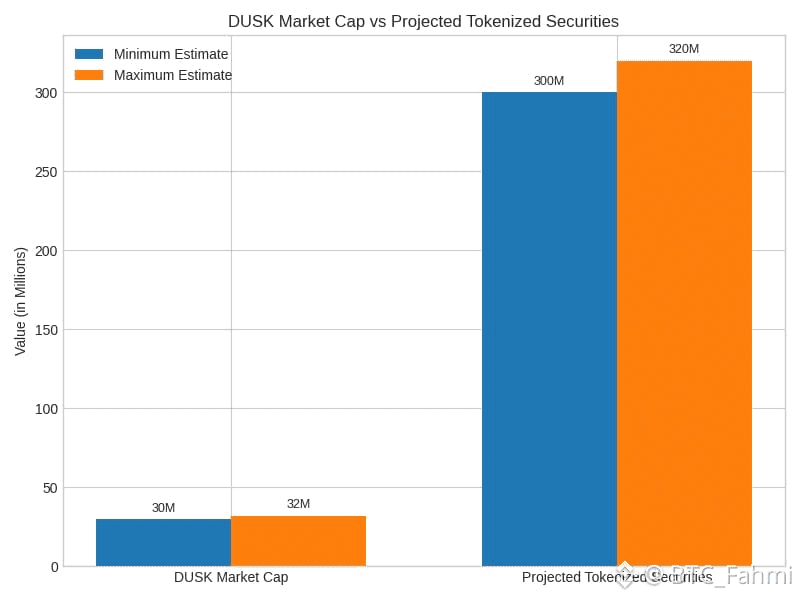
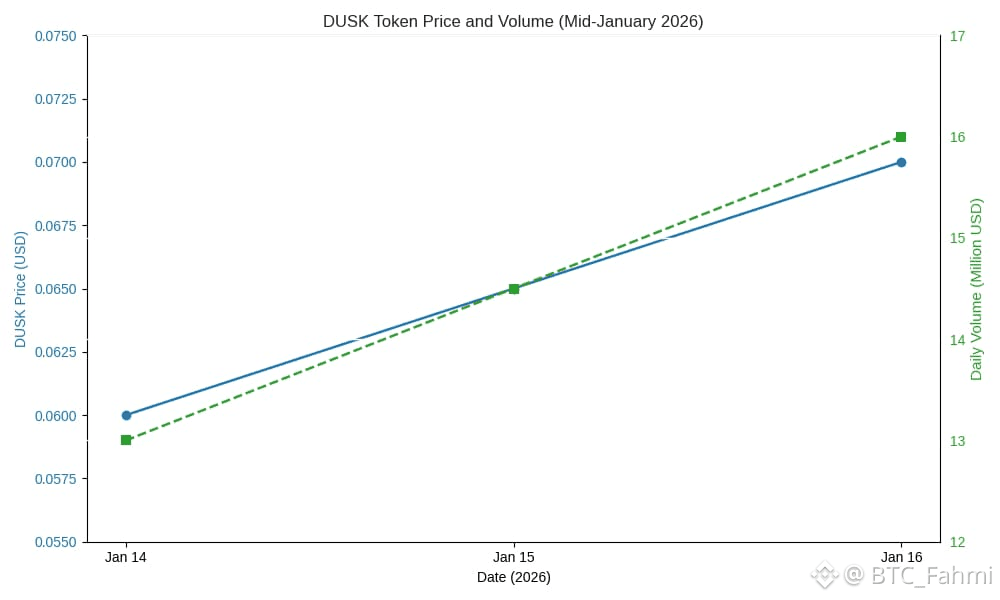
As of mid-January 2026, DUSK trades around $0.06–$0.07 with roughly $13M–$16M in daily volume depending on the tracker, and a market cap around $30M–$32M. That price doesn’t tell you whether RWA tokenization will succeed. But it does tell you something practical: the market is watching, liquidity exists, and this isn’t a dead project floating in silence.
So what does “bringing RWAs on-chain legally” actually require?
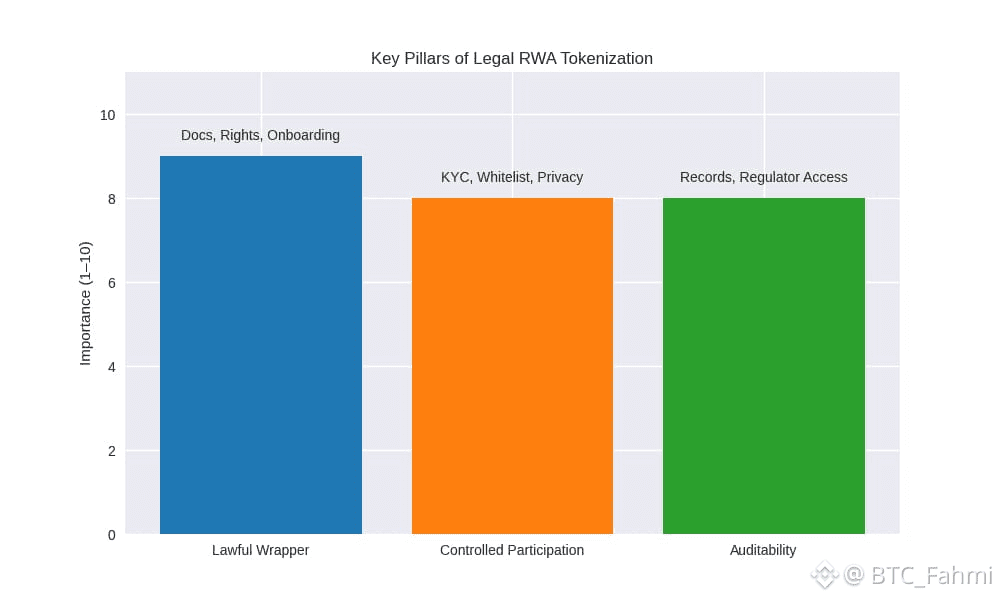
First, the asset itself needs a lawful wrapper. A real-world asset has a legal identity: a share certificate, a bond register, a fund unit, a claim on cashflows. Tokenization doesn’t delete that structure, it mirrors it. In compliant systems, a token usually represents a legally recognized claim issued by an entity that is allowed to issue it, in a jurisdiction that permits it. That means documentation, investor rights, and regulated onboarding aren’t add-ons, they’re the foundation.
Second, you need controlled participation. The open crypto idea is “anyone can interact.” Regulated finance is “only the right parties can interact.” That’s where privacy becomes more than a nice feature. You don’t want every wallet to broadcast identity details. But you still need to prove eligibility. Dusk’s broader positioning is built around privacy-preserving compliance, where sensitive user and transaction information can remain confidential while compliance checks still happen. In plain language: you can prove you’re allowed without exposing everything about you to the whole internet.
Third, you need auditability that doesn’t leak private data. Many people misunderstand this part. Institutions don’t necessarily hate privacy. They hate uncertainty. They need provable records, clear reporting, and predictable control points. If a regulator requests audit access, the system must support it without turning into a surveillance chain. Dusk’s entire narrative sits right on that tension: privacy for users, verification for authorities.
A practical example makes this clearer. Imagine a tokenized bond issuance. In classic finance, a registry knows who owns what. Payments flow on schedule. Transfers have checks. Now imagine the same bond tokenized. If it trades on-chain without rules, it instantly becomes a compliance nightmare. But if the chain can enforce transfer restrictions (only whitelisted/KYC’d wallets), maintain private ownership details, and still allow auditors to verify that the registry matches reality, then tokenization becomes a real operational upgrade rather than a regulatory gamble.
That’s where a platform concept like DuskTrade fits the bigger picture. Public sources around Dusk describe DuskTrade as a regulated-facing gateway for tokenized assets, with onboarding flows like KYC and region-based access. The interesting part here isn’t the UI. It’s what it implies: tokenized assets that are designed to live inside the legal perimeter, not outside of it. Some market commentary claims 2026 rollout targets and even a pipeline aiming for €300M+ in tokenized securities through partnerships such as NPEX. (Treat that number as an ambition until it’s confirmed by official disclosures, but the direction matters.)
Now, as a trader or investor, the clean way to analyze this isn’t “will RWAs pump?” It’s: does the chain’s design match the real constraints of financial adoption?
In my view, Dusk’s bet is that compliance isn’t the enemy of crypto, it’s the bridge to scale. Most crypto rails optimize for permissionless speed. Dusk optimizes for lawful participation, privacy-preserving verification, and predictable oversight. That’s not emotionally exciting. But it’s realistic. In regulated markets, the winning infrastructure usually looks boring. It looks like standards, reporting, and systems that reduce operational risk.
Of course, there are real risks. RWA tokenization is politically and legally sensitive. Rules vary by country. Licenses matter. Integration cycles are long. Even with the right tech, adoption can stall because institutions don’t move fast, and regulators rarely reward experimentation. There’s also a competitive field: tokenization efforts exist across Ethereum L2s, enterprise chains, and traditional finance sandboxes. Dusk doesn’t just need a working chain, it needs credible distribution, real issuers, and successful pilots that stand up to scrutiny.
But if you zoom out, the bigger trend is undeniable: tokenization is getting pulled into the mainstream conversation. The question isn’t whether assets will be tokenized. It’s where, under what rules, and with what privacy guarantees. Dusk is trying to position itself right in that intersection: “on-chain” without becoming “outside the law.” And if they pull that off, the most important outcome won’t be a headline price candle. It’ll be a world where tokenization stops being a crypto story and becomes a finance workflow that just quietly works.
That’s the kind of reality traders should respect because reality is where the real money stays.