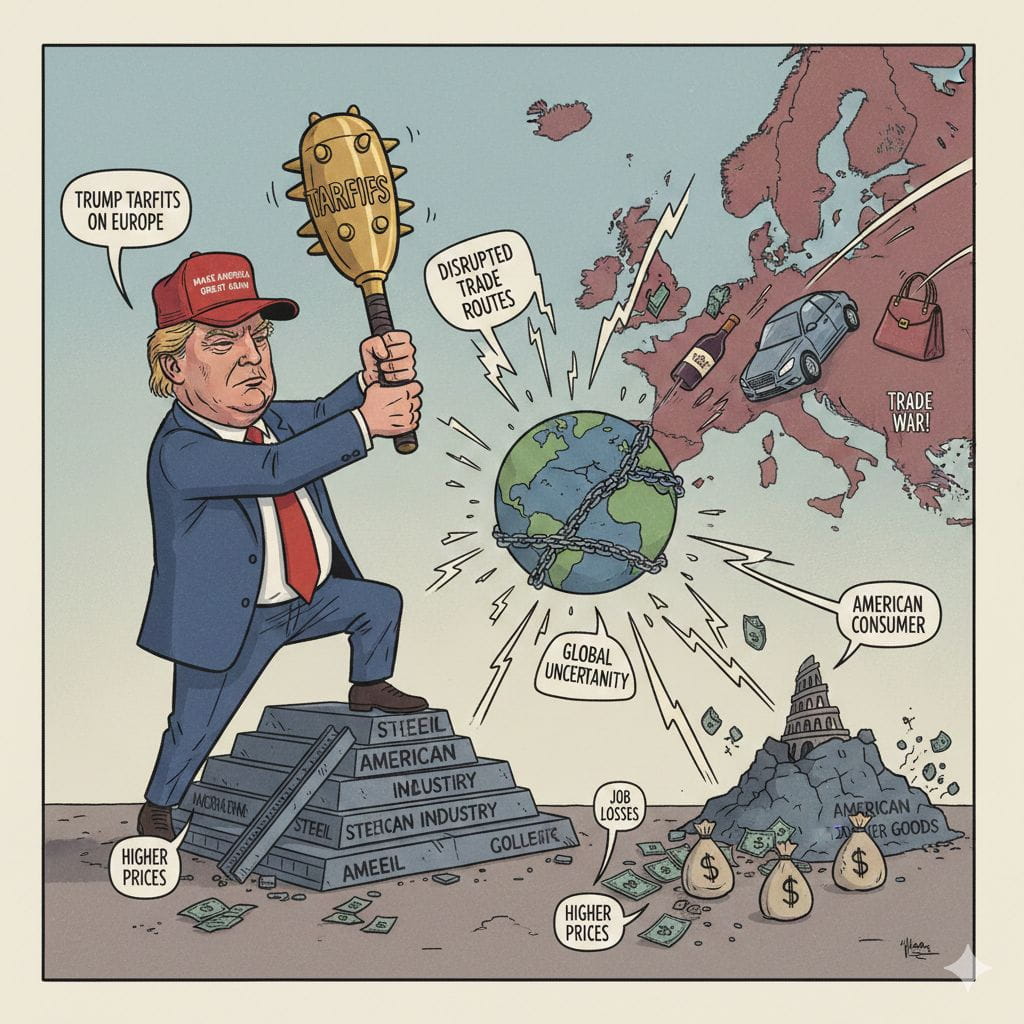
The imposition of tariffs by the Trump administration on goods from Europe created significant economic ripples on both sides of the Atlantic. The stated aim was to protect American industries and jobs, particularly in sectors like steel and aluminum, which the administration deemed critical for national security. However, this move sparked strong reactions from European nations, leading to retaliatory tariffs on American products.
Economically, these tariffs tended to increase the cost of imported goods for American consumers and businesses, potentially leading to higher prices and reduced purchasing power. For European exporters, the tariffs made their products less competitive in the U.S. market, impacting their revenues and potentially leading to job losses in affected industries.
The larger implication was a disruption of long-standing trade relationships and a move away from multilateral trade agreements towards more protectionist policies. This shift fueled uncertainty in global markets and raised concerns about the long-term stability of international trade. The tit-for-tat tariff exchanges also highlighted the intricate interconnectedness of the global economy, where actions by one major player can have far-reaching consequences for others.#TrumpTariffsOnEurope #WhoIsNextFedChair