
The decentralized finance (DeFi) landscape has grown exponentially over the past few years, yet privacy and secure data storage remain persistent challenges. Walrus (WAL) is emerging as a solution that not only addresses these gaps but also introduces a unique combination of private transactions, decentralized storage, and governance tools—all powered by the Sui blockchain.
A Privacy-First DeFi Protocol
Walrus distinguishes itself by focusing on confidentiality without sacrificing usability. While most DeFi platforms emphasize speed and liquidity, Walrus prioritizes privacy in transactions and interactions. Through its privacy-first architecture, users can engage with decentralized applications (dApps), stake tokens, and participate in governance decisions—all while keeping sensitive information secure. This design is particularly attractive for users seeking discretion in financial operations, whether retail investors or institutions exploring blockchain adoption.
Innovative Decentralized Storage
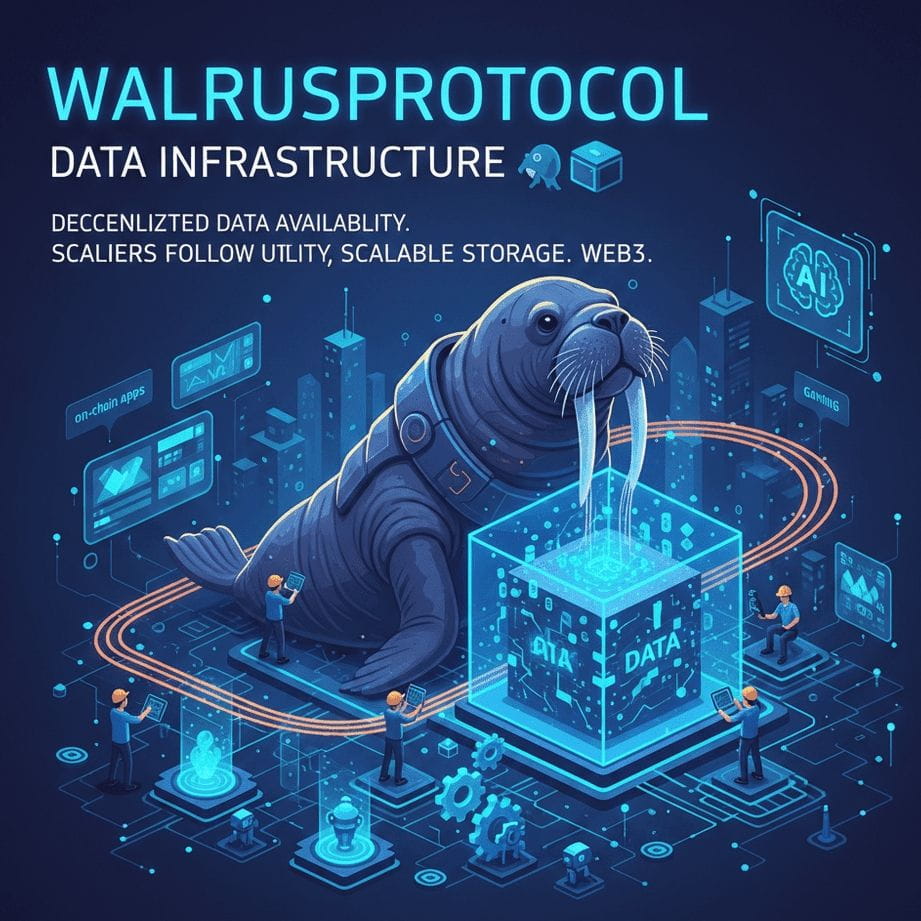
A standout feature of Walrus is its decentralized storage network. Leveraging erasure coding and blob storage, large files are sharded and distributed across a decentralized network, ensuring data resilience, redundancy, and resistance to censorship. Unlike traditional cloud services, which centralize data and carry risks of breaches or government intervention, Walrus offers a cost-efficient, secure, and truly decentralized alternative. Enterprises, developers, and individuals alike can benefit from this infrastructure, especially for Web3 applications, NFT storage, or sensitive financial data.
Governance and Community Empowerment
Walrus is not just a protocol; it is a community-driven ecosystem. Token holders actively participate in governance, proposing and voting on key upgrades or initiatives. Its staking mechanisms encourage long-term engagement, rewarding users for contributing to network security and stability. This combination of governance and staking creates a self-sustaining ecosystem, where the community has a meaningful say in shaping the protocol’s future.
Unique Advantages Over Other DeFi Protocols
While many DeFi projects provide staking, lending, or liquidity pools, Walrus uniquely blends privacy, storage, and financial functionality. Its ability to offer censorship-resistant storage alongside a privacy-first financial protocol sets it apart in a crowded market. Additionally, by building on the Sui blockchain, Walrus benefits from sub-second finality and high scalability, making it suitable for mass adoption and real-world application deployment.
Potential Real-World Impact
The implications of Walrus extend beyond traditional DeFi use cases. With increasing concerns over data privacy, censorship, and centralized control, Walrus can serve as a foundation for privacy-preserving applications, decentralized enterprise solutions, and secure NFT storage. Its infrastructure is particularly relevant for developers and organizations looking for alternatives to centralized cloud providers, combining cost-efficiency with blockchain-enabled security.
The Walrus Token ($WAL)
The native cryptocurrency $WAL powers the ecosystem. Beyond serving as a medium for staking and governance, $WAL acts as a utility token for engaging with the protocol’s storage and transactional services. As adoption grows, $WAL is positioned to play a critical role in incentivizing participation and securing the network, making it an essential component of the Walrus ecosystem.
Conclusion
Walrus (WAL) is not just another DeFi token—it represents a new paradigm for privacy-first finance and decentralized storage. By combining private transactions, decentralized storage, governance, and staking in a single ecosystem, Walrus is building a platform that appeals to both retail users and institutions. With its innovative approach and Sui blockchain’s scalability, Walrus is poised to redefine secure, private, and censorship-resistant finance in the Web3 era.