
Walrus isn’t just another token — it’s a toolkit for building private, resilient, and practical Web3 applications. Below is a fresh, differently angled, and in-depth take that blends technical clarity, strategic analysis, and practical signals to watch. This version focuses on how Walrus can be used, why it matters now, and what to measure if you’re evaluating or promoting the project.
Advanced: PrivacyLayer BlobSharding,SuiEcosystem CensorshipResistant ,StorageEconomics OnchainGovernance $WAL
What Walrus Actually Does (plain & practical)
Walrus provides three tightly integrated capabilities:
1. Privacy-first transactions — user flows and dApp interactions designed to minimize on-chain metadata.
2. Decentralized blob storage — large files are sharded (via erasure coding) and stored across many nodes so data remains available even if some nodes go offline.
3. Community governance & staking — $WAL holders help steer upgrades and secure the network.
Put simply: it’s a platform for apps that need confidential money flows + robust file storage without relying on a single cloud vendor.
Why this combo matters (not just marketing)
Regulatory resilience: Censorship-resistant storage + private settlement is valuable in jurisdictions with tight data controls or where private financial rails are required.
NFTs & media use-cases: High-value NFTs, game assets, or long-form media require reliable off-chain storage that’s verifiable and tamper-resistant — Walrus’ blob-sharding model fits that need.
Enterprise adoption path: Enterprises care about SLAs, auditability, and encryption. A decentralized storage layer that supports encryption-at-rest and verifiable retrieval opens practical enterprise pilots.
Quick technical primer — Erasure coding & blob storage (why it’s smart)
Erasure coding breaks files into many pieces plus parity shards. Any subset of pieces (fewer than the total) can reconstruct the original file. This yields:
Lower storage overhead than naive replication,
Higher resilience against node failures, and
Privacy by distribution (no single party holds the whole file).
When combined with on-chain pointers and storage proofs, this becomes a reliable system for dApps that need large-file persistence without centralized risk.
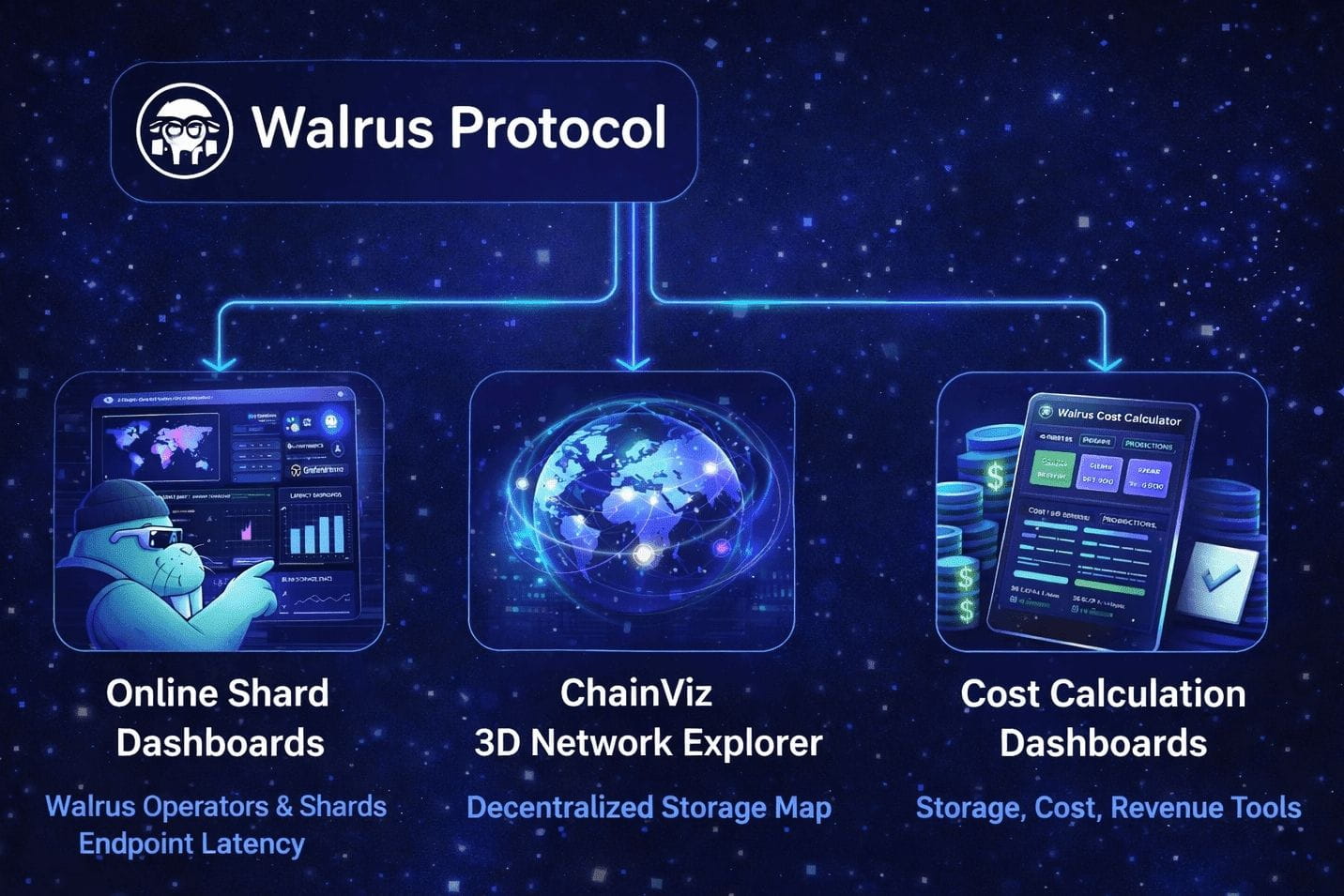
Warlus Protocol or Calculation here's in Image
Unique differentiators (compared to typical DeFi/storage projects)
Privacy + Storage in one stack: Most projects do one or the other. Walrus designs interfaces where private payments and file access are first-class partners.
Sui-native performance: Building on Sui gives lower-latency finality for microtransactions tied to storage access (e.g., pay-per-download, gated NFTs).
Protocol economics aligned to storage health: Incentives can be structured so stakers and node operators are rewarded for availability and integrity, not just token lockups.
Risks & realistic mitigations
Adoption friction: Enterprises need tooling (APIs, SDKs, compliance logs). Mitigation: developer docs, managed-node partners, and audit reports.
Privacy vs. compliance tension: Full privacy can clash with KYC/AML expectations. Mitigation: offer configurable privacy modes and enterprise-grade audit hooks (selective disclosure).
Storage cost predictability: Decentralized economics can be volatile. Mitigation: hybrid pricing (on-chain meta + off-chain agreements) and storage-market hedging pools.
What to measure (metrics that matter)
Storage Uptime & Retrieval Success Rate — real-world reliability.
Average retrieval latency — user experience for apps and NFTs.
Active dApps & monthly active wallets interacting with storage — real usage, not just TVL.
Staked $WAL vs. active node operators — security and incentive alignment.
Cost per GB-month (effective) vs. major centralized providers — adoption hinges on competitiveness.
Tactical suggestions for a promo / community push
Showcase a real use-case: store an NFT art collection with full retrieval proofs; publish a short case-study.
Publish a developer walkthrough:
“How to build a paywalled NFT using Walrus storage + private payment” (code snippets + video).
Run a storage bounty: reward dev teams that migrate small enterprise workloads (logs, medical images with encryption) for a pilot.
TL;DR (for a social caption)
Walrus blends privacy-first DeFi with resilient blob-sharded storage on Sui, unlocking censorship-resistant apps, secure NFT/media handling, and enterprise-ready decentralized storage economics. Watch uptime, retrieval latency, dApp activity, and staked-node alignment to gauge real momentum. Privacy layer or BlobSharding of ($WAL)

