

@Plasma is gaining attention as a specialized Layer 1 blockchain designed specifically for stablecoin settlement, aiming to make digital dollars move as smoothly as everyday payments. Instead of trying to compete as a general-purpose chain, Plasma focuses on one of the biggest real-world use cases in crypto: fast, reliable, and low-cost stablecoin transfers. This direction makes Plasma particularly relevant for regions where stablecoin usage is already high and demand for simple payment rails is growing rapidly.
What makes Plasma different is its stablecoin-centric infrastructure. The chain introduces gasless $USDT transfers through built-in mechanisms that remove the need for users to hold a separate gas token just to send stablecoins. It also supports “stablecoin-first gas,” which means users can pay transaction fees using stablecoins, reducing friction and making onboarding far easier for normal users who only want to transact in USDT.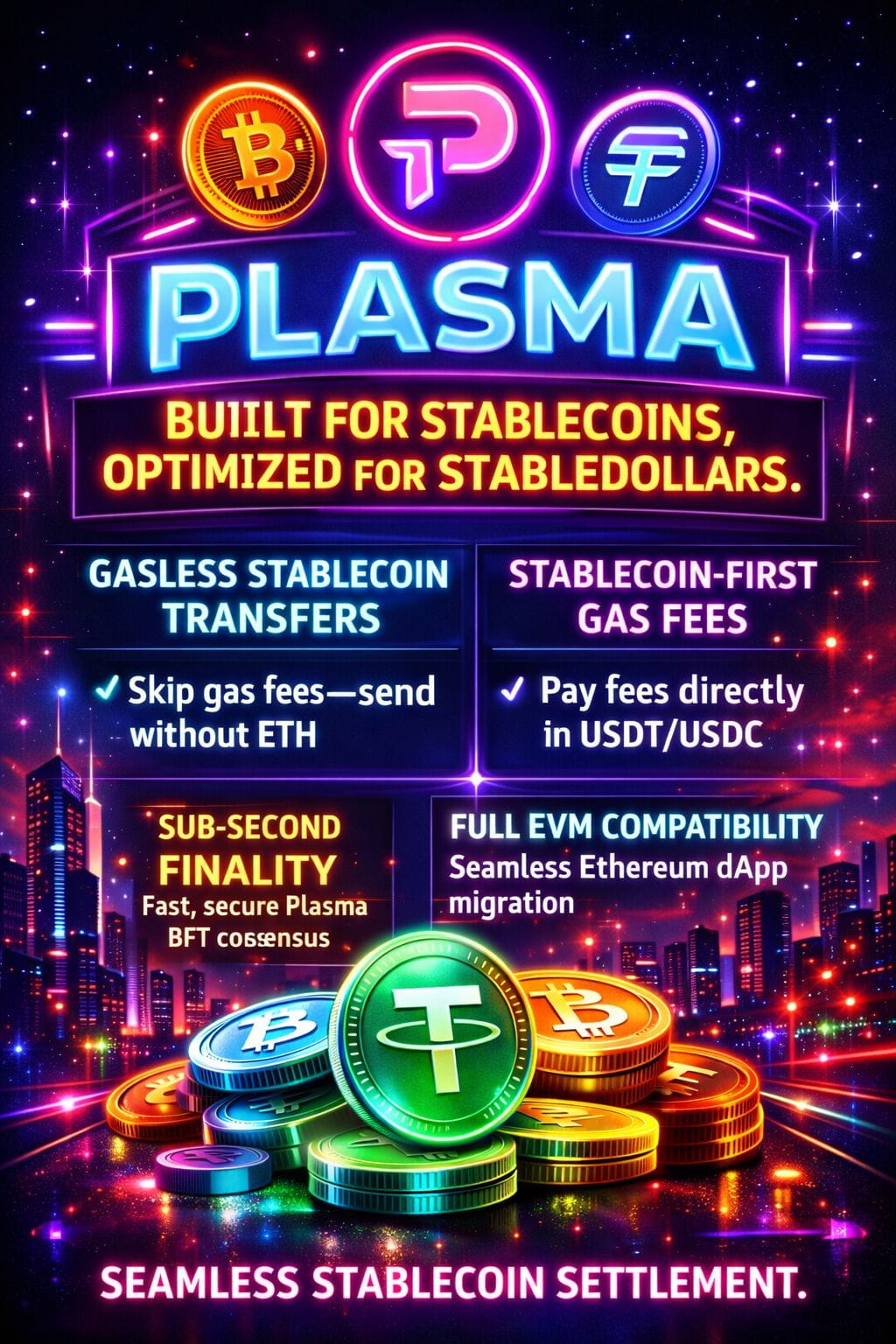
On the technology side, Plasma is fully EVM-compatible and powered by Reth, enabling Ethereum developers to deploy and build using familiar tools without switching ecosystems. At the same time, Plasma targets sub-second finality through its PlasmaBFT consensus, which improves speed and reliability for payments. This combination gives it a strong foundation for both consumer-friendly transfers and high-throughput institutional settlement.
Another major narrative behind Plasma is its $BITCOIN -anchored security approach, designed to increase neutrality, censorship resistance, and trust for global settlement. With its focus split between retail users in high-adoption markets and institutions in payments/finance, Plasma is positioning itself as a stablecoin-first chain built not for hype, but for real-world usage. If execution matches vision, Plasma could become a key piece of future on-chain payment infrastructure.



