
When I think about where Web3 infrastructure still struggles, it usually comes back to the same issues. Networks work fine in ideal conditions, then fall apart when usage ramps up. Fees jump, performance drops, and developers are left adjusting their products to fit the chain instead of the other way around. That’s the context in which Plasma caught my attention.
What I find interesting about plasma is that it seems shaped by those past failures. Plasma isn’t positioning itself as a one-size-fits-all chain. It’s focused on handling applications that are data-heavy and execution-intensive, the kinds of apps that tend to expose weaknesses in existing networks. Gaming, interactive consumer apps, and AI-related use cases all fall into that category.
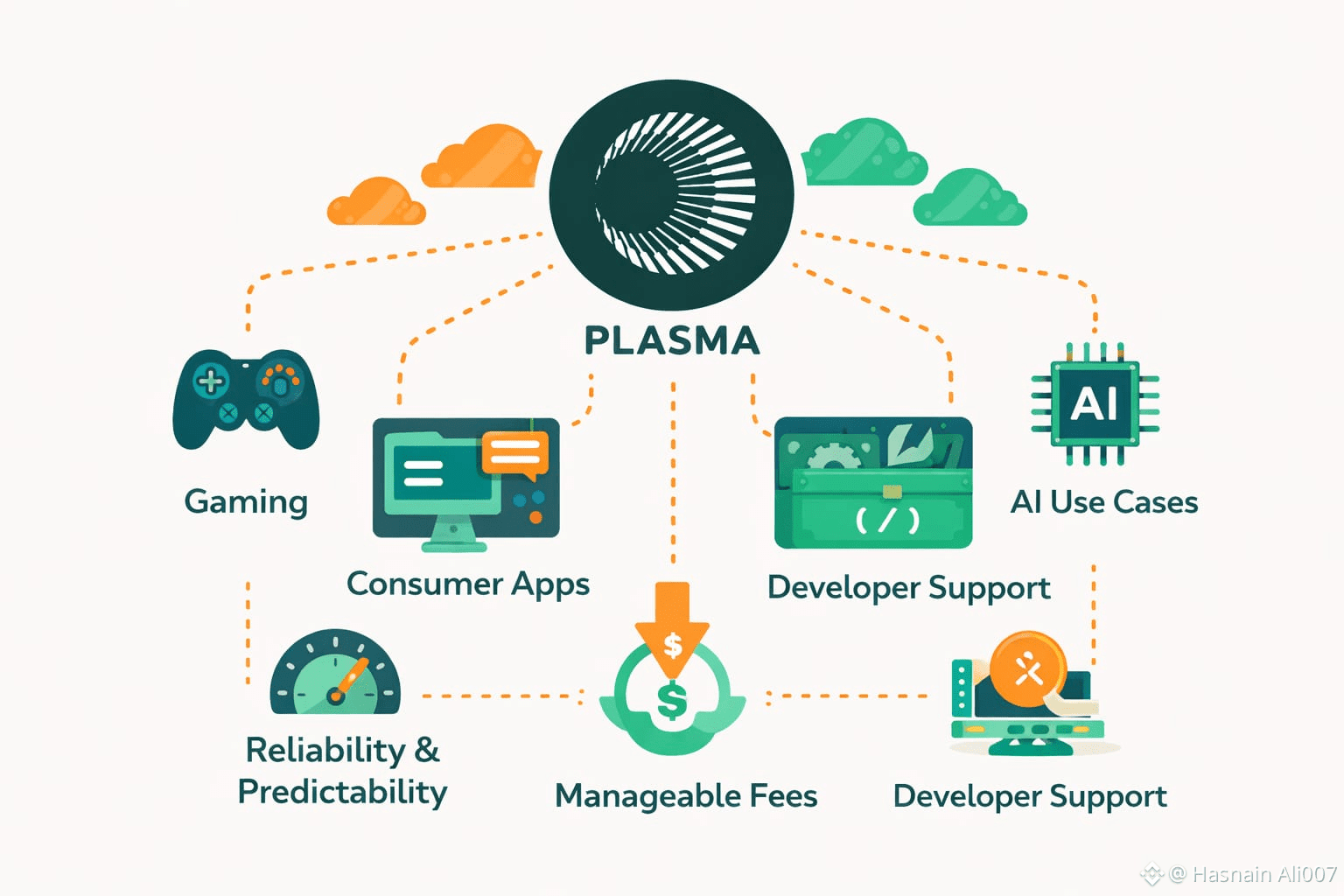
A lot of infrastructure projects still optimize for headline metrics. Transactions per second, theoretical throughput, best-case benchmarks. Those numbers look good in isolation, but they don’t always translate into a stable experience once users arrive. Plasma’s approach feels more grounded. The emphasis is on consistency and reliability when conditions are uneven, which is how real usage actually looks.One area where this matters is cost behavior. For developers building real products, unpredictable fees are more than an inconvenience. They can break business models. Plasma appears to be designed with that in mind, aiming to keep execution costs understandable and manageable even as activity fluctuates. That kind of predictability is easy to overlook, but it’s often the difference between an app scaling or quietly shutting down.From a broader market view, infrastructure projects like Plasma usually don’t get immediate recognition. Adoption tends to come before attention, not the other way around. That creates an interesting dynamic. If Plasma manages to become reliable plumbing for real applications, its relevance grows naturally. If it doesn’t, no amount of messaging will compensate.It’s also worth being realistic about the challenges ahead. Plasma is entering a competitive space. Developers can choose from established Layer 1s, fast Layer 2s, and app-specific environments. Plasma has to earn that choice. That means strong tooling, clear documentation, and ongoing developer support. It also means listening when things break or friction shows up.
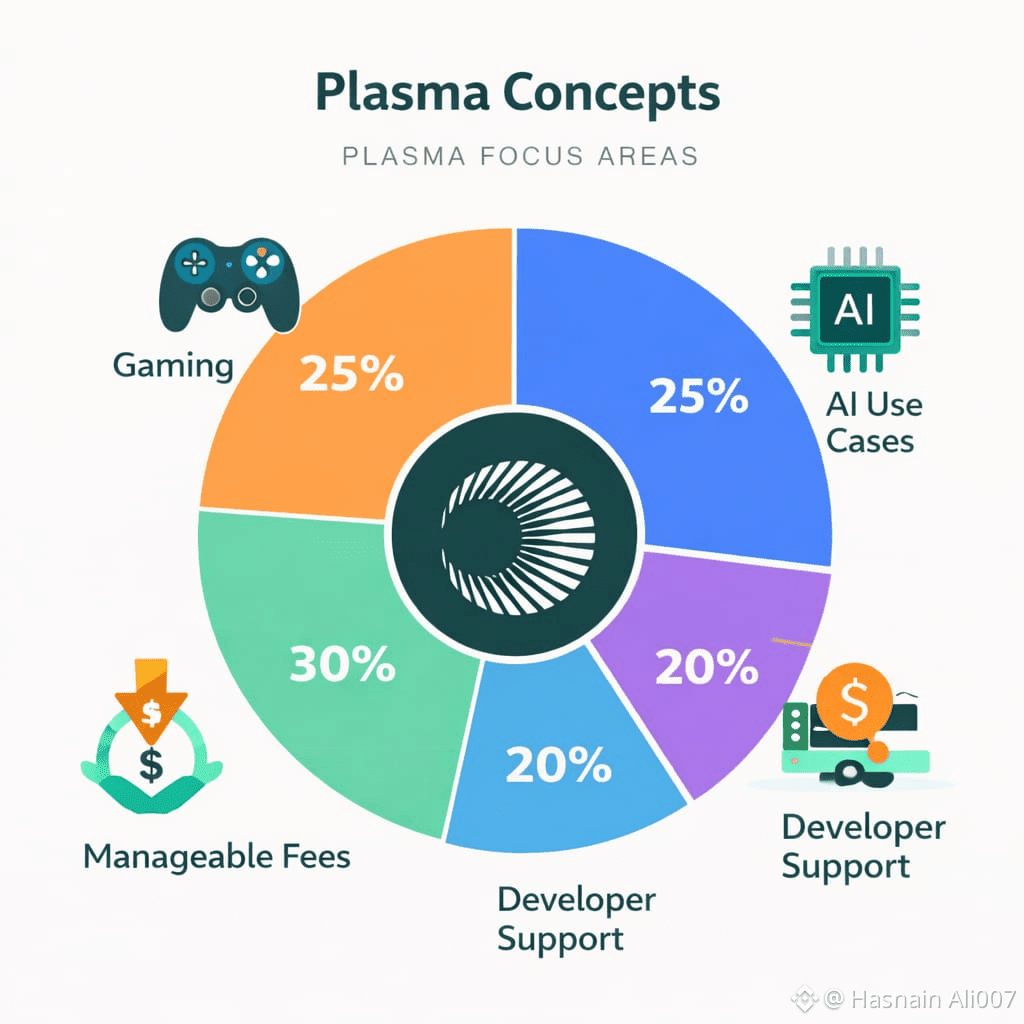
Another risk is momentum. Early ecosystems often rely on reason to attract activity, but long-term success depends on holding. Plasma needs builders who stay because the network works for them, not because rewards are temporarily attractive. That transition from move usage to organic use is where many projects struggle.When I look at XPL, I don’t see a token that lives or dies on short-term excitement. Its value is tied to whether Plasma becomes infrastructure that developers actually depend on. If the network proves useful in production environments, value accrual follows over time. If adoption stalls, the market will reflect that quickly.
What keeps Plasma on my watchlist is that it seems focused on the unglamorous parts of infrastructure. Performance under stress, predictable costs, and developer experience. Those things rarely trend on social media, but they’re what determine whether a chain lasts beyond its early phase.I’m less interested in what Plasma promises next quarter and more interested in what it looks like a year from now. Are teams still building? Are apps still running without constant workarounds? Those answers will say more than any announcement ever could.

