

Crypto has created massive opportunities for investors, traders, and innovators. But where there is money, there are also scammers. Every year, billions of dollars are lost due to crypto fraud, fake projects, and emotional traps. The good news? Most crypto scams follow predictable patterns , once you know them, you can avoid them.
This detailed guide explains the most dangerous crypto scams and how to stay safe.
Why Crypto Scams Are Growing
Crypto is decentralized, fast, and borderless. While this is powerful, it also makes it harder to recover stolen funds. Scammers take advantage of:
New investors who lack experience
Market hype and fear
The promise of fast profits
Fake authority and influencer marketing
Understanding their tactics is your first line of defense.
1. Fake Investment & “Guaranteed Profit” Scams

If someone promises guaranteed profits, it is almost always a scam.
Scammers often claim:
“Daily 5–10% guaranteed returns”
“Insider signals”
“Risk-free crypto trading bots”
Reality: Crypto markets are volatile. No real trader can guarantee profits.
How to avoid:
Never trust anyone promising fixed or guaranteed returns.
2. Rug Pulls (Scam Tokens & Fake Projects)
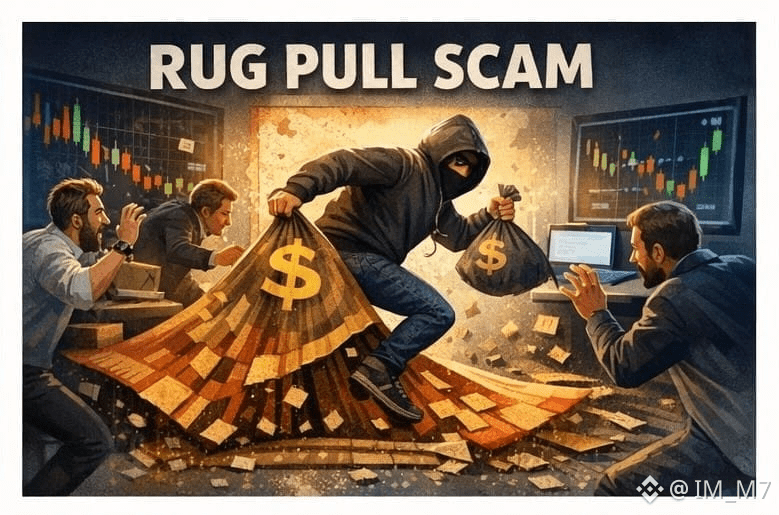
A rug pull happens when developers launch a new token, build hype, attract investors, then sell all their holdings and disappear.
Warning signs:
Anonymous team
No real product or roadmap
Sudden hype with influencer pumping
Liquidity locked for a very short time
How to avoid:
Research the team, project use case, tokenomics, and community before investing.
3. Phishing Scams (Fake Emails, Websites & Wallet Links)

Scammers create fake versions of:
Exchanges
Wallet login pages
NFT marketplaces
They trick users into entering their seed phrase or private key.
Golden Rule:
Never share your seed phrase , not even with support teams.
4. Fake Giveaways & Celebrity Impersonation
Scammers impersonate famous people or brands and claim:
“Send 0.1 BTC, get 0.2 BTC back”
“Limited-time crypto giveaway”
Truth:
No legitimate company or celebrity asks you to send crypto first.
5. Pump & Dump Groups
Social groups hype a low-value coin, telling members it will “moon.”
Early insiders sell at the peak, while late buyers suffer losses.
How to avoid:
If a coin is being aggressively promoted with no real fundamentals ,stay away.
6. Fake Wallet Apps & Malicious Extensions
Some apps look like legitimate wallets but steal funds once installed.
Safety tips:
Download wallets only from official websites
Avoid unknown browser extensions
Read reviews before installing anything
7. Romance & Trust-Building Crypto Scams

Scammers build emotional trust through dating apps or social media, then slowly convince victims to invest in a “special crypto opportunity.”
If someone you barely know asks you to invest , it’s a red flag.
8. Impersonation of Support Teams
Scammers pretend to be Binance, or other platform support.
Remember:
Real support teams will never ask for your private keys.
9. Fake Airdrops & NFT Scams
Some airdrops require connecting your wallet to malicious smart contracts that drain your funds.
Tip:
Verify the official source before connecting your wallet anywhere.
10. Recovery & “Lost Funds” Scams
After a victim loses crypto, scammers offer fake recovery services , then scam them again.
Crypto transactions are usually irreversible. Be cautious of recovery promises.
How to Stay Safe in Crypto
Never share your private keys or seed phrase
Avoid emotional trading decisions
Research before investing in any project
Use hardware wallets for large funds
Verify websites and social media links
Be skeptical of hype and fast-profit claims
Trust logic, not influencers
Final Thought
Crypto can build wealth but only if you protect yourself. Scammers rely on greed, fear, and urgency. The smartest investors are not the fastest , they are the most cautious.