

Walrus Protocol ka blog casually scroll karne wali jagah nahi lagti. Thoda time dekar padhoge to ek baat dheere-dheere samajh aane lagti hai: decentralized storage yahan sirf theory ya future promise nahi hai. Ye already real systems, real users aur real workloads ke saath kaam kar raha hai. Blog posts ek isolated update jaise feel nahi dete, balki ek continuous story banate hain jahan data ka role sirf “save karke rakhna” nahi reh jaata.
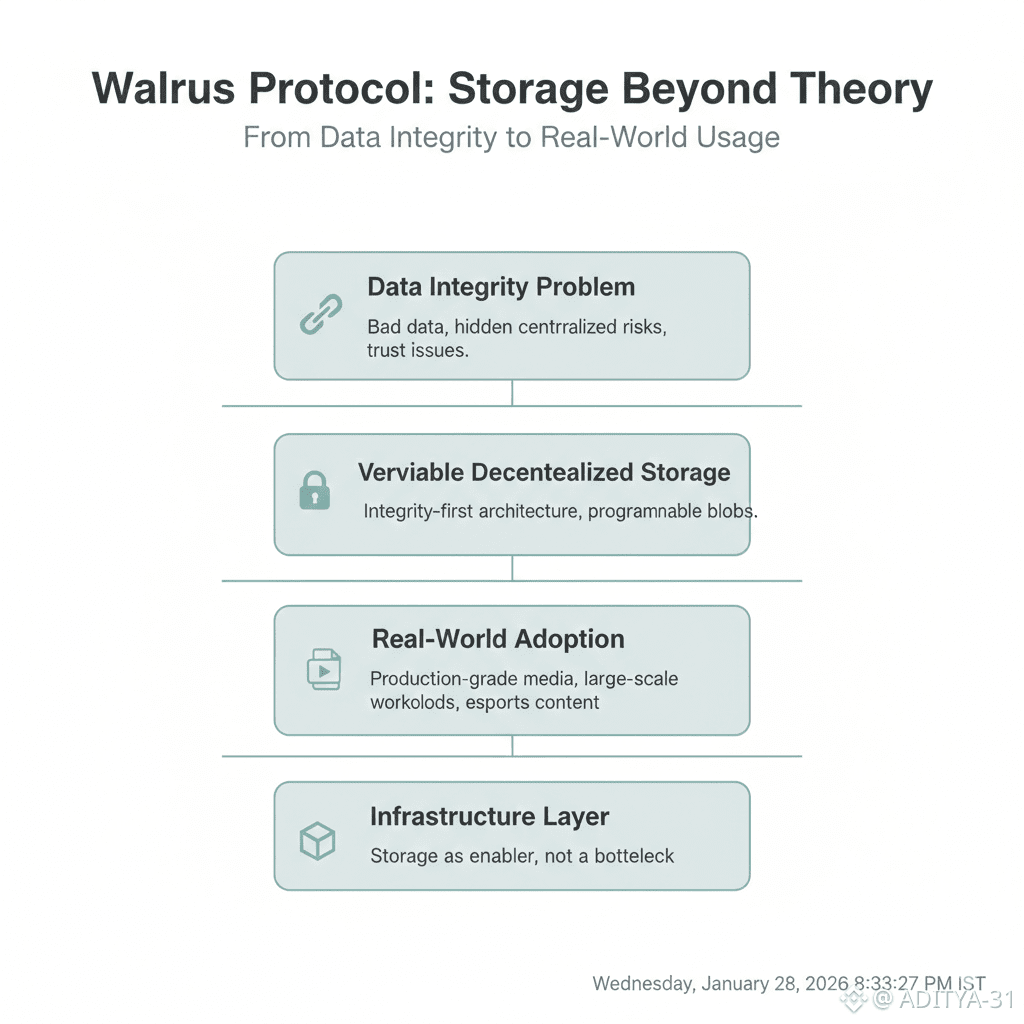
Early articles me hi focus data integrity par shift ho jata hai. “Bad data costs billions” jaisi discussions ye point make karti hain ki centralized storage ke risks kitne quietly accumulate hote rehte hain — chahe analytics ho, AI model training ho ya decision-making systems. Walrus yahan khud ko sirf ek storage option ke roop me push nahi karta. Narrative ye hai ki data ko blindly trust karna problem hai, aur verify-able data hi long-term solution ho sakta hai.
Ye sab theory tab meaningful lagti hai jab blog real adoption dikhata hai. Team Liquid jaise esports brand ka example especially eye-opening hai. Hundreds of terabytes ka production-grade media decentralized storage par move karna koi experiment nahi hota. Ye signal hota hai ki network reliability, bandwidth aur availability ab us level par aa chuki hai jahan serious organizations bhi isse depend kar sakti hain.
Technical depth bhi surface tak limited nahi rehti. Jab Walrus scale aur decentralization ke baare me likhta hai, to wo simple buzzwords par nahi rukta. Node distribution, data fragmentation aur recovery logic jaise topics ko real context ke saath explain kiya jaata hai. Ye clarity Walrus ko generic “object storage but decentralized” projects se alag karti hai. Yahan architecture dikhaya jaata hai, sirf claim nahi kiya jaata.
Blog ka ecosystem angle bhi kaafi natural lagta hai. “Walrus 2025: Year in Review” jaise posts sirf achievements list nahi karte. Wo milestones, hackathons, partnerships aur community efforts ko ek flow me jod dete hain. Reader ko ye feel milta hai ki network random direction me nahi badh raha, balki ek consistent path follow kar raha hai.
AI ke saath connection bhi forced nahi lagta. Walrus ka perspective ye hai ki autonomous agents aur AI systems ke liye data sirf storage problem nahi hai — wo execution aur trust ka foundation hai. Isliye storage ko passive backend nahi maana jaata, balki intelligent workflows ka active part samjha jaata hai. Ye framing AI-heavy Web3 use cases ke liye kaafi naturally fit hoti hai.
End me blog padhkar ek cheez clear ho jaati hai: Walrus Protocol kisi single launch ya hype cycle par dependent project jaisa feel nahi deta. Ye ek living infrastructure layer lagta hai, jahan thought leadership, actual usage, technical clarity aur ecosystem growth parallel move kar rahe hain. Esports media ho, AI workflows ho ya data-heavy dApps — storage yahan bottleneck nahi, enabler ban raha hai.
Final Thought:
Walrus ka blog sirf updates ka collection nahi hai. Ye ek transition document karta hai — jab decentralized storage idea se nikal kar real products aur real integrations ka hissa banne lagta hai. Web3 stack me data layer ka role yahan theory nahi, practice me clearly dikh raha hai.