
Dusk Network is one of those rare blockchain projects that didn’t chase hype, memes, or quick trends. It quietly started back in 2018 with a very clear mission: bring real, regulated finance onto the blockchain without sacrificing privacy. While most chains focus either on full transparency or full anonymity, Dusk chose the hardest path building a public Layer-1 that institutions, regulators, and everyday users can actually trust.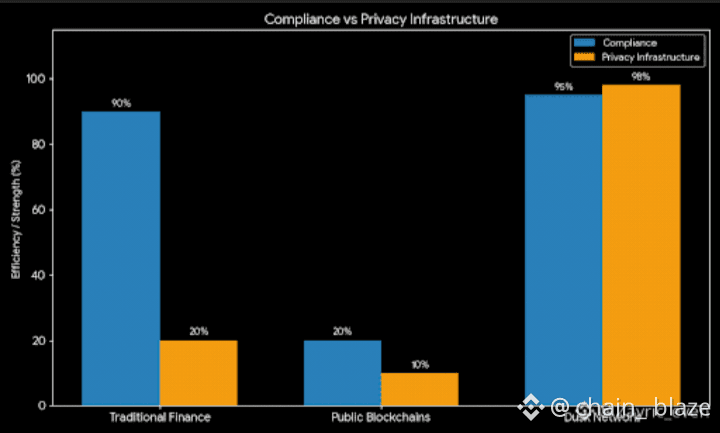
At its core, Dusk is designed for regulated financial markets. This means things like tokenized stocks, bonds, ETFs, and other real-world assets can be issued, traded, and settled directly on-chain while still following strict rules like MiFID II, MiCA, and the EU DLT Pilot Regime. Instead of fighting regulation, Dusk embraces it and builds around it. That alone already sets it apart from most Layer-1 blockchains.
What makes this even more interesting is how Dusk handles privacy. On most blockchains, everything is public forever. That simply doesn’t work for institutions, companies, or investors who need confidentiality. Dusk uses zero-knowledge cryptography to keep sensitive data private while still allowing audits when required. In simple terms, transactions can be confidential, but regulators can still verify that rules are being followed. This balance between privacy and compliance is exactly what traditional finance needs to move on-chain.
After years of research and development, Dusk reached a major milestone on January 7, 2025, when its mainnet went live and produced its first immutable block. This wasn’t a test or a soft launch it marked the moment Dusk became a fully operational Layer-1 blockchain. Since then, real transactions have been running on the network, validators have been securing it, and the ecosystem has been steadily growing.
Cross-chain connectivity came next. In May 2025, Dusk launched a two-way bridge that allows assets to move between Dusk and Ethereum-compatible networks. This includes support for ERC-20 and BEP-20 tokens, making it much easier for users and developers to interact with the broader crypto ecosystem. Even here, privacy was not ignored. Zero-knowledge proofs are used to keep cross-chain transfers secure and confidential.
Developer adoption is another key focus. In December 2025, DuskEVM testnet went live, opening the door for Ethereum developers to build on Dusk using familiar tools like MetaMask. Developers can bridge DUSK tokens into the EVM environment and deploy smart contracts while preparing for the upcoming EVM mainnet launch. This step is crucial because it lowers the barrier for developers and allows existing DeFi and financial applications to migrate or expand into a compliant environment.
On the institutional side, Dusk has been making serious moves. One of the most important developments is its integration with Chainlink in late 2025. By adopting Chainlink standards like CCIP and secure data feeds, Dusk enables reliable market data and cross-chain settlement for regulated assets. This is not theoretical it’s being built with real institutions in mind.
A standout collaboration is with NPEX, a regulated Dutch exchange. Together, they are working on bringing tokenized securities on-chain using Dusk as the settlement layer. This means real financial instruments, backed by regulation, using blockchain infrastructure without exposing sensitive information to the public. This is exactly the kind of use case institutions have been waiting for.
The DUSK token itself plays a central role in the network. It is used for transaction fees, staking, and smart contract deployment. The supply structure is straightforward, with around 500 million tokens in circulation and a maximum supply capped at 1 billion. The token has been available on exchanges like BitMart since 2025, and its value is closely tied to network usage rather than hype cycles.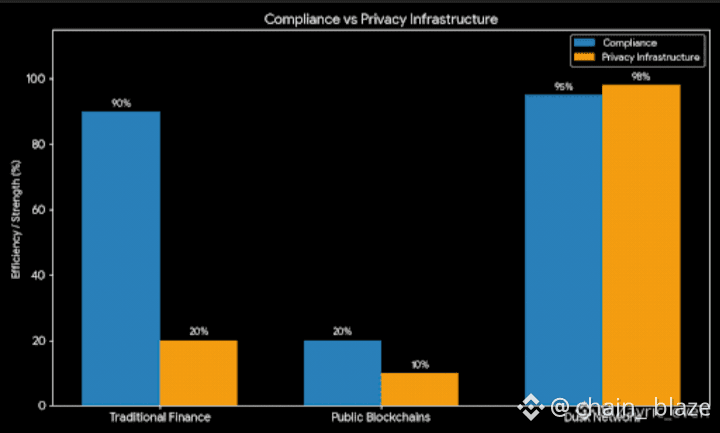
What truly makes Dusk important is its long-term vision. While many chains compete for retail traders or short-term DeFi activity, Dusk is building infrastructure for the future of finance. Think confidential trading, compliant DeFi, programmable staking, and regulated asset settlement all running on a public blockchain that respects both privacy and the law.
On-chain data shows steady activity, validator participation has grown since mainnet, and development continues at a consistent pace. This isn’t a flashy ecosystem, but it is a serious one. Dusk is positioning itself as the bridge between traditional finance and blockchain, not by breaking rules, but by rewriting how compliance and privacy can coexist on-chain.
As we move through 2025 and into 2026, the focus is clear. Dusk is preparing for EVM mainnet, expanding cross-chain interoperability, and pushing deeper into institutional asset issuance and settlement. If regulated finance truly goes on-chain at scale, Dusk Network is quietly making sure the rails are already in place.
This is not a project chasing attention. It’s a project building foundations and in the world of real finance, foundations matter more than noise.
